

Airport
My flight from Luanda stopped briefly at the town of Kuito to pick up more passengers and then continued to Menongue. I had been traveling over 40 hours on little sleep, but I was on the home stretch. I was the next-to-last person to disembark the plane and enter the terminal. At the immigration checkpoint, a lady asked me questions in Portuguese, but I understood very little. The man behind me said she was asking for an address, but she wasn’t accepting the only address information that I had, “Kazenga 2, near the airport.”

After a few minutes of cluelessness on my part and frustration on her part, she let me go. Baggage claim was just around the corner. The room was empty, save for my one checked bag sitting on an idle conveyor belt. All was silent. I could feel the warm air from outside as it gently opened and closed the front doors. I paused for a few moments in the empty silence before walking outside. There were three vehicles parked out front, but no sign of occupants or movement. I walked to the side of the covered porch to get a clear view of the sky, and I got out my satellite phone. After a few minutes of trying to make an international call, I heard a familiar voice with a South African accent.
“Michael?”
Wessel had arrived half an hour before and was growing concerned that perhaps I had disembarked at Kuito. A previous visitor had made that mistake, and it had taken some time to fetch him to Menongue. I could just imagine him thinking “Oh no, we lost our American. Not again.” He welcomed me to Menongue and introduced me to Ericleidy, an Angolan who had come with Wessel to retrieve me from the airport, and who Wessel aptly described as “coming along quite well with his English.” Ericleidy had previously been a mission student, and he was now part of the OM leadership, teaching English and several religious subjects.
Introducing: OM base
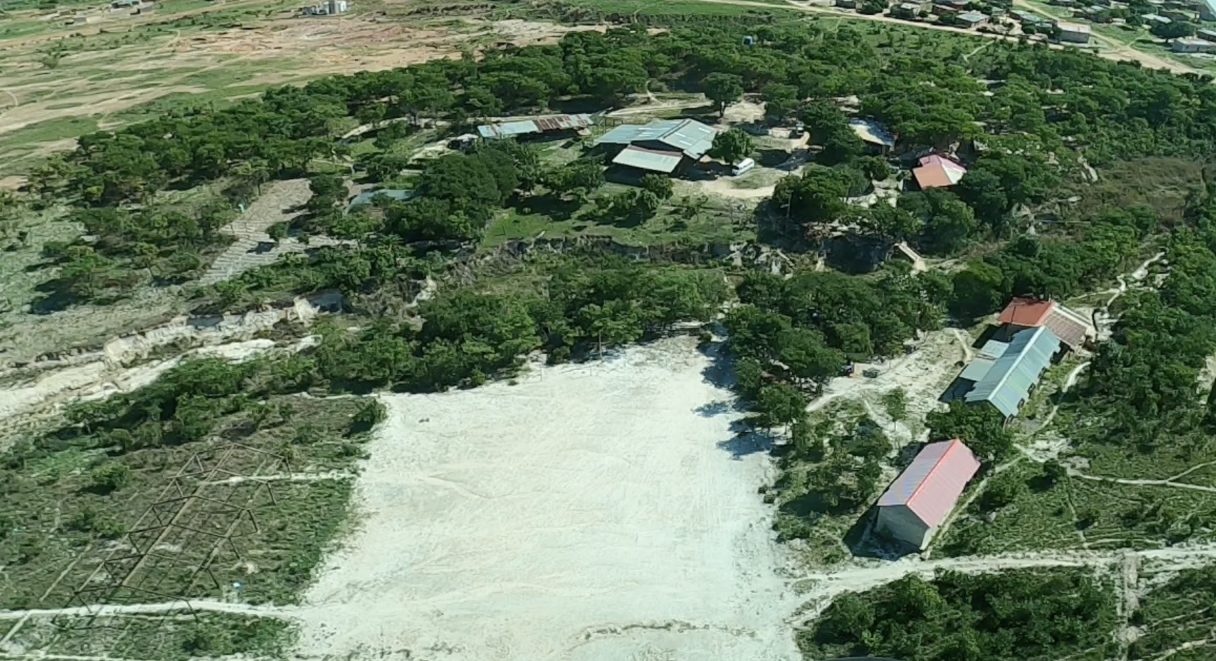
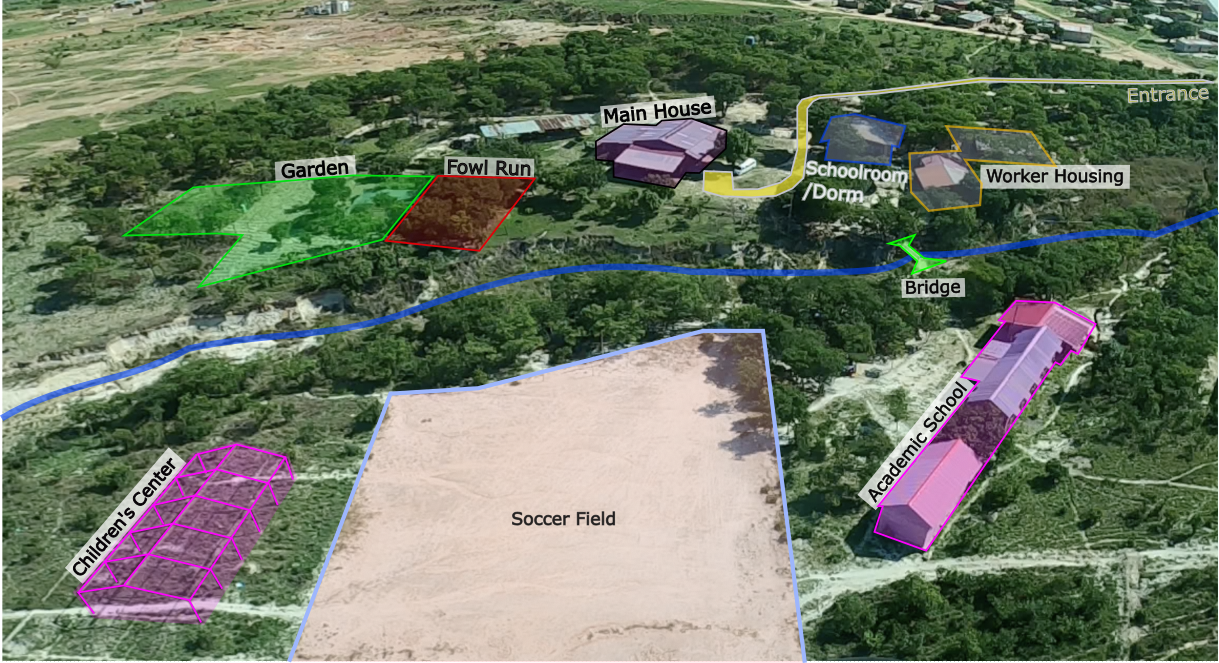
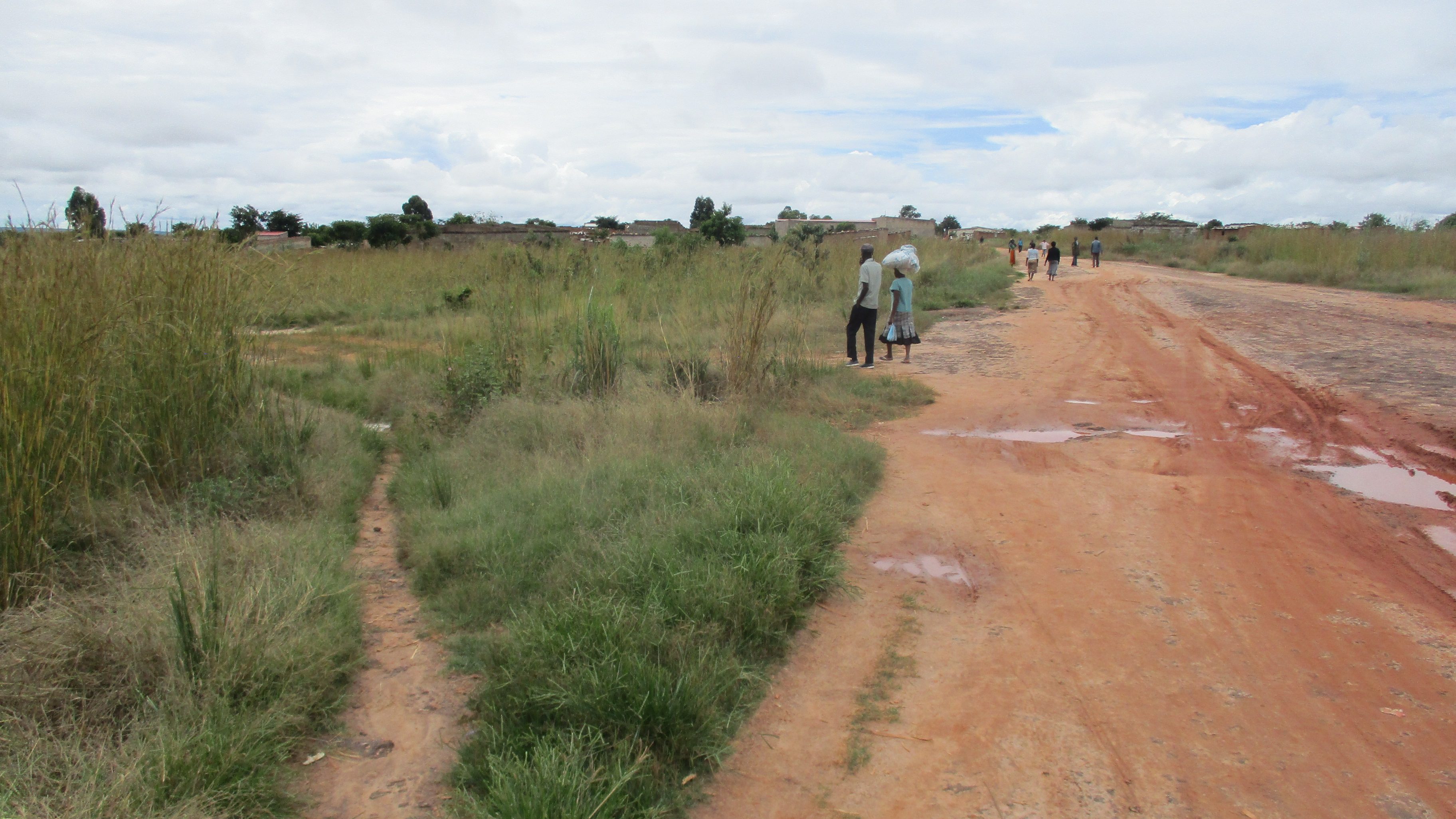
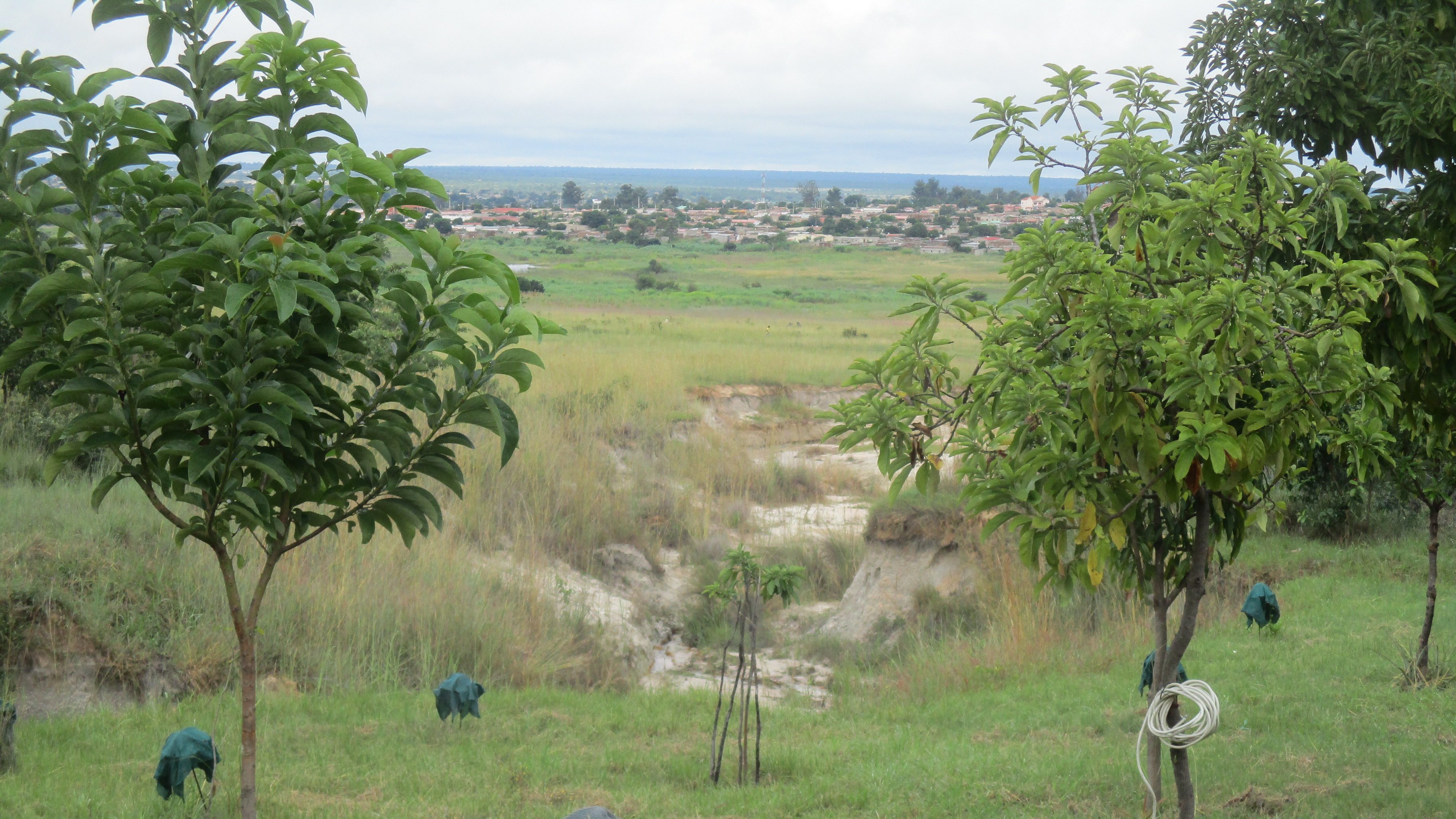
We loaded into the truck for the drive to the OM base. As we drove out of the airport and through Menongue, the pavement soon gave way to rough roads of beautiful red dirt, which reminded me of the red rocks found in Arizona, Utah, and Colorado. As part of my digital scouting, I had found the GPS track of a 4×4 overland convoy across Angola that had stayed a night at the OM base, so I already knew that it was very close to the airport. We soon turned off the road and onto the long “driveway” of the base. Trees lined both sides of the track. As the landscape unfolded before me, I could tell that one of my expectations had been completely wrong. Whereas I had imagined flat, featureless grassland, there were instead rolling hills, a multitude of trees, and a commanding view down the valley across the Cuebe River to the rest of Menongue and beyond. A natural spring flowed out of the hillside and ran roughly east to west, cutting a gully across the base, bisecting it.
On the north side of the gully, the driveway snaked down to the front of the main house. A garden area and fowl run were next to the main house, and on the opposite side of the driveway were a classroom, a dormitory, and OM worker housing. A prominent feature of the north side was a pipe with fresh water constantly flowing from the spring. The water formed a small pool and followed a trench through the fowl run, down the gully, and into the Cuebe River below.
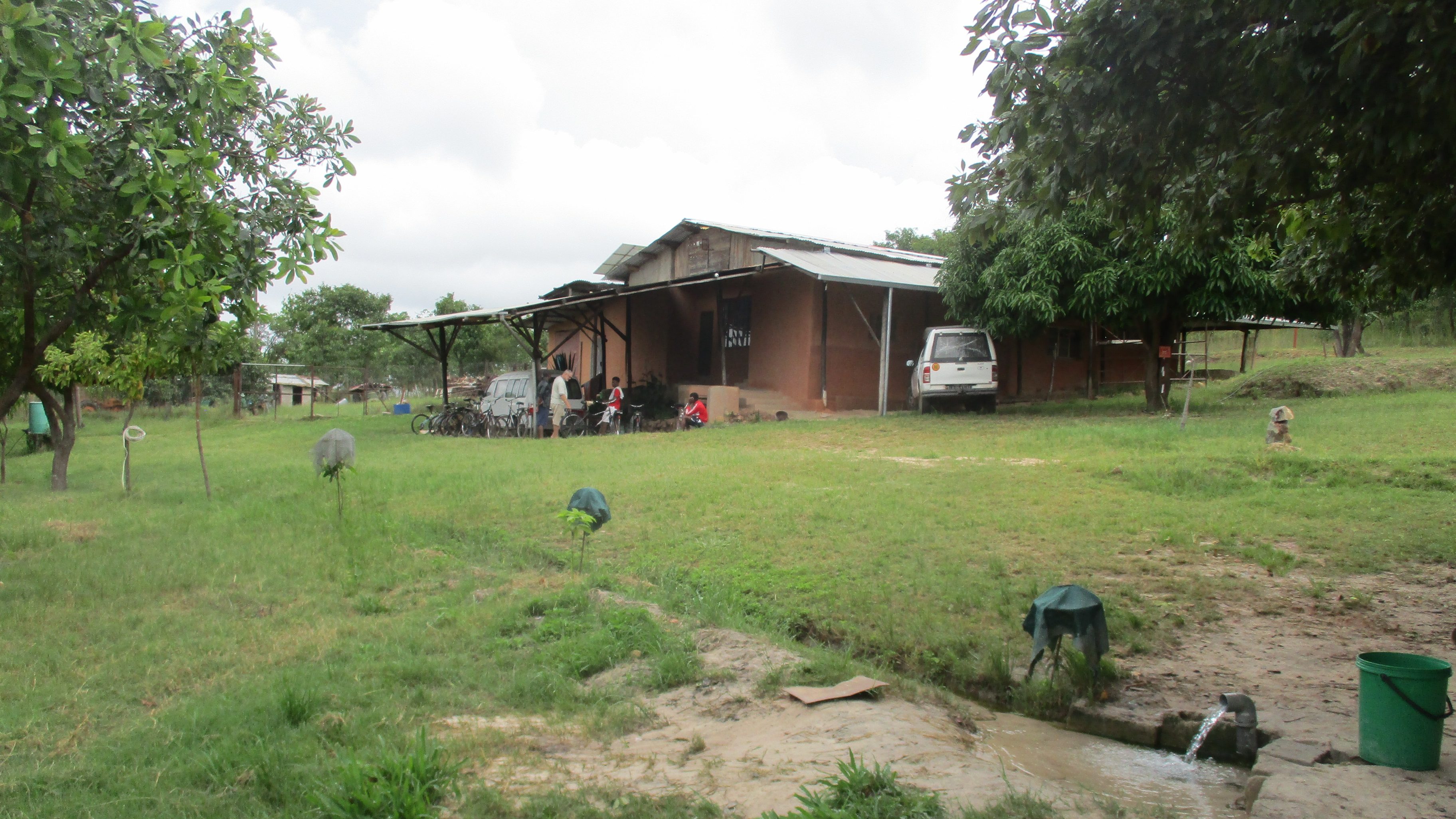
Spanning the gully was a bridge made from an old truck chassis, and on the south side were several academic school buildings, a playground, a large soccer field, and a metal frame for a children’s center that had been started long ago and was waiting to be finished.

When we pulled up in the truck, I was treated to a song of welcome, and then I was introduced to everyone. The first was Wessel’s wife, Joan, followed by the other members of the leadership team: Ngunza and Barianne and their son Yakeem; Elisa; and Delfina. Then I met the seven mission students: Juelma – the only female that year, Dorivaldo, Eliseu, Ernesto, Paulo, Ricardo, and Tonilson. They had traveled from Luanda and Huambo to spend a year on the base learning about Christian life and missionary work. Except for Ernesto, the students knew very little English. I also met Herivaldo, a former mission student who was doing his internship at the base. They all greeted me enthusiastically and wished me a profitable time in Angola.
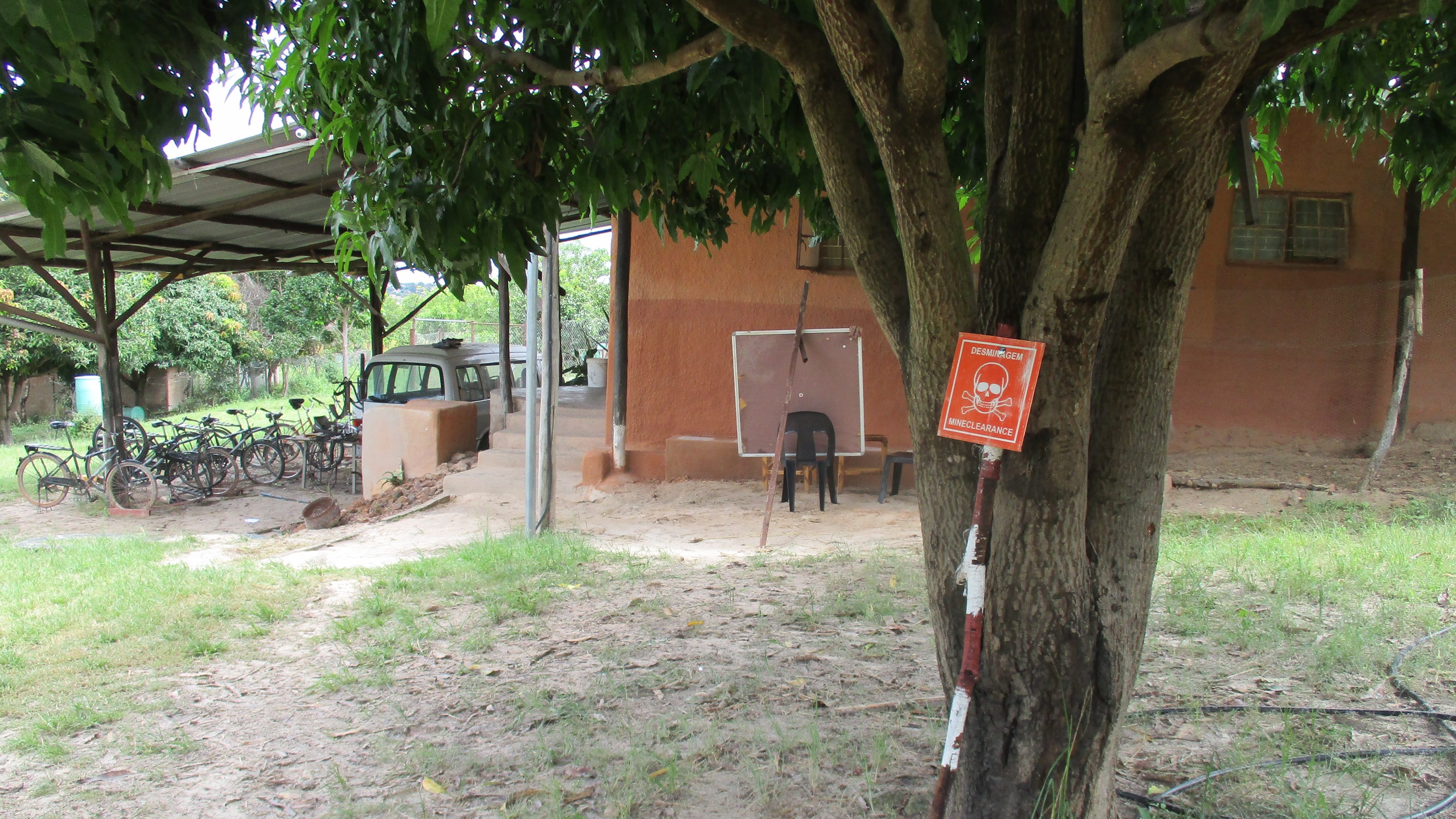
I was given a brief overview of the main house. Wessel cut the tour short to let me get some rest due to my deteriorated state from traveling. The house had a wide, tall porch of concrete with steps at one end and a ramp at the other. The roof extended from the main structure to cover the porch and the front parking area that housed a long row of bicycles, a non-functioning van, and a workbench. The front door opened into a long, wide, and tall central room with a couch in the corner and a large table in the center to accommodate many guests.
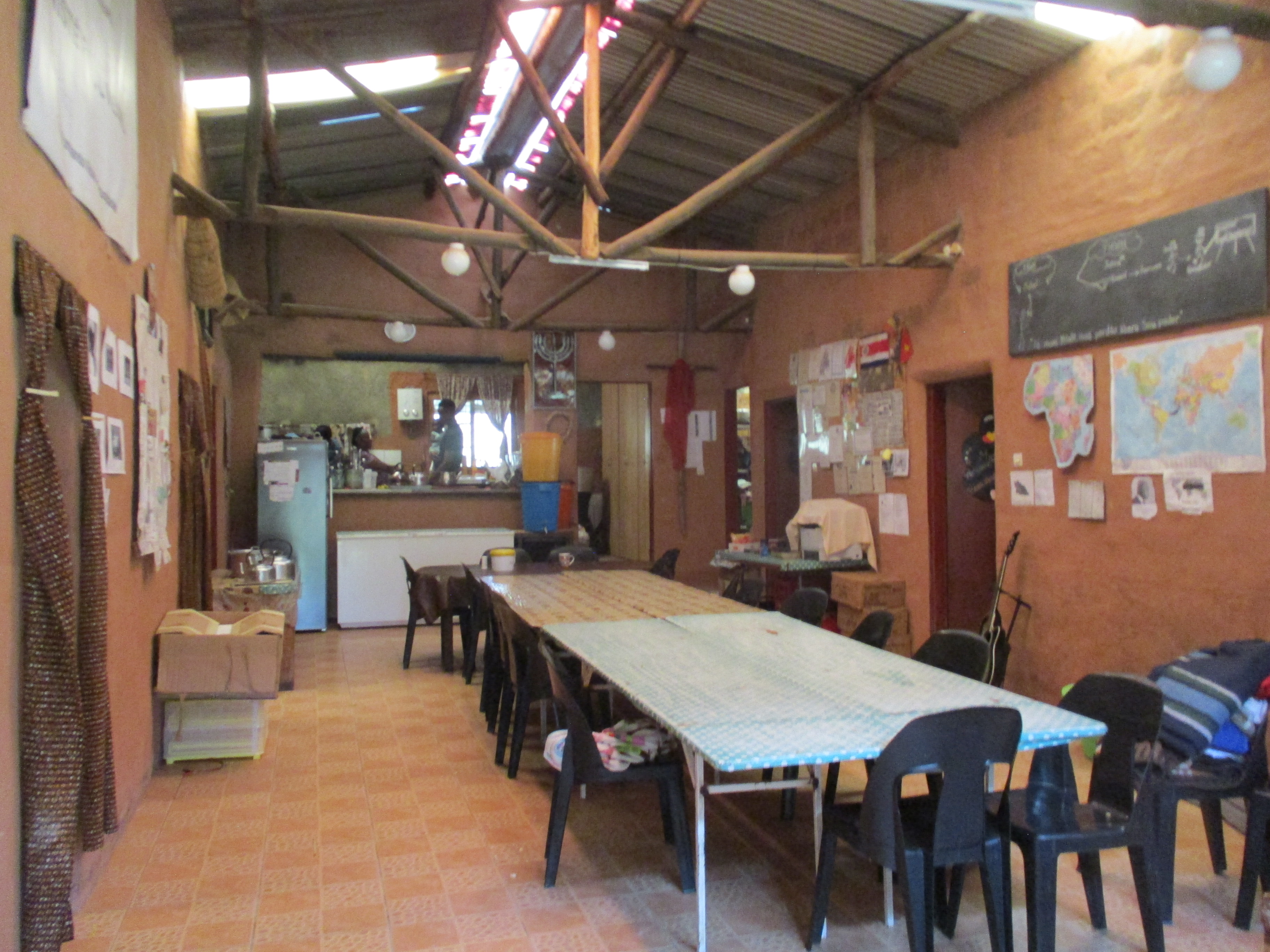
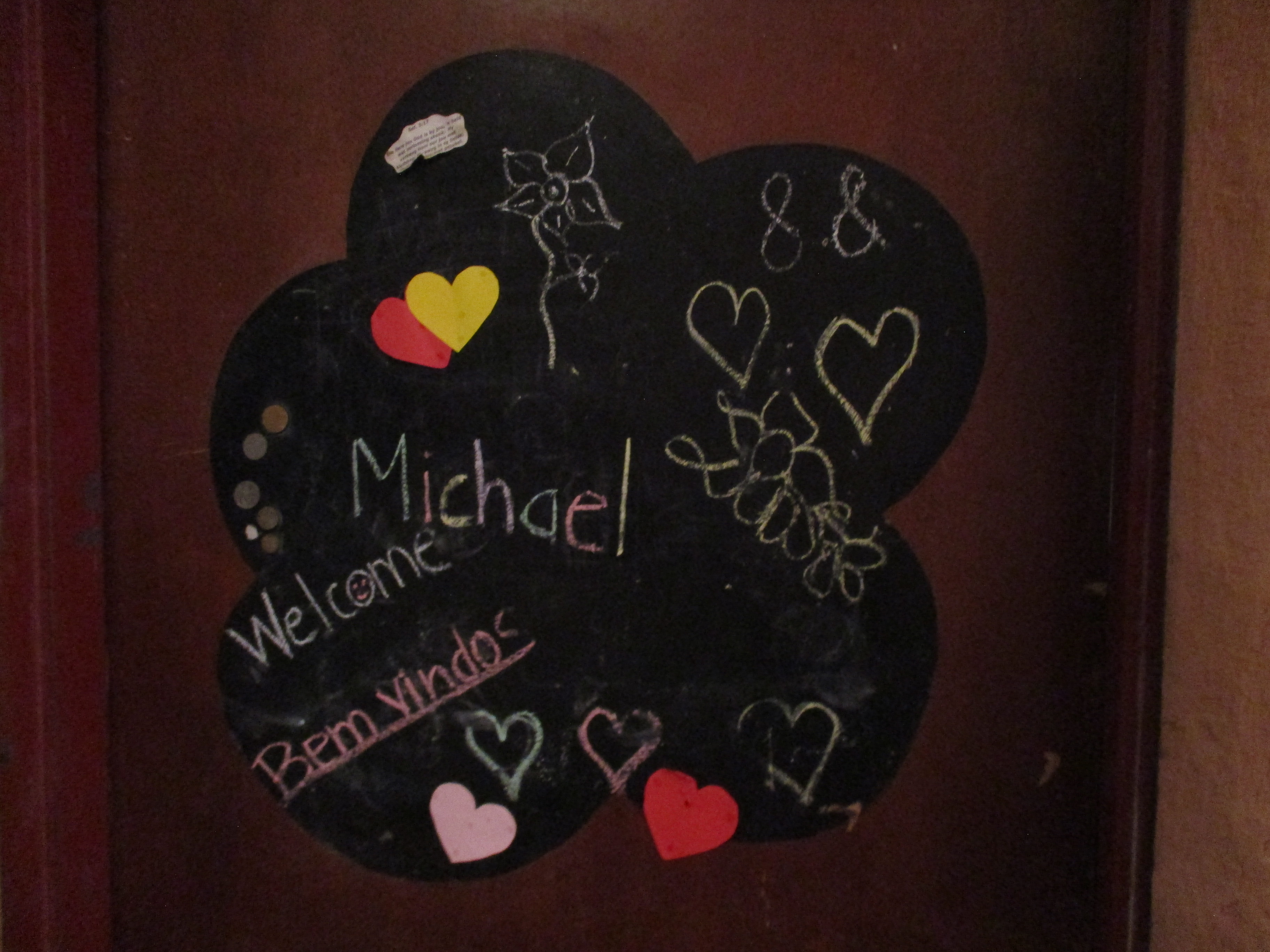
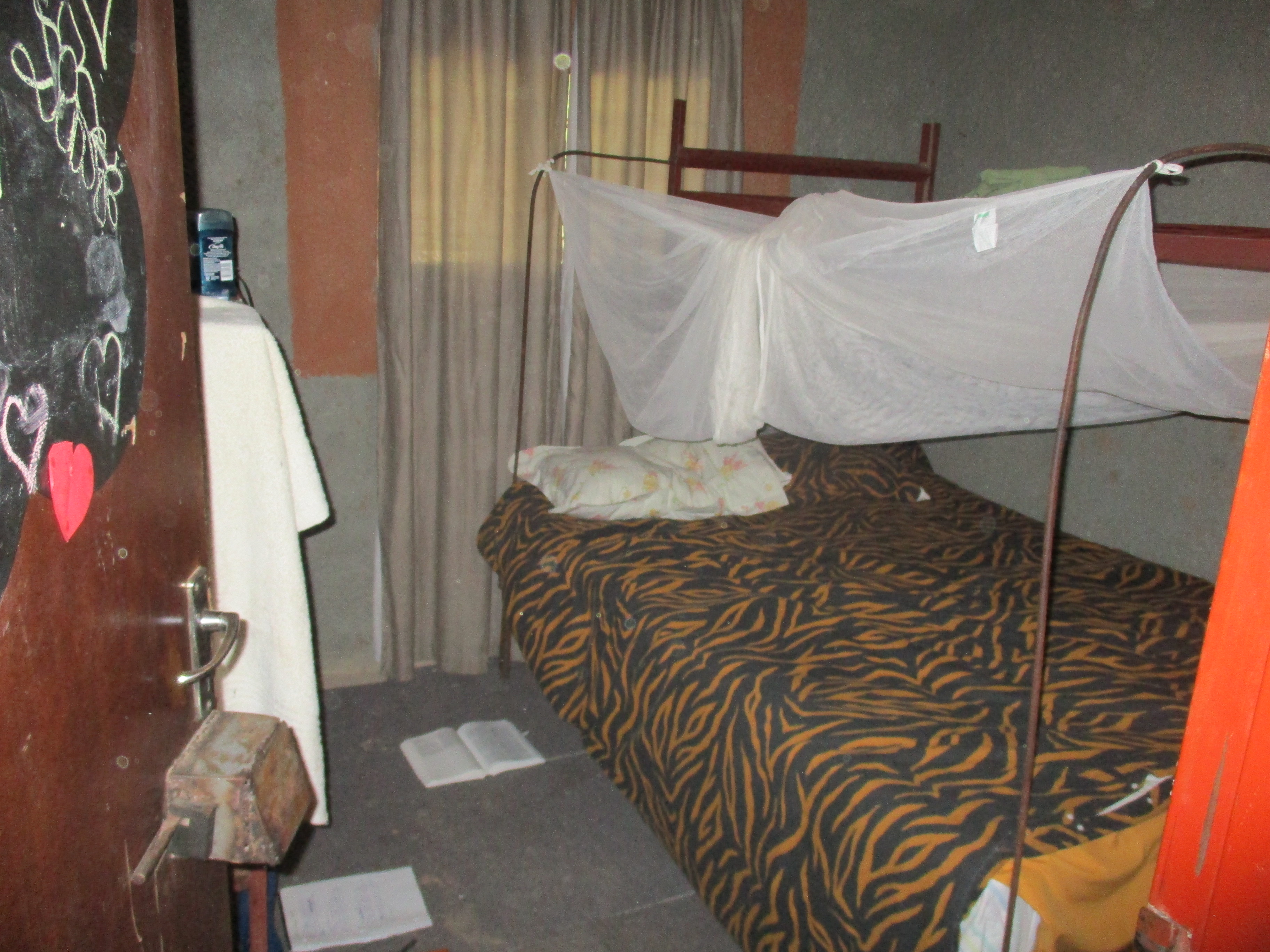
Several rooms were arranged around the periphery of this central room. The first to the left was Elisa and Delfina’s room. After that were two alcoves for showers, sinks, and toilets. At the back left was Wessel and Joan’s room; since the beginning they have lived in the same space as the Angolans to maintain the concept of familial connectedness. The kitchen was at the back, raised about a foot above the rest of the space. Continuing around the right side, next to the kitchen was a storage room, and next to that the business office. Next was my room, the door of which was decorated with my name and messages of welcome and love. Lastly, there was the room that Ericleidy and Herivaldo shared that also housed the control systems for the photovoltaic system. The municipal electric grid had not yet made it to the outskirts of Menongue, and a set of solar panels and batteries were the source of electricity.
Not a wall in the main room was bare. They were all covered with maps, memorabilia, and pictures. One wall was covered with images of missionaries and workers with OM and other organizations. A map of Angola showed the hometowns of each of the current mission students, connected to their picture by a length of yarn. And another wall displayed some information and artifacts about the bushmen’s lifestyle. The main house was made of dried mud bricks with a metal roof to blend in with the surrounding culture. Though made of mud and clay, the walls looked smooth and clean, and their natural red color was at once exciting, inviting, and soothing. The sheer mass of the mud keeps the houses cooler in the hot, wet season and warmer in the cold, dry season. Translucent plastic panels in the roof introduced natural lighting to the space.
Saturday – 14 Mar 2020
Got up last night around 2 am after about 5 hours of sleep. Ate a bowl of good soup – noodles, potato, ground beef, and zucchini. Then I slept about 12 hours. Still groggy, but functioning. No diarrhea, so far.
I had assumed that I would get sick at least once on my trip to Africa, either from food or water contaminants, so I was constantly on the lookout for symptoms. I had prescription anti-diarrheal that I was sure I would need. Thankfully, that was another incorrect assumption, one that I was glad to be wrong about.
After I awoke and rejoined the land of the living, Wessel told me that the students had been asking, “Should we go in there? Is he dead?” Wessel had told them to leave me be. He knew about jet lag.
I had a chance to talk with Barianne, and she shared some of her story. She was from Namibia, the country to the south of Angola. She had decided to follow God to mission work at a young age, but a specific calling hadn’t materialized for many years. It finally worked out about four years prior. She came with a group of mission workers from her church to Angola, where she met Ngunza. They were married 2 years later, and their son Yakeem was born about a year after that. She was a teacher in Namibia, and that was her primary role when she came to work at the OM base in Menongue. When she had a child, her focus shifted more to raising him, and now she is responsible for one or two classes and contributes as a leader.
I met Pastor John from Cuito Cuanavale, a city to the southeast that had seen heavy fighting during the civil war. He was visiting Menongue for a few days and spoke English well. He talked of the animism and witchcraft that is more prevalent in Africa than other parts of the world. He made it clear that an active prayer life is very important for spiritual survival. I lamented the decline of morality and godliness in my country. He mentioned hearing about the many large churches in America, and he asked how the country could need a spiritual awakening if there were so many mega churches. I remarked that any righteous society is only one or two generations away from losing that heritage if the people become careless and complacent. I talked about how the seats in those large churches are too often filled with nominal believers, who praise loudly on Sunday but do not live a changed life the rest of the week. He said they had a name for that: “Brother and Sister Hallelujah.”

 Welcome to Angola