
I woke up early and refreshed on my first Sunday in Menongue. The sun would soon heat everything up, but the morning was wonderfully cool. There was a grassy hill to the east, so the sun’s rays lit up the sky long before they hit the mission base. Low and distant party sounds had emanated from the surrounding neighborhood until late in the evening. Perhaps there was a cantina not far away, and some of the locals kept the same hours as the malaria mosquitoes. Regardless, the mornings there were very calm. Few vehicles ever traveled on the road about a hundred yards away. Walking was the most common mode of travel. Few people owned a vehicle of any sort in that neighborhood, and the noise of downtown Menongue was far away. The tranquility of that rural setting stood in stark contrast to the commotion of crowded Luanda that I had left behind.
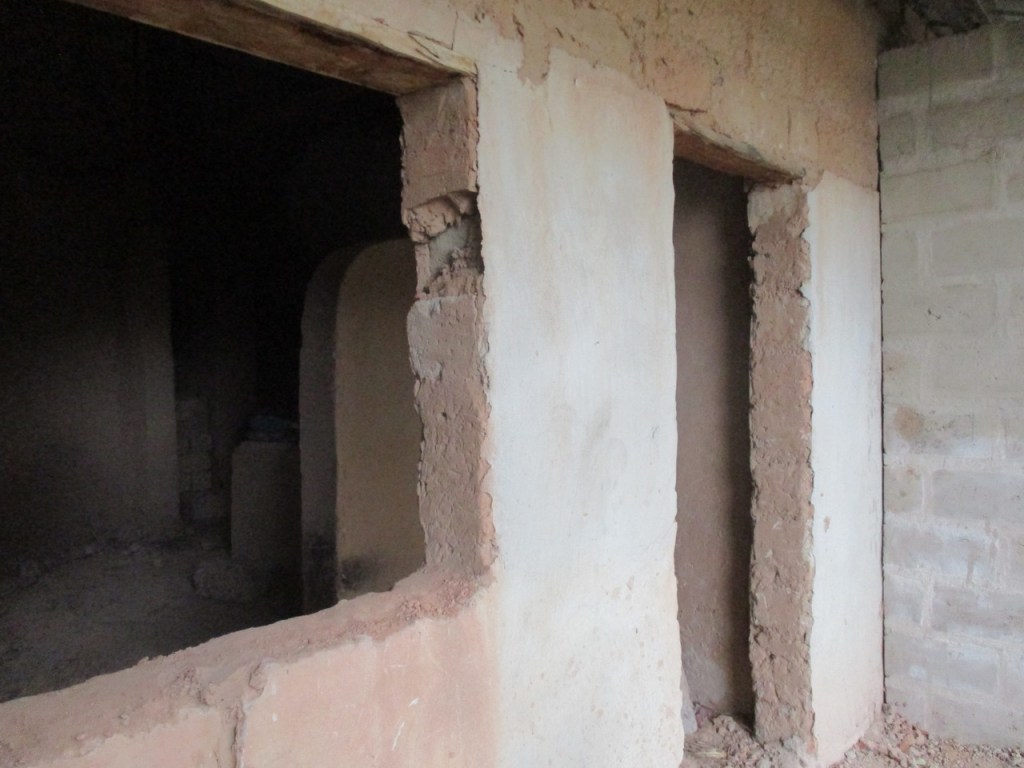
Our future home
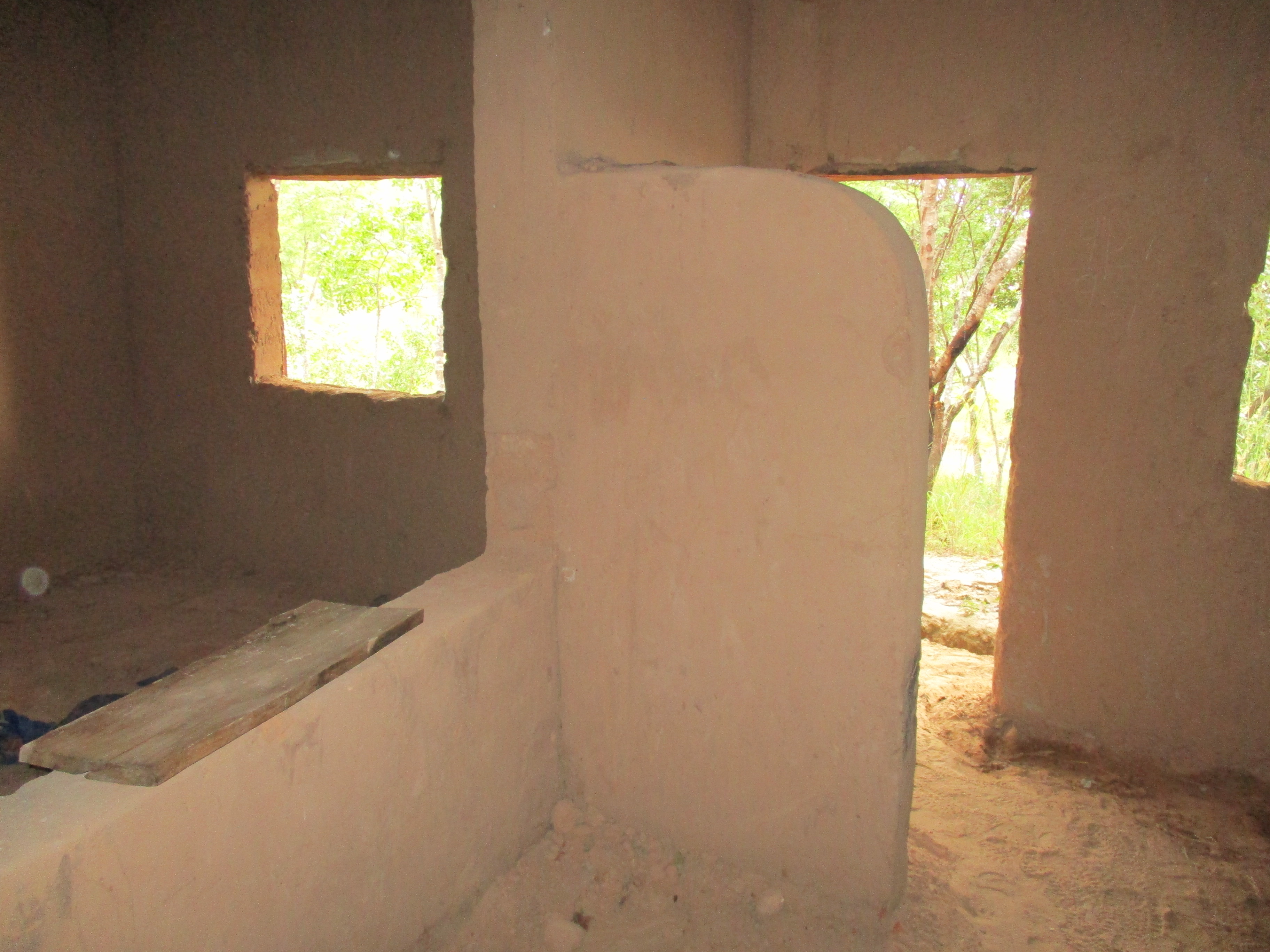
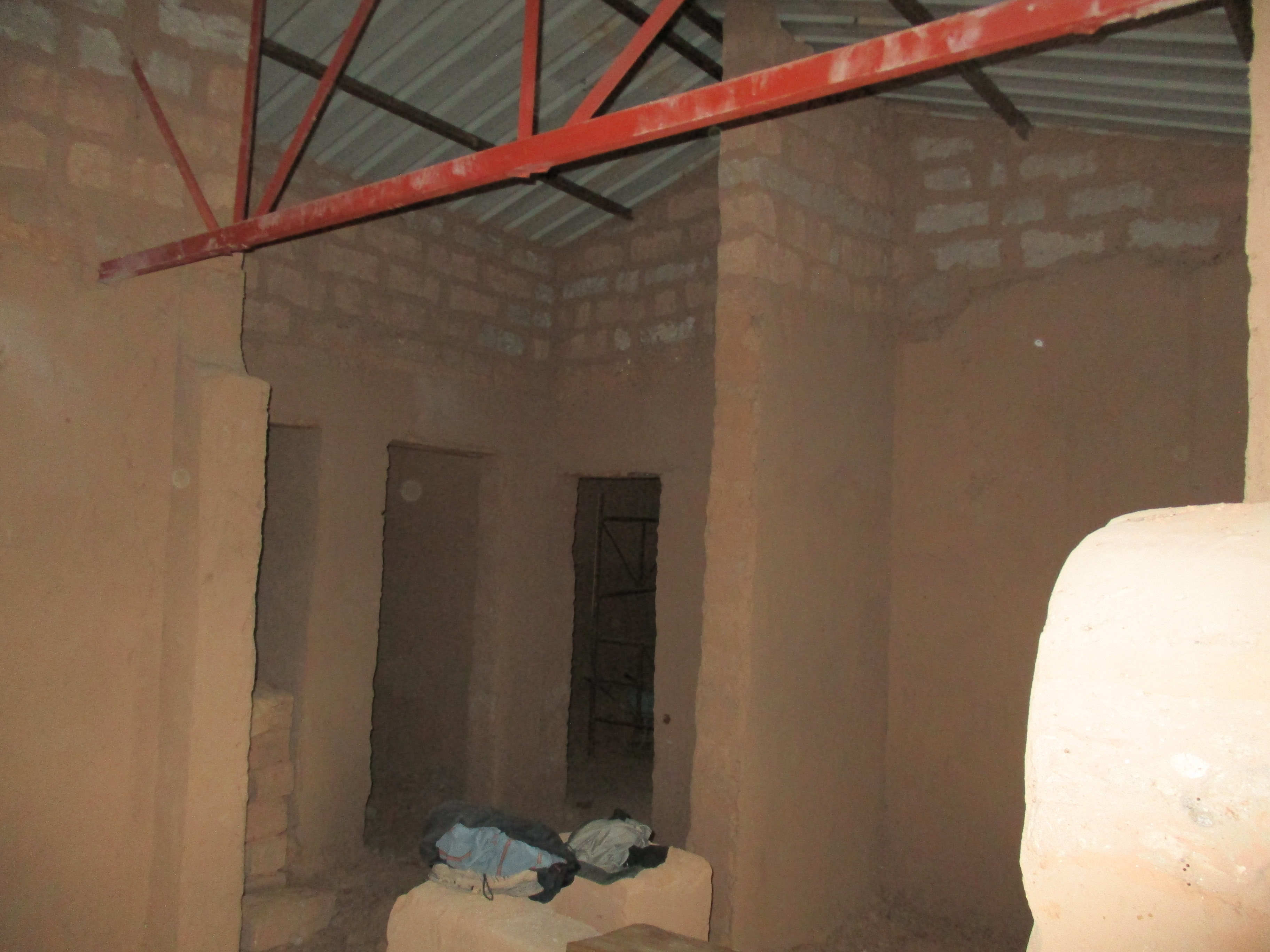
Later in the day, I walked around the campus, trying to feel at home in that foreign place. I went alone to the nearly completed house that might someday be my family’s home. I stepped through the gap where the door would eventually be and walked into the living room. The mud brick construction and the surrounding trees would keep it cool in the summer. The first time I talked to Wessel on the phone, he mentioned this structure. He felt compelled several years earlier to begin its construction, and they slowly worked on it when they had resources to spare. It seemed surprisingly modern with its vaulted ceilings and open floor plan. With three bedrooms and plenty of living space, it would more than suffice for our needs.
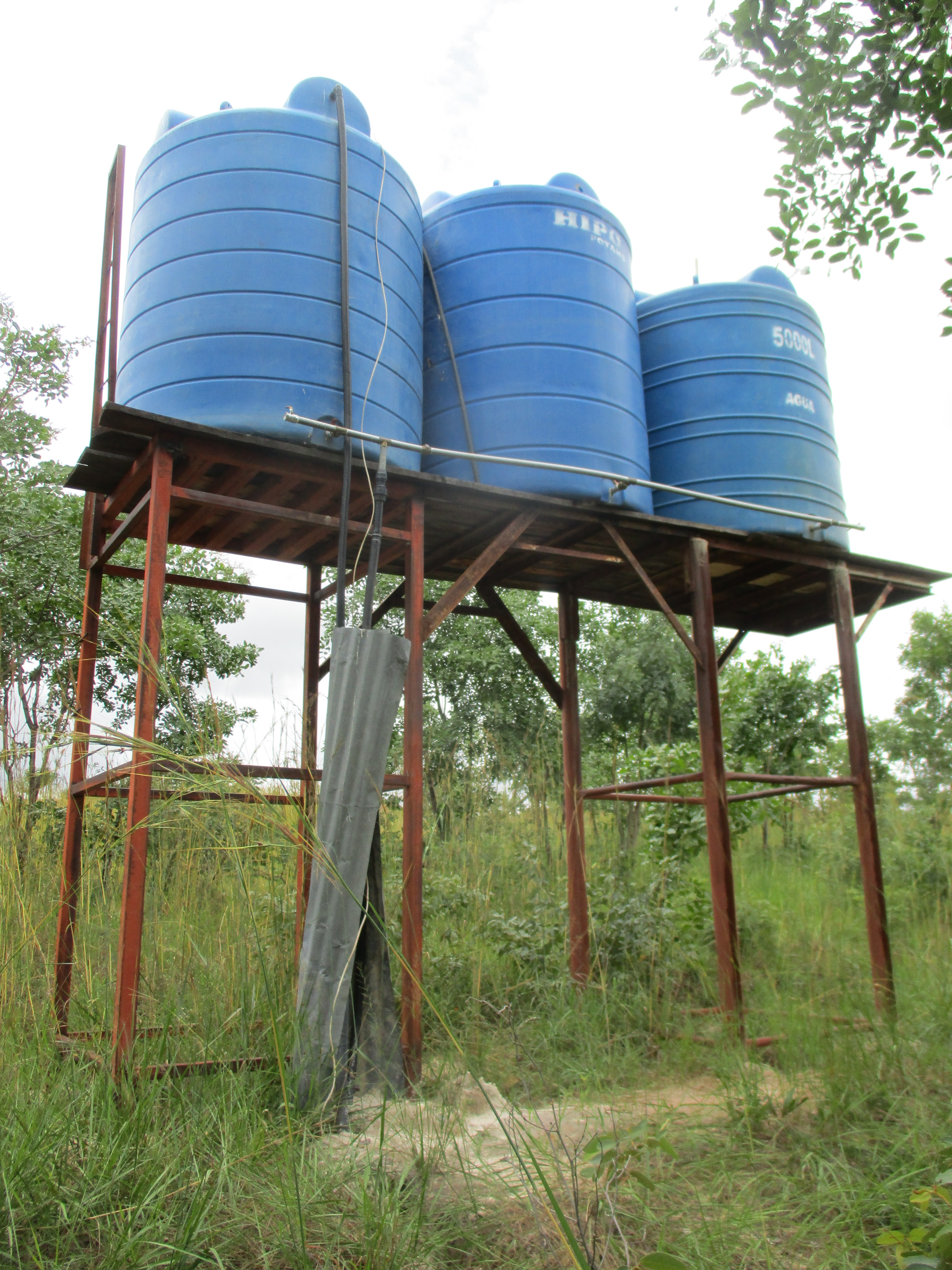
The OM mission base has amenities that are rare in rural Angola. Three giant tanks on the hillside provide gravity-fed water to the houses. The natural spring of water on the hillside is diverted into an in-ground tank to settle the silt, and the resulting clear water is pumped up to the water tanks. On-demand gas heaters produce hot water at the point of usage.
Church service
For the service that Sunday morning, we went to a church in town. The OM group visits churches in Menongue on a rotation, helping out as they can. They have found this to be an effective approach to evangelizing in the community. The students and some of the leaders rode bicycles, while the rest of us took the truck to church. On the way to the service, Wessel said that a man had contacted him and wanted to pray for me during the service; I asked how anyone even knew I was going to be there. Wessel said that it could possibly be someone from the government making sure I wasn’t spreading anti-government messages. For that reason, Wessel was wary of the man’s request. We soon parked at the church. The building was unremarkable, save for the sign out front announcing that it was an igreja (church).
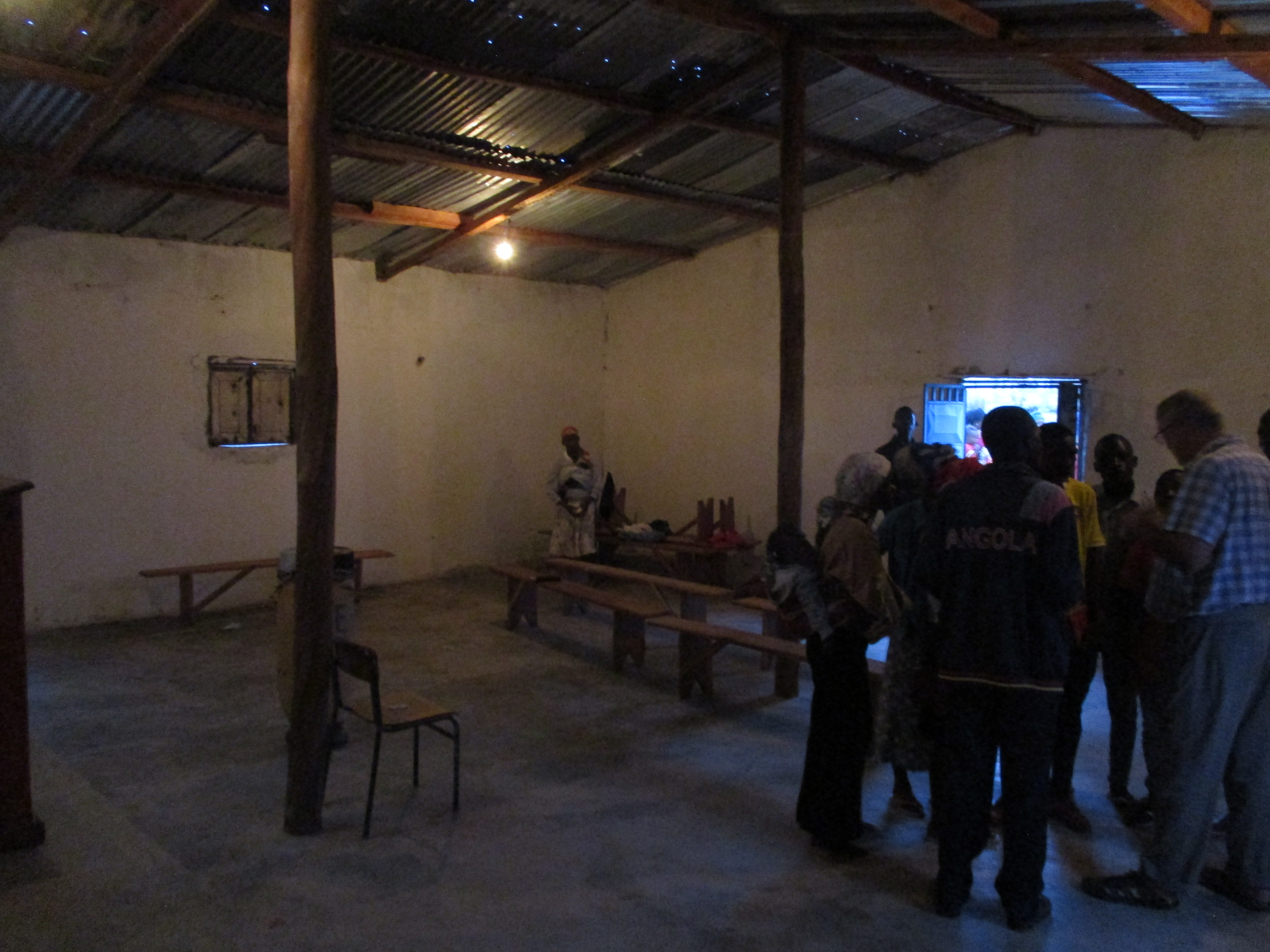
It was a basic block and metal building, perhaps 30 feet by 40 feet, with two windows and one door. Three bare bulbs dangled from above, the light from which mingled with tiny shafts of sunlight filtering through holes in the roof. The walls and floor were made of concrete, and the room had neither rug nor curtain to dampen the echoing sounds of enthusiastic worship. Over 100 people attended the service, with many coming and going during the meeting.
The group was energetic and clearly enjoyed singing, and the building was soon reverberating with sound. First, there was congregational singing and then different groups sang special numbers. The children sang, led by one of the OM mission students from a previous year. They were followed by the mothers of the church, and lastly, the young people gave a lively performance. The singing was accompanied by lots of movement, ranging from a swaying back and forth, to a tapping of the feet, to enthusiastic dancing in line around the central support post. Tall drums and a keyboard accompanied the singing and invigorated the outward expressions.
The little children assisted with gathering an offering, and a prayer was given. Then all of us from the OM base stood in front of the congregation while Ngunza talked about OM’s ministries, and a few of the mission students gave their testimonies. In the crowd was a well-dressed man in a dark suit with a bright red flower in the breast pocket, and he was accompanied by a woman and a child. As we stood up front, he arose and announced that they had recently moved to the area and wanted to join the church. After that, I was introduced as someone who was also planning to move to the area. Wessel, showing his joking side, whispered that I should say that I wanted to join their church as well. I merely expressed that I was glad to be in Angola and to worship with them.
Wessel had earlier asked me to work up a little message for the service. I had a short talk about Psalm 1 planned, but I was not called to give it that morning. Delfina presented a lesson on some of the influential mothers in the Bible. She relied heavily on visual aids, which are commonly used in both the children and adult services. Drama and visuals and song are all used to impart lessons. Barianne translated for me until Yakeem demanded her attention. Wessel translated after that.
Social calls
After the service, Wessel, Joan, Ngunza, Barianne, Yakeem, Ericleidy, Elisa, and I went to visit a friend of the OM mission who had invited us to join in celebrating his new job and newly-constructed house. The approach to the property was a muddy strip of road made nearly impassable by recent rains. His was one of the nicer homes in Menongue. It was situated in a sizable yard surrounded by a tall concrete wall. The property itself was high and dry, and after parking the vehicles we were ushered into the house. An eclectic mix of game shows and televangelism emanated from the television against the wall, its volume turned high. The sounds echoed off the bare walls and tiled floors as we were served a hearty meal of chicken, beans, rice, and fruit.
I added a banana to my plate and quickly regretted it. When I removed the peel, I was faced with a black, blue, and yellow mass. Back home, I would have deemed it inedible and been done with it. I cast about for a solution. I wanted to get rid of it – fling it out the door or stuff it in my pocket – but we were elbow-to-elbow around a small table with our host. I was hoping that my rising panic wasn’t obvious. Ngunza was my hero that day. He was in the same predicament. In a move that was probably not the heroic gesture that I made it out to be, he proceeded to cut up his banana and eat it with loads of rice, beans, and chicken. I followed his lead and made it through the meal.
I carried a water bottle with me everywhere and drank often. Nature soon called. Excusing myself from the table, I located the bathroom off the main hall. Holding the latch-less door closed with a mop handle, I turned to the task at hand. I encountered an arrangement that I was slowly getting used to. As was common in even the nicest homes, the toilet had no running water, and next to it was a barrel of water and a pitcher to facilitate flushing.
We soon departed to another part of town to visit a man named Isaac who worked for the ministry of education in Menongue. His first child had recently been born, and we were there to congratulate him. Wessel introduced me to him as someone interested in teaching programming and English. I told Isaac about my family and our plans to move to Menongue, and he asked about my technical qualifications. He looked me over and said that maybe he could present me to the local polytechnic college later in the week. I never figured out if our encounter with Isaac that day was coincidental or if Wessel had orchestrated it for my benefit.
Malaria conversation
Later that afternoon at the mission base, I talked to Wessel about malaria – one of my concerns about moving to Angola. He said he’d had it “millions” of times. Ericleidy had recently dealt with the disease, possibly having picked it up in Luanda. Malaria can take weeks to manifest symptoms, so the source of infection can be difficult to nail down. Once transferred into the bloodstream by an infected mosquito’s bite, the malaria parasite attacks the red blood cells, hindering the efficient transfer of oxygen through the body. The symptoms are achy and painful joints, headache, fever and chills, fatigue, and vomiting. As the infection progresses, it can cause mental confusion, kidney failure, coma, and death.
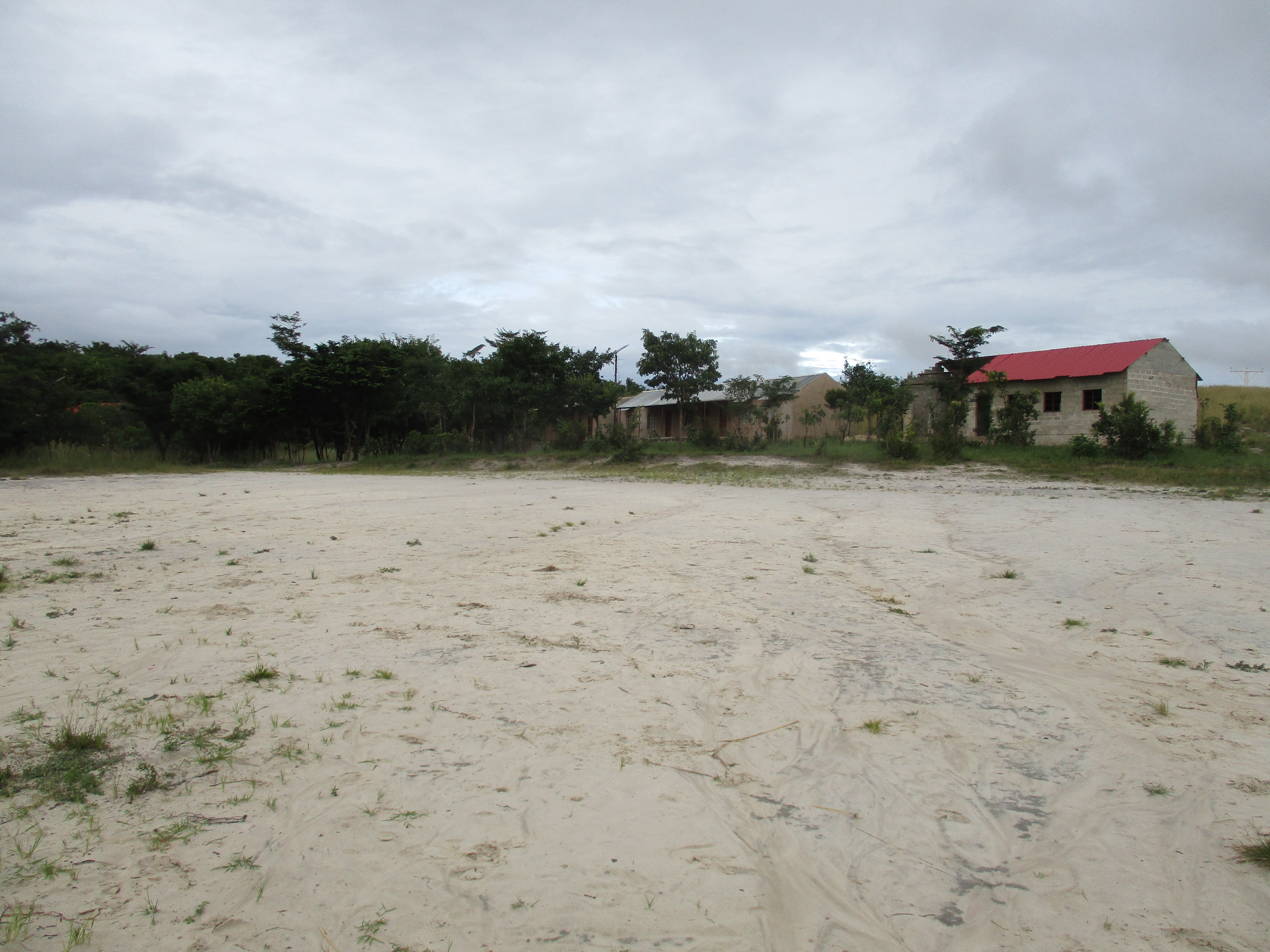
The mosquitos that carry the disease are active from dusk until dawn. If going out after dusk, it is prudent to put on repellent and keep moving so the insects have a harder time landing. Due to the time difference, the best time to call my wife, Carmen, was after dusk, and while making my calls, I would walk briskly around the big soccer field to give the sat phone full view of the sky.
They have a treatment for malaria at the base. It is a series of shots to be administered to the hindquarters, and each injection requires precise placement to prevent abscess. A quick-response test exists for detecting malaria, but it is not very accurate. However, there is a doctor in town who offers a cheap and effective test to the OM workers. A needle prick of a finger draws a drop of blood that is smeared on a slide and inspected under a microscope. Diagnosis is more certain, and the results are available quickly.
Evening
At the OM base, they have a tradition each evening of sharing their thoughts from the day or some short inspirational message. On that evening, I shared how Delfina’s lesson at the church had spoken to me, and how much I appreciated my dear wife, whom I could trust to take care of my children and home while I was away. My journal recorded something disturbing from that day:

 Welcome to Angola