
Sphere of influence
When the Angolan government granted land for OM to build the Menongue base, the property was outside the city to the northeast in a rural setting. Since then, Menongue had grown toward and beyond the base. Some of the land around the base was granted to Angolans returning from other countries after the civil war ended in 2002. These were the Luchazi people group, many of whom had fled to Zambia. The Angolan government had promised to help these expats return to their home country. The government gave them land, but other than that, they were given little support. So that made two underserved people groups within the OM sphere of influence: the bushmen and the Luchazi.
Jose’s discipleship meeting
We started Wednesday earlier than usual so we could get to another discipleship meeting at the far west end of Menongue by 6 am. It had rained a lot the night before, and the roads were wet and very rough. Despite the unpleasant conditions, 18 people were in attendance. Joan told me about the leader of this discipleship group, Jose. When she first met him, he was 12 years old, sitting under a tree and teaching a large group of children. She took him on as a disciple and taught him how to effectively conduct children ministries. Now, at age 21, he had a group of disciples of his own. He met with them regularly, and we were there that morning to support his work. His lesson was on the authority of the Bible and titled “Who wrote the Bible?”
Jose read the Bible in both Portuguese and the local dialect. His message was direct and simple. All knowledge is from God. God had man write the Bible so we could understand it and relate to it. It was written by many people in many countries over many years, yet tells a single, overarching story. The Bible tells us about God and salvation. Only by following the Bible can we hope to reconcile with our Creator. Herivaldo testified that God had showed him that he was in the world but did not have to be like the world. At the end, Jose asked “Papa Miguel” (me) to offer a closing prayer.
Practical work day
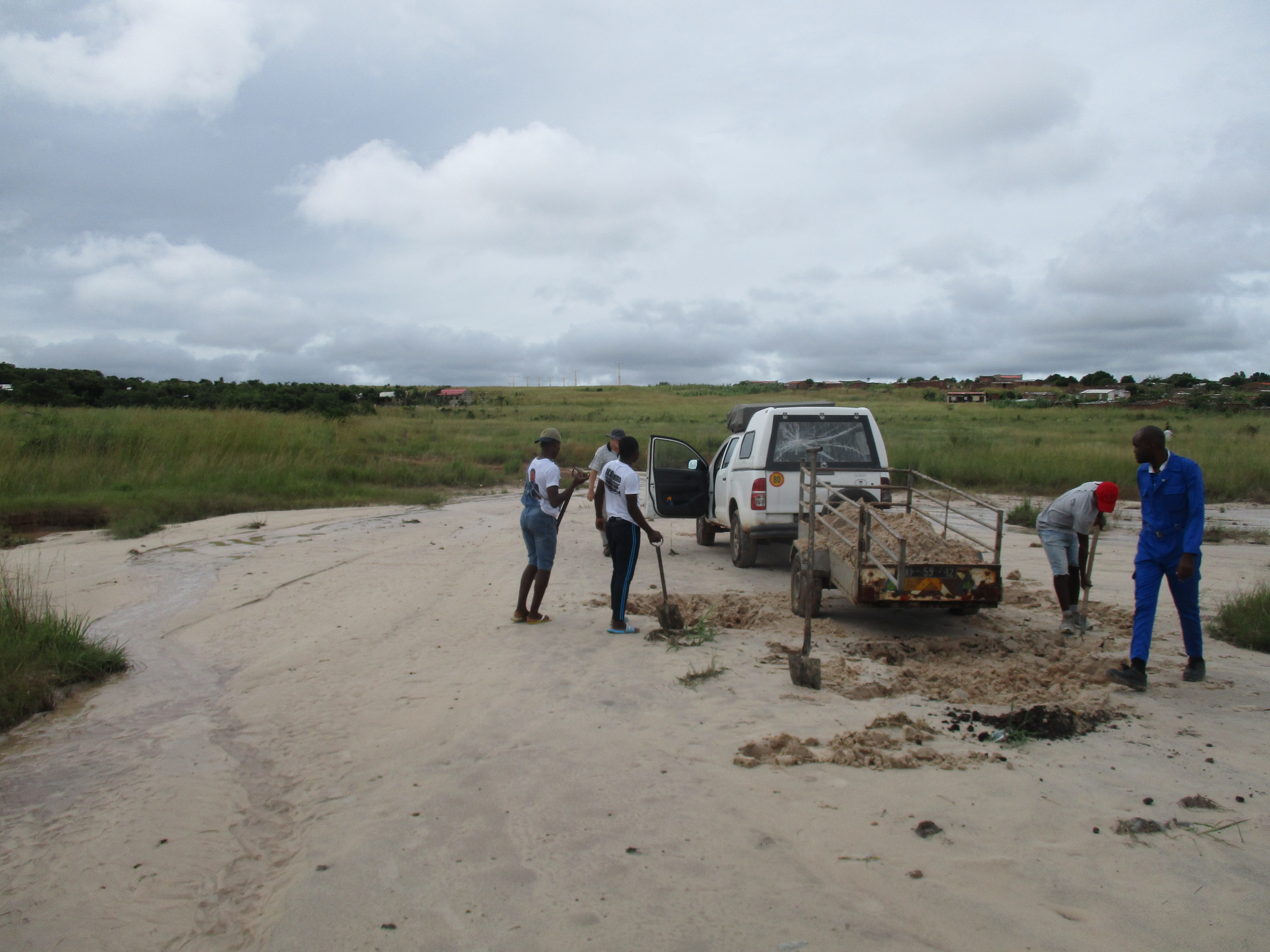
Wednesday of each week was a practical workday for the mission students. They would do some form of physical labor or practice some useful skill, typically around the base. On this workday, we went down to the Cuebe River below the base to collect sand for the new academic school building under construction. The sand would be the base for the soon-to-be-laid concrete floor. We got a trailer from the old barn yard, cleaned it out, and hooked it up to the truck. Wessel drove us down to the riverbed. I rode with the students in the trailer, half standing and half sitting to keep my balance. The students and I filled the trailer with sand, each one taking his turn wielding a shovel. We then rode back up the other side of the gully and emptied the load by the unfinished school room. They continued with their workday, but I had to leave, as it was time for Elisa’s agriculture class that had been postponed from the day before.
Agriculture
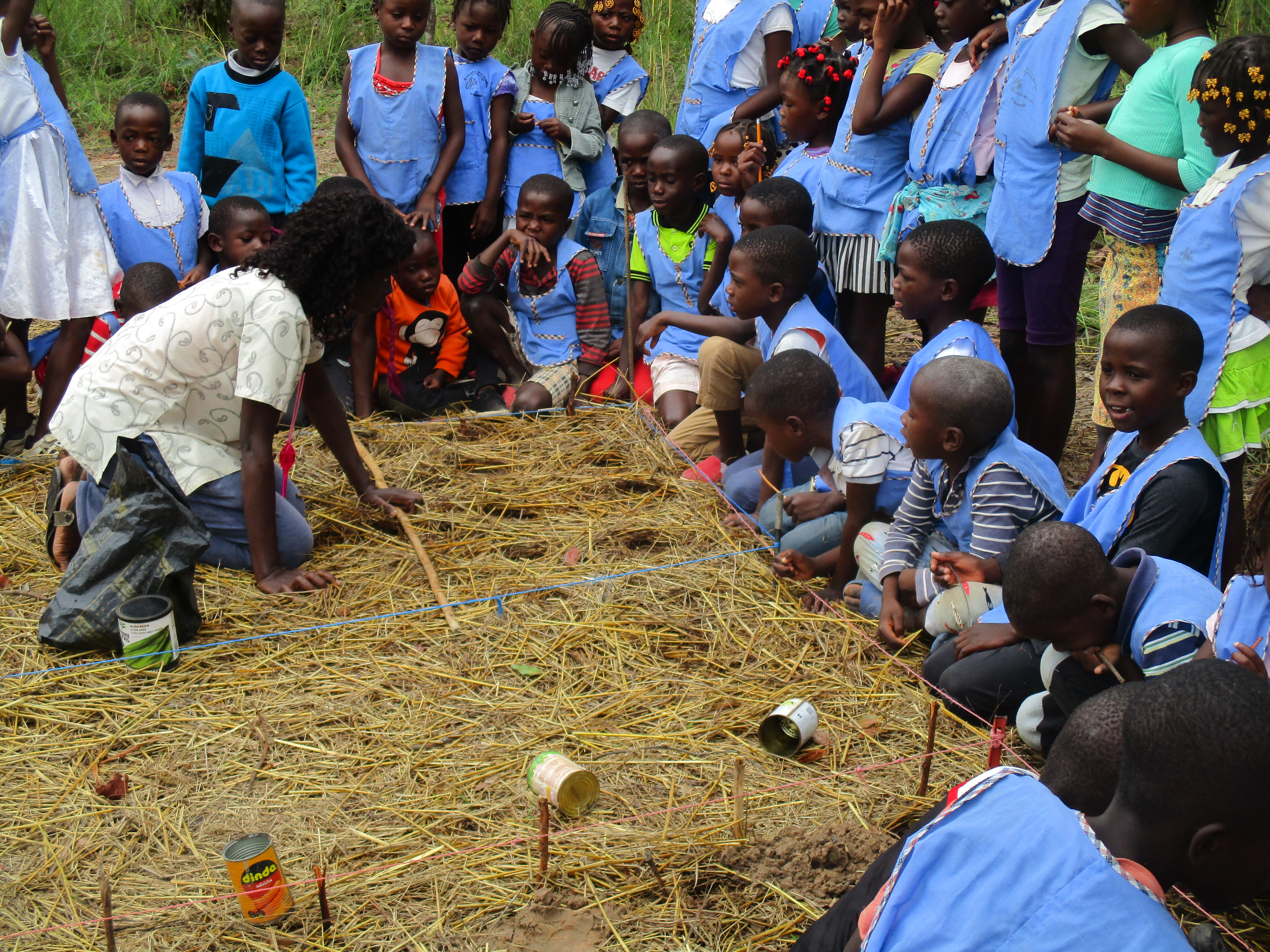
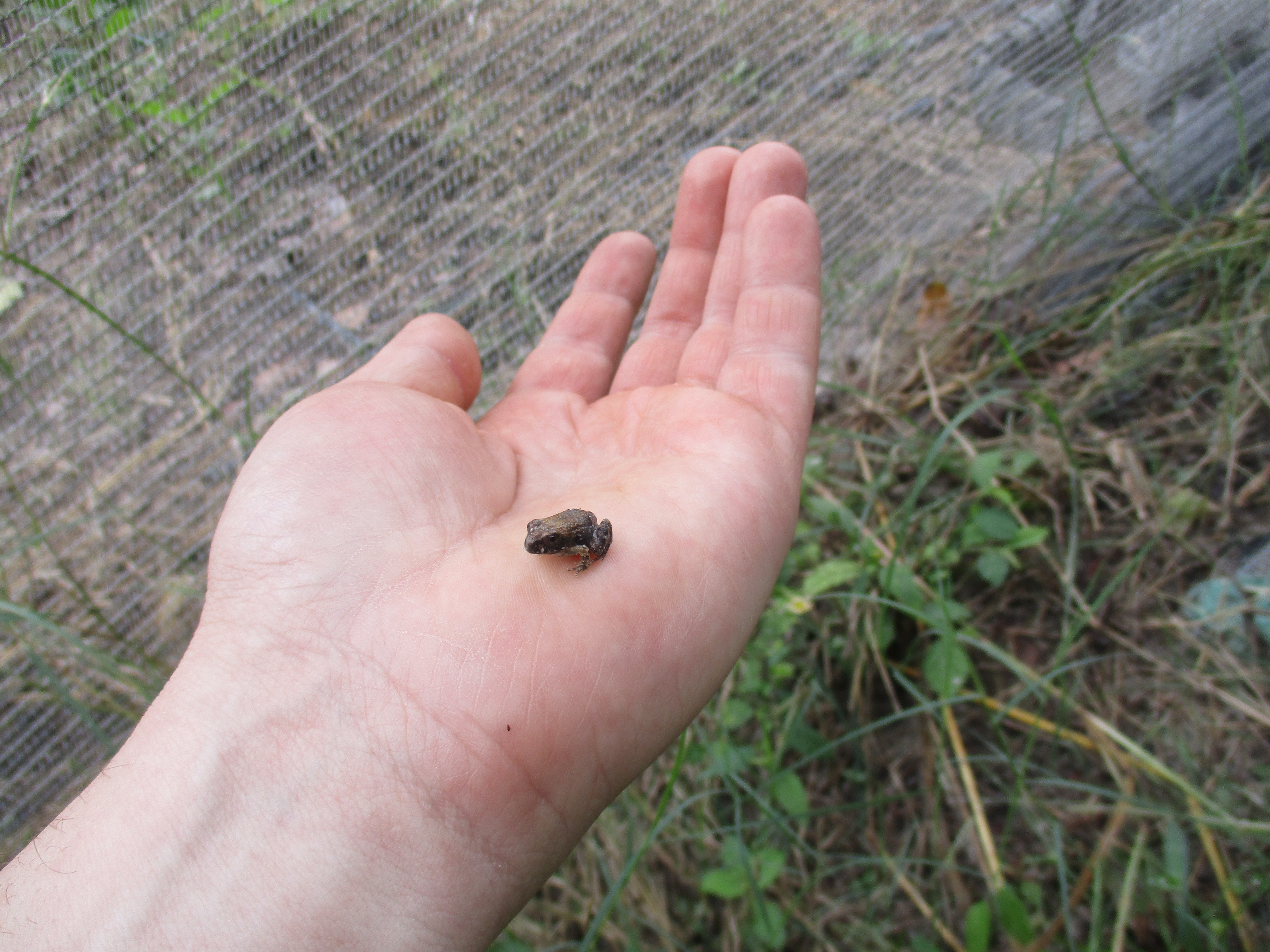
When I arrived, the children were learning how to plant seeds, which was the focus that year. Joan was also there, and she told me about their program. In the previous year the children had learned how to make compost and compost tea and how to properly feed and water the plants. They were growing kale inside the chicken-wire fence. There were lots of dragonflies and many frogs around, including a tiny species of frog that stays very small.
Considering the ever-present danger of mosquitoes, it was a relief to see such a variety of insect-eating animals. Many different species of dragonfly patrolled the grounds. They came in many sizes and colors, including one that was a beautiful orange. Small frogs were around during the day, and big toads came out at night while the mosquitoes were most active. Aside from the mosquito predators, quite a few butterflies could also be seen fluttering around the base.
Every subject taught at the academic school includes an element of Bible teaching. It is incorporated into the agriculture class by teaching that God has given us everything we need to provide our own food. He has given us seed, soil, water, and sun, and He provides the increase. Therefore, even as we are planting and harvesting, we are to give God the glory and thanks.
Joan spoke about an opportunity they had to train the government’s agricultural staff in the country’s provinces. A man with a compost factory gave the government seeds when they bought his compost. They asked him to provide training for the government personnel, so they could learn the best practices of agricultural care. He said he didn’t have the capability to do that, but that he knew of an organization that did. When approached by the government regarding the training, OM said that the Bible message came along with the training, and the government officials agreed to that stipulation. So it was that the OM group was able to give each government employee a Bible lesson along with some practical training.
While I was watching the agriculture class, Wessel came down from the main house with his electronic tablet. He asked if he could record a short video of me stating the purpose of my visit. I took a few minutes to compose my thoughts and then gave a brief history of my trip, that I was from the US, had a wife and four children and a degree in computer science, and that I was in Angola to see if we should move there to serve. He thanked me for the short video, and I remarked with a smile, “You like putting people on the spot, don’t you?” which received a laugh.
Luca’s mud work
After agriculture class, I went to the unfinished house to watch a worker put the mud-clay finish on the inside walls. His name was Luca, and he was once a mission student. He asked me where I lived, but it sounded like “leave” so I said I was leaving on Sexta-feira (sixth day, Friday).
Clearly not what he expected, he said it again and offered, “Namibia? South Africa?”
I said, “United States.”
“United States?”
“Yeah, America.”
“That’s very good.”
I nodded my agreement. “Yeah”
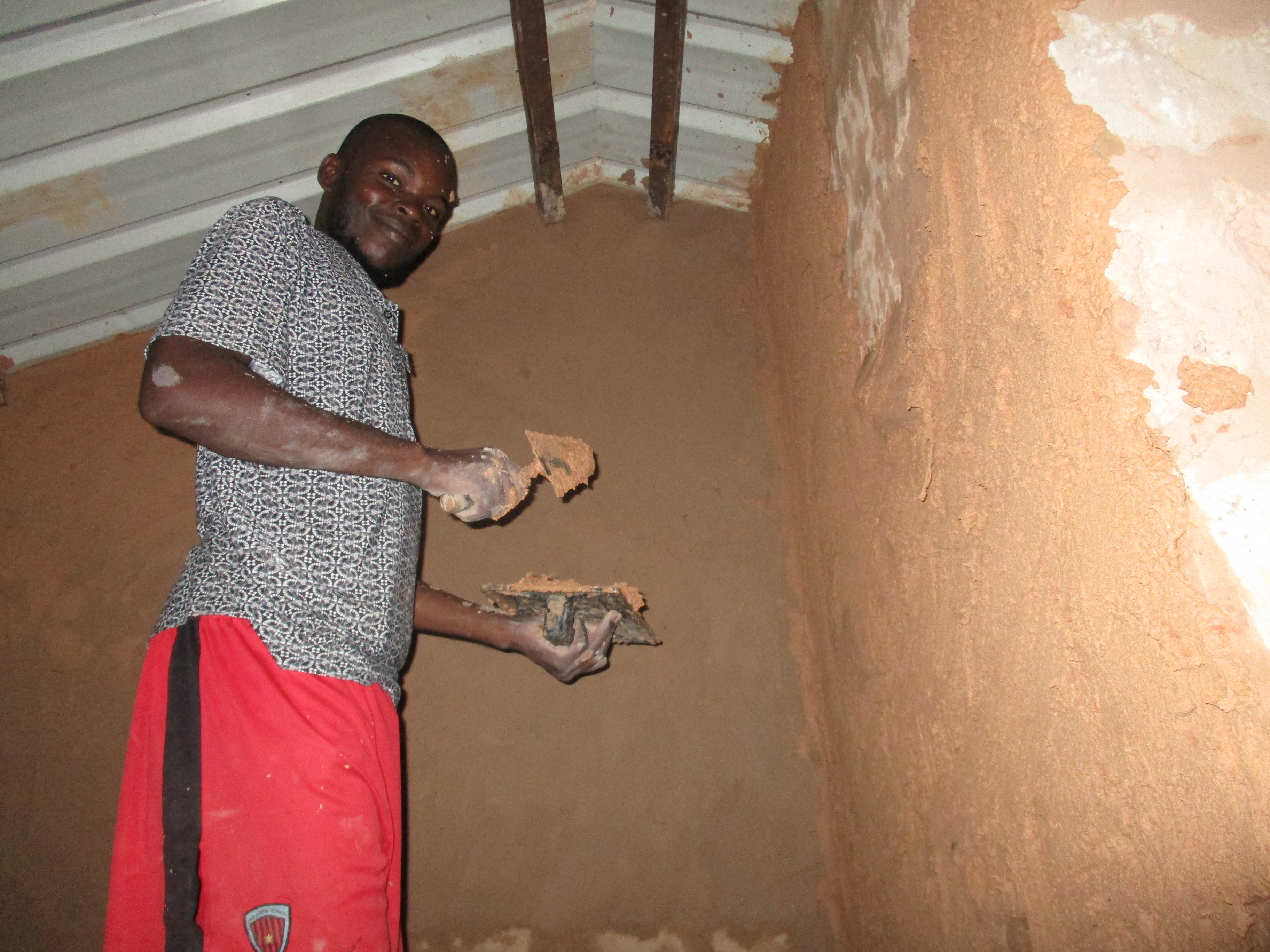
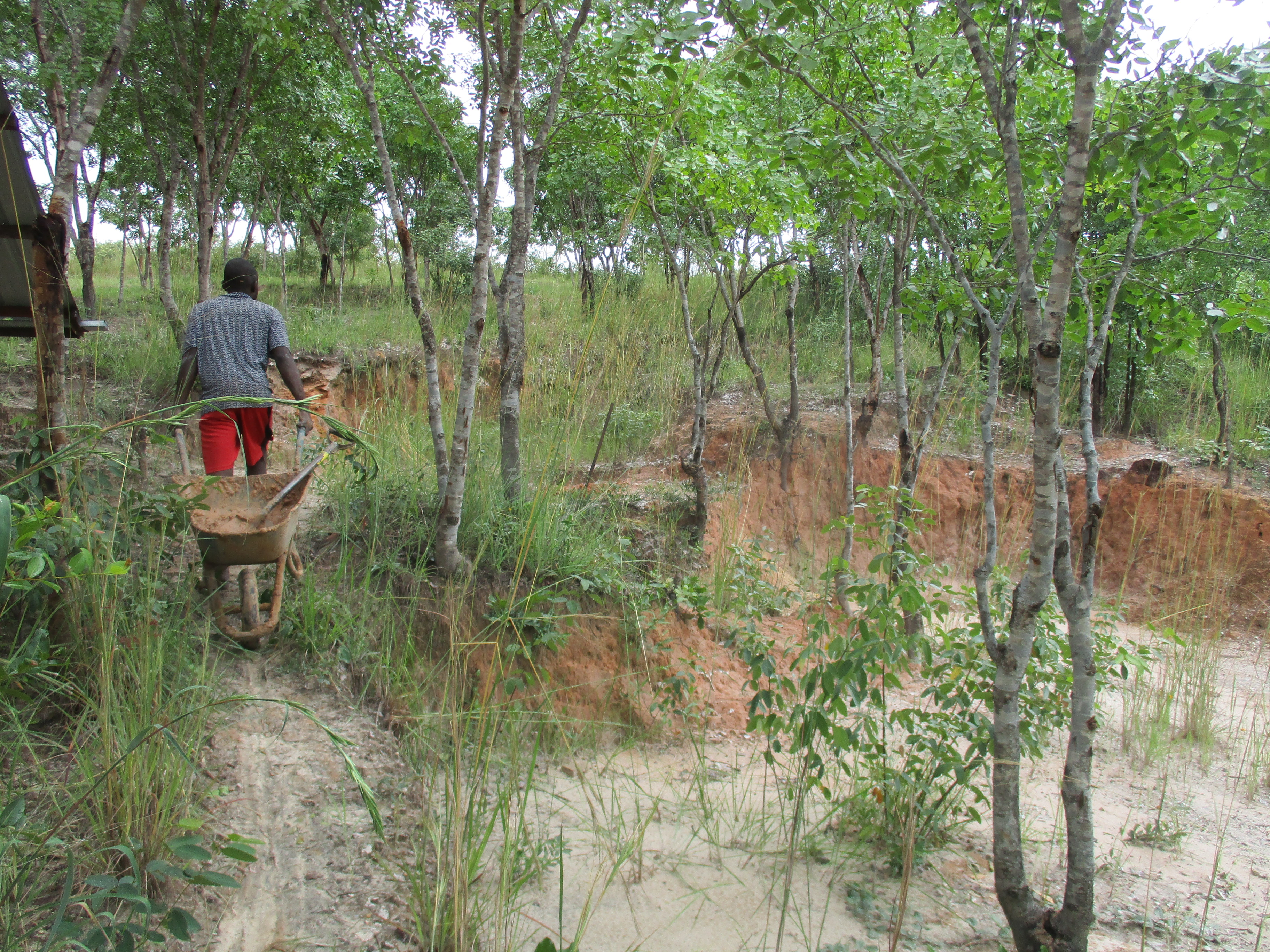

Luca was up on scaffolding with his mortar board piled with mud. The technique looked simple, but it no doubt took a lot of practice to perfect. He repeatedly scooped some clay with his trowel and flung it at the wall, his movements fast and precise. He then scraped some off the wall and threw it back on with a twist of the wrist. Each section sat for a few minutes, and then he re-wetted the wall and smoothed out the mud. After that, it looked pretty uniform, but he went over it once more to give it a very polished finish.
When he ran out of material, he went around the back of the house with his wheelbarrow and dug into the hill of red soil and clay. Back inside, he added water and mixed it all together, bugs, leaves, and all. Once mixed, he refilled his container on the scaffolding, and the process began again.
Women’s prison visit
The day was still not over. After watching Luca for a while, it was time to visit the women’s prison in the afternoon. The prison guards were familiar with the group from OM, and allowed me to enter with them. Joan had impressed upon me the importance of proper behavior while we were guests at the prison. We left our phones and anything of value in the car.
I was surprised to see children inside the prison. If there are no other family members to care for them, young children can stay with their mothers. I assumed this kept the kids from being wards of the state and encouraged strong family bonds, and I got used to seeing the little kids running around. OM had been working in this prison for several years, and the women – and the guards – were welcoming and friendly. The prison environment was less intimidating than I had expected. It was comprised of a large grass courtyard with many cells around the perimeter and an administrative building at one end of the courtyard. The inmates were not confined to their cells. A woman was washing clothes in a basin; a child clung to her leg and stared curiously at the visitors.
When OM workers first started this prison ministry, they were told not to hug the inmates. They respectfully challenged that restriction; they argued that without the ability to express love to the inmates, their efforts would be ineffective. The officials saw the logic in that and agreed to let them give hugs to the inmates.
There were several inmates and a few children at the presentation, and a guard also hung around for the talk. Elisa taught a lesson about how sin can tear down a person from being a good member of society to being broken and twisted. She described how sin changes the feelings that we experience, for example replacing love with fear, and then this changes how we behave. She concluded with the truth that only the power of Jesus Christ can restore us.
Challenges
I talked to Wessel that evening for quite a while. The conversation revolved around challenges that Wessel and Joan had faced in their mission work. A decade ago, all of Wessel and Joan’s possessions were lost in a container fire. Some money had also been stolen from Wessel some years ago by a trusted colleague; it was eventually restored, but it was a very challenging time. One year, they discovered that one of the mission students had been trying devil worship, probably due to peer pressure from outside the OM group. He had used a pentagram several times, and he had severe scratches on his upper arms, typical of such practices. The leadership team could tell that he was being resistant, and they were able to get him to come clean about the practice. They worked with him to stay at the base, and he was able to graduate that year.

After the evening meal, Ngunza shared an observation on perseverance. That day, he had worked many hours breaking up the concrete floor of his house in order to access the plumbing. The floor was hard and progress slow, until he got down to the sand just under the concrete, which of course was very easy to work with. He said that when we persevere, we eventually see the reward of hard work.
I had not been regularly taking the malaria prophylaxis (preventive medicine) that had been prescribed for me. I hadn’t seen many mosquitos, and besides, I didn’t like the sound of the medicine’s side effects, which included dizziness, problems sleeping, and general malaise. After a couple of short nights, I was feeling very tired, and fatigue is a symptom of malaria. I started taking the medicine but at a reduced dosage. I thought it would be a good idea to ration the pills, even though I should have had more than enough for my scheduled time in Angola…

 Welcome to Angola