
Making the most of a bad situation
Malaria dominates life here, but not in an overt sense. It is not the topic of daily conversation, and there is no sense of terror. It is just a fact of life – like earthquakes in California, tornadoes in Kansas, and poisonous rattlesnakes in Arizona. The danger is known, but life goes on and the threat is managed. Malaria’s dominance is instead seen in the day-to-day response to its carriers, mosquitoes. Sleeping under a net every night increases life expectancy. Mosquitoes become active at dusk, so we adjust to their schedule. Dusk is bedtime, and the day starts early.
So it was that I found myself up at 5:30 on the first day of Angola’s lockdown. There was much to do before breakfast. I was supposed to go home on that day, but I would remain a guest for an unknown length of time. I was determined that the reality of my predicament should stay in the background – present but not focused on. Life would go on, and I would manage. Now that I was faced with this unexpected situation, I was determined to make the most of it. I refused to turn inward and be immobilized by the enormity of my predicament, stranded 8,000 miles from home.
Instead, I felt a firm sense of peace about it. It had dawned on me that there had been a tiny window of opportunity for this to happen. If my trip had been shifted one day later, I never would have left, because I would have heard the news that the president had closed America’s borders. Had it been shifted one day earlier, I would have made it out of Angola before the curtain fell. There was no way to shake the feeling that I was meant to be right there at that time. And if God had a further purpose, I was not going to miss it feeling sorry for myself.
The full effects of the lockdown would take a few days to get to Menongue. Things were going to get a lot worse before they got better, in Angola and around the world.
Discipleship service
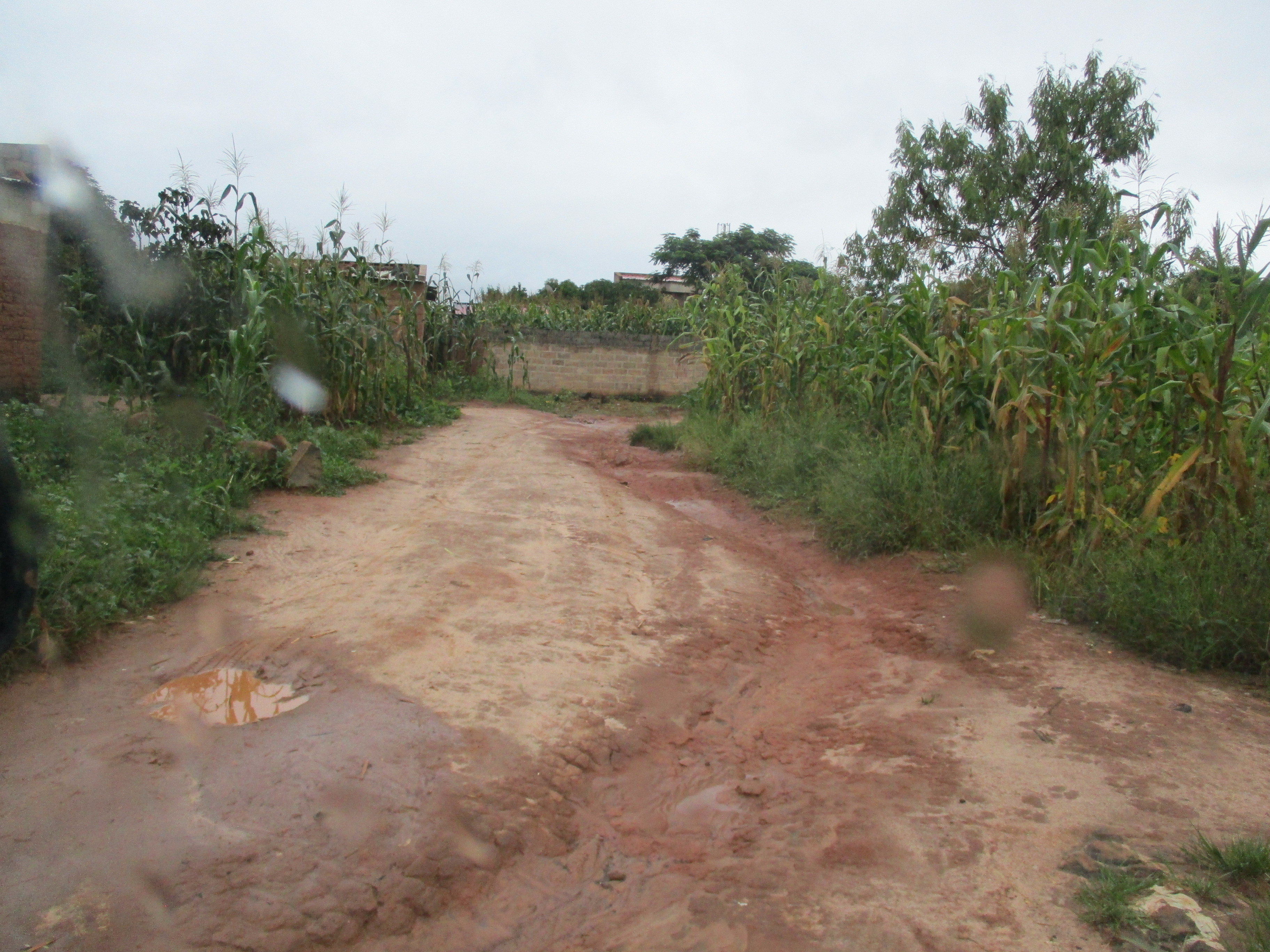
The first order of business for the day was another discipleship service at a church. Ericleidy drove for us. It was the roughest road I had been on yet, at time reduced to little more than a vague path through tall corn stalks that seemed to grow wild all over the place. The trail ended abruptly at a house blocking the path. Ericleidy carefully backed up and tried another way. After a few more wrong turns Joan seemed to recognize the area. We got out and walked a few hundred yards through the tall grass and corn to a clearing with a church in the center.
It was a well-built structure with outside lighting and heavy double doors. The interior was dark with a pleasant earthy smell, the floor compacted and smooth. The roof beams hung bare in the space above. A few faithful women and children were in attendance, as well as the local group leader. There were several songs followed by a message from Ericleidy. Then I was asked to share again, why I was there, why I was stuck there, and why I was at peace with the whole situation.
Visiting Jose’s ministry
After the meeting and the short walk back to the vehicle, we continued to the school that Joan’s protégé Jose was directing. As we pulled into the property, there was an old structure like a church to the left, and to the right was a bigger, unfinished block building at the back of the property. It was an airy edifice with a high roof and large openings where the future windows and doors would be. Running across the property was a partially built wall of cinder block. There was a sense of slow but constant progress, like many places I had seen. The Angolans are building for the future, but it takes time and other precious resources to get there.
Out front was a circle of women talking with Jose. They greeted us all warmly when we parked, and Jose greeted me with “Thank you, Papa Miguel” as I put my arm around him in greeting. Tall and handsome with a ready smile and kind, clear face, Jose is instantly likable and has the easy manner of a natural leader. This school is one of many that OM disciples have started. Wessel and Joan are faithful to support and advise without interfering or controlling. Laughing and playing all around were dozens of children with a wide age range.
We stepped out of the brilliant sunshine into the dim closeness of the old building. Once my eyes adjusted, I could see numbers and symbols on a chalk board on the wall. A row of benches faced the chalk board. It was a math class. In that single classroom, the children took turns learning their subjects. They were making the best of the resources they had.
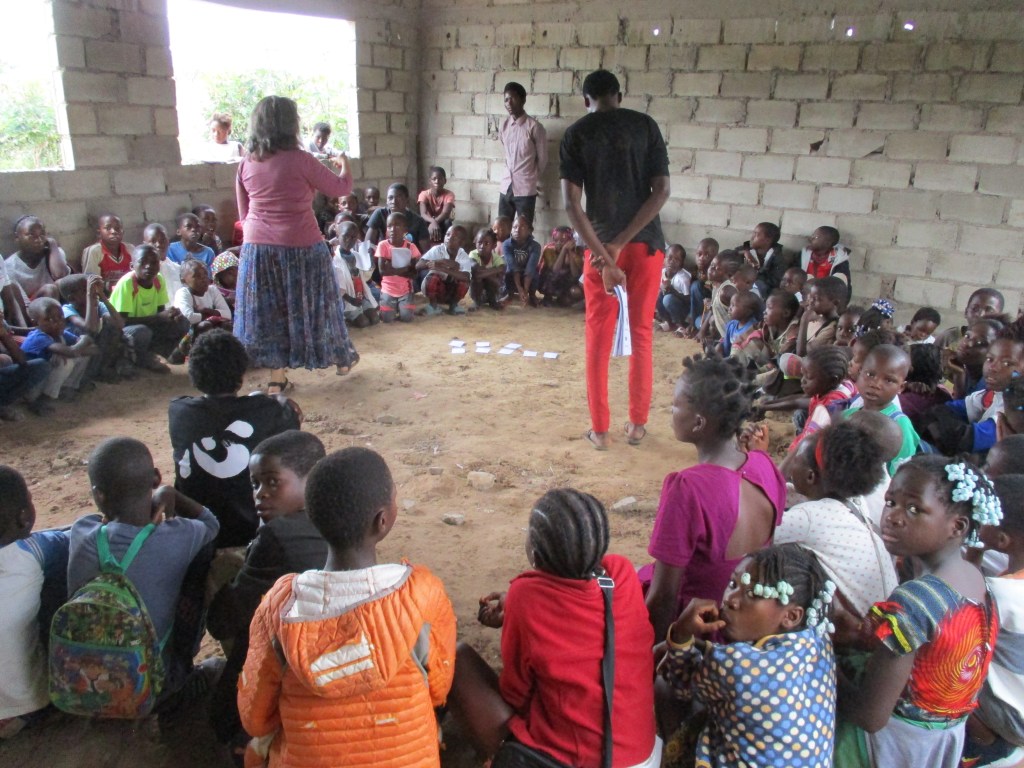
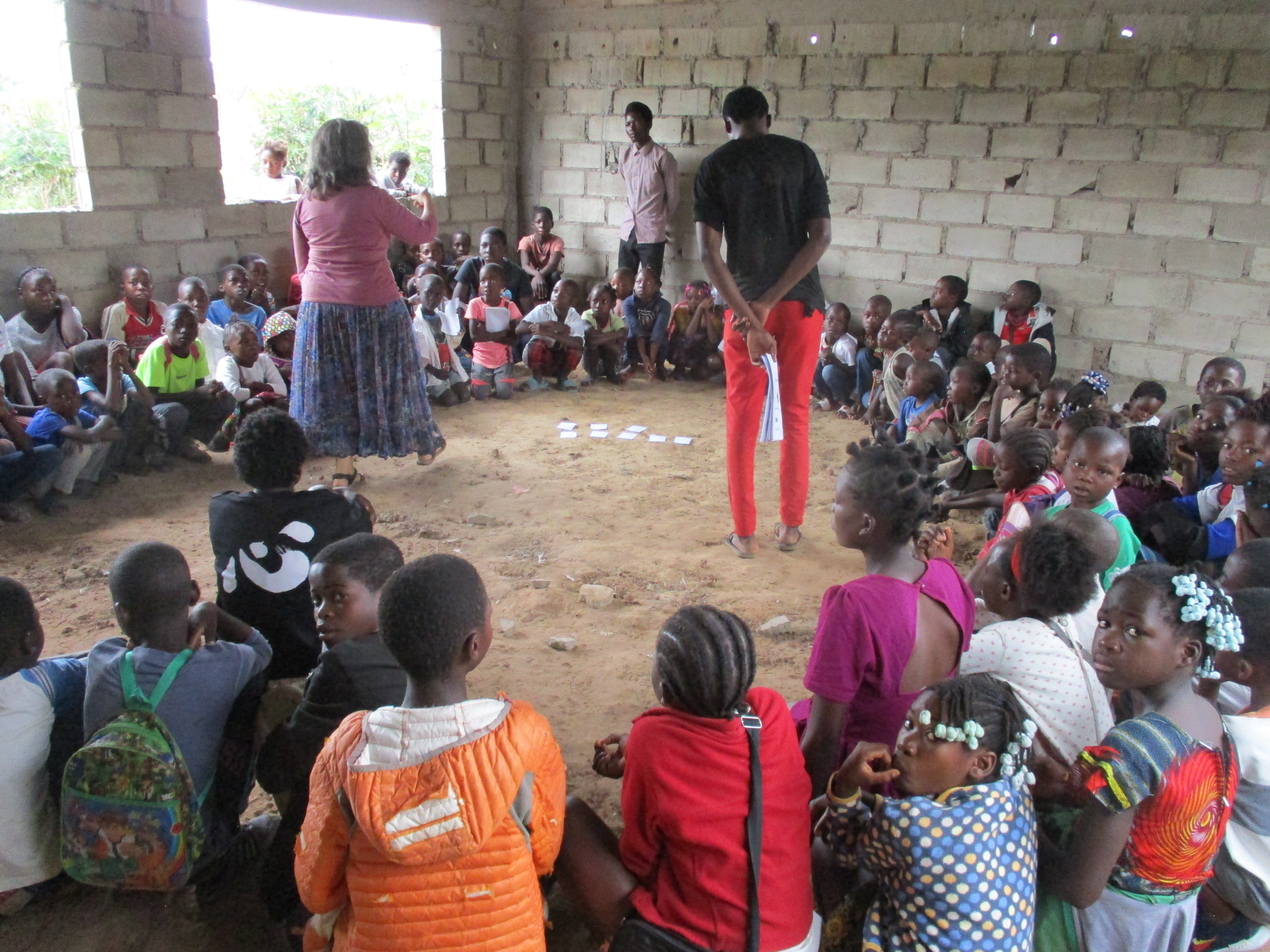
We went outside to the new open-air building. Throughout Angola, there is a hunger to learn, but teachers and school buildings are in short supply. We were there on that day to help fill the gap in a small way. Children of all age groups gathered and sat in a circle on the unfinished floor. I stood out of the way to observe, trying not to look conspicuous and failing at it, based on the many curious eyes looking over at me. Joan and Jose greeted the children, and Joan explained who I was and why I was there. She liked to ask each new group of children where they thought I was from. Several incorrect guesses were offered, including Brazil and Canada. In hushed tones, a few finally ventured “Estados Unidos.” Apparently, Americans don’t often make it to their corner of the world.
I didn’t have anyone to translate for me that day, but I could tell that one of Joan’s academic lessons focused on numbers in both Portuguese and English. The more they can learn English, the more they can participate in the global economy of marketable skills, one of my reasons for my interest in moving to Angola. I don’t know if Joan teaches English every time, but it is a coveted skill, and it certainly fit with their visitor that day.
The number lesson was followed by a biblical lesson that children could relate to. The story was told that two children were playing with a toy car, and the car broke. Their grandfather was able to fix it and make it work again, something the children could not do. Joan asked me to be the grandfather, so I pretended to fix the invisible toy on the floor, using my imaginary tools. The story illustrated how our Heavenly Father can fix the problems in our lives that we cannot.
Preparing for lockdown
If Angola followed the pandemic script of many other countries, it would soon put harsh measures in place to try to halt the spread of the coronavirus. There was some business to attend to in Menongue, and I wanted to see the shopping options available, so we set aside the morning to take care of these things. After breakfast, Wessel and I headed to town in the truck.
Our first stop was the bulk store. All manner of daily products were available there in bulk, like large bags of grain, big packs of diapers, and multi packs of shampoo or ketchup. It was like a small-scale Costco. Some of the items on the shelves could be reached, but others were displays and had a code for ordering. A little window was open to the side for placing and paying for orders. Most of the products were in the back room of the store. Workers appeared from the back carrying various items, and they were quickly claimed by the folks who ordered them. Trying not to feel like the proverbial sore thumb, I walked around, making note of products and prices. The entire store front opened right onto the sidewalk, and there was a mass of people in the entrance. Some were waiting to put in an order, some were waiting for their purchases, and others just seemed to be socializing. I noticed that some people were wearing some sort of face covering; the global pandemic was starting to have a local impact, but stores and markets were so far largely unaffected.
We also went to the local Shoprite, a common grocery store chain in Africa. We were required to wash our hands at a water jug and bucket out front before entering. Inside, the store was like any small-town grocery store in the US. It was stocked with most of the products you would expect. One purpose of my visit to Menongue was to determine what products we needed to take to Angola and which could be bought once we got there. I had a list of items with me, and I set about checking prices and availability. I had only made a dent in my list, when Wessel announced he had found what he needed and it was time to leave.
“Are you done? We need to be going.”
“Well, no. I still have a lot more to find.”
“Oh, you will get another chance to come back before you go”
“Well, OK.”
We had one more stop to make, and that was the bakery where the OM base gets its bread. Several mornings a week, someone from OM comes to the bakery to buy a hundred of the small rolls that are served at nearly every meal. Wessel wanted to stop in and talk to the owner. He haggled over the price a little, and we ate some delicious sweet bread. I enjoyed the thought that my family and I could someday visit the little bread shop for an occasional treat.
Shabbat night
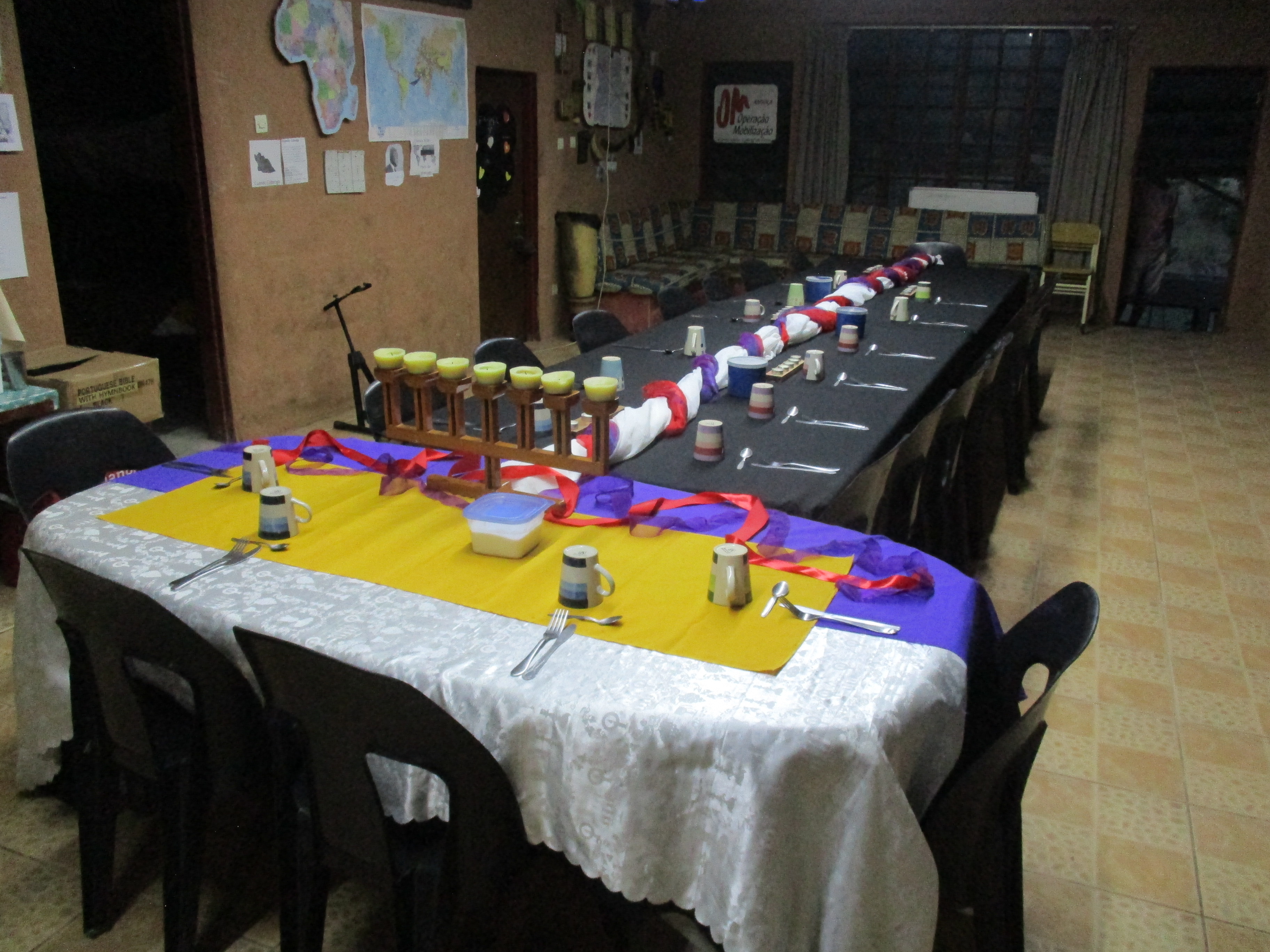
Friday night at the OM base is “Shabbat” night, a tradition borrowed from Judaism. It is the night before the Jewish Sabbath day, and the Judaic tradition is marked by blessings, prayers, and reflection. The OM group decorates the table in bright colors, and Wessel gives praise and blessings to his wife, the leadership, and the students. The meal that night was a watery flour grilled to a type of thick tortilla. There was a hint of fish or other meat broth mixed in for extra flavor. Games and other diversions are also a part of the Shabbat celebration in Menongue. This evening, they played a video of the previous year’s highlights, including their trip to the bushmen.
After the festivities, most of the people headed to bed. I stayed up and talked to Wessel about the events of the day. I was supposed to be on my way back home, but instead I was still there. I was sad not to be going home, but excited to see what the next weeks would bring. Wessel told me the government had closed all the schools, and they were restricting group sizes to no more than 10. Elisa and Joan arranged for 10 school children at a time to come on alternating days. The children were glad to keep attending school and not get too far behind on their studies.

 Welcome to Angola