
Purpose
Tuesday dawned another beautiful day. It was a pleasant time of year in Menongue. The days were warm but slowly cooling as Angola transitioned into the cooler and drier season when the mosquitoes would be less plentiful, thus less deadly.
My purpose for coming to Angola had been to determine compatibility with the work in Menongue, to figure out if we belonged there. In the few days that I had planned, I hadn’t felt a distinct confirmation either way, and I was wondering what the OM team thought of me. I assumed that there was a purpose to being stranded, but I wouldn’t find it by feeling sorry for myself. To cheer myself up, I made my way outside and took a survey of the fowl. I found two more dead ducklings. I told Wessel about their early demise, and his response was an unsurprised, “Yes, they die for nothing.”
I was not cheered up.
We went back to the fenced fowl run to check on the conditions. Together, we cleaned up the pens and swept out the shed. He shared how to keep the bedding clean to prevent parasite infestations.
Culture
Our talk turned to cultural expectations and how people need to be careful in their cross-cultural dealings. Wessel related a few things he had learned about the local Luchazi culture in Menongue, how they kneel to show respect, and how something as simple as the position of your hand for a handshake can convey respect. His point was that careful study of the culture could avoid unintentional offense.
I contemplated this concept for a while, and later I offered him a scenario for consideration: In many cultures, it is customary to stand to show respect, but in the local culture, kneeling conveys that sentiment. Through ignorance, pride, or mere habit, a missionary to the Luchazi could insist that his congregation stand for the reading of the Bible. If this goes on long enough, and then the missionary leaves, the people might continue standing to read Scripture. At that point, though, standing would be nothing more than a ritual, completely disconnected from the original purpose of showing respect. By failing to appreciate and understand the local culture, one could unintentionally introduce rituals and even cause divisions over minor things.
We both agreed that the proper way would be for the missionary to learn about showing respect in the local culture, and then tell the congregation that they would kneel for the reading of the Word. Because the action would line up with cultural norms, the congregation would understand that the kneeling was to show respect, not just some ritual to perform.
Light Fixture/rivets/Philip
As my extended stay in Menongue lengthened, I was eager for more work to keep me occupied. Wessel had a few tasks that I could do, nothing big, just a few things that had been piling up: a broken light fixture, a door wobbly on its hinges, and a broken table in a classroom. I worked with Filipe, an Angolan who returned from Zambia a decade ago. His family had migrated there, and he had learned English while away. He told me his English name was Philip, so I called him that while I was there. Philip helped me find tools and materials in the shed. I scrounged some wire, pliers, drill, and rivet gun.
As I was walking with my gear, I met Ericleidy as he came from a session of teaching the next generation of Angolan preachers and missionaries about reaching souls for Christ.
“What are you doing?” he asked.
“Working. What are you doing?”
He shook his head and admitted, “Nothing.”
I patted his shoulder and added, “More important stuff than I am, no doubt,” as I smiled and continued on my way.
My first order of business was to replace a burned-out light plug on the porch of the academic school. The porch was a monolith of concrete overlooking the soccer field. It spanned the width of the first and second grade classrooms and was shaded from the sun by an awning. The schoolrooms had their own photovoltaic system, but the lone outside light had not been working for some time. Removing the old fixture was easy enough, but I found the wires did not have enough slack to connect to the new fixture. Ignoring what little I knew about electrical codes at home, I got the fixture working with a short extension of wire.
The next tasks were literally riveting. One of the heavy metal classroom doors was loose in its frame, making it unwieldy to operate. I needed Philip’s help. While he held the bulky door, I bored a few holes through the hinge and into the frame. Firmly driving a few rivets through the holes made the door sound again. It could open and close without a hint of wobbling. I gathered my tools and sought out my next patient.
It was a plastic table that had been broken – shattered might be a better description – and the pieces cobbled back together. But despite the valiant efforts of the previous repairman, one leg simply refused to hold its share of the weight. The underside was festooned with an array of plates, screws, and rivets to the extent that finding a location to apply a fresh patch was difficult. I mused to myself that they could have constructed a new table with all the repair material they used. But of course, repair and reuse were always the watchword, as replacing things was cost prohibitive. With some creative trimming with tin snips, I fashioned a repair plate that would just fit in the last available bare spot, and a few more rivets gave the structure just enough integrity to be serviceable.
Snake bite woman
Once I had wrapped up my work, I found that Joan was going to revisit the woman with the snake bite, so I went along. Joan is trained in nursing, but she does not work in a hospital setting. She does what she can for the surrounding neighbors, and she uses as many natural remedies as possible. This not only fits in an environment where medical supplies are short, but it also meshes well with the lifestyle of the locals. The library at the OM base contained several “village medicine” titles, such as Where There Is No Doctor.
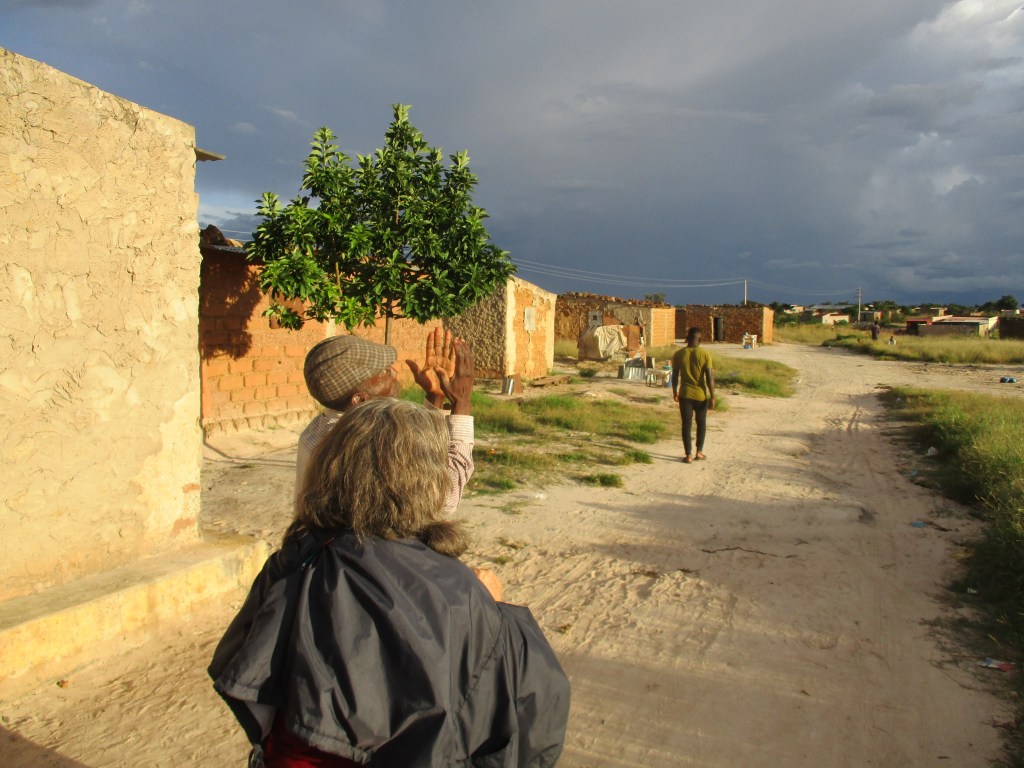
When we arrived, the husband greeted us gratefully and welcomed us to their home, holding aside the curtain that kept the dust and pests outside. It was a bright and beautiful day. I bowed low through the doorway, and my eyes slowly adjusted to the relative darkness inside. Joan’s patient lay on a blanket on the otherwise dirt floor, her injured leg stretched out in front of her, wrapped in a white cloth. I was starting to get used to this standard of living; the dirt floors and single rooms of these humble homes seemed almost normal thanks to repeated exposure. And the invariable friendliness and politeness of everyone I met made me feel at home. Though not feeling well at all, the woman managed a smile in greeting.
A large, white mesh net, tied back during the day, drooped from the ceiling above her – their defense against the deadly nighttime mosquitoes. Joan peeled back the wound’s dressing, and the full extent of the damage was clear. The original bite location was small, but the resulting infection had traveled up and down her leg, splitting and cracking the swollen skin. Controlling the infection was key, and the damp and dust in the air made it difficult. Today, they had a hopeful weapon against the devastation – a papaya fruit, not quite in season, but suitable for the purpose.
Papaya is regarded as a therapeutic treatment in many parts of the world. It contains chemical agents thought to speed healing, reduce inflammation, and fight bacteria and parasites. As Joan scraped the fruit from the peel, she asked how the healing was progressing and if her patient was getting enough rest. She continued the conversational tone while cleaning the wound and applying the papaya poultice to the area. The task was completed with several wrappings of new white fabric. Almost as an afterthought, Joan reminded the couple to eat the remaining papaya, as she only needed the peel, and the rest was still edible. They were both thankful for the visit, and before we departed, they asked that we pray with them.
Flames across Angola
On our way back to the base, I was aware of a haziness in the air and a familiar sickly-sweet fragrance on the wind. The source soon came into view. Flames were licking at the grass verge of the road, leaving behind bare, blackened ground. It was the end of another growing season, and the dry season was approaching. The most common way for the local farmers to clear out old growth is to burn it away (either at the end of one season or the beginning of another). Much of Angola burns every year, as untold thousands of fires like this one are set all across the country and indeed most of central Africa. The fire was unattended. There is little regard for the trees, and homes of mud and concrete don’t burn, so there is little concern about where the fire goes. So the burning is not confined to cultivated fields. It finds its way into every corner, and little of the land is spared as it consumes grass, corn stalks, flowers, and trees.
There are several reasons why Angola burns, apart from agriculture expedience. Fire is used in hunting to scare and corner prey. It is used to kill snakes and remove their cover. The local village leaders, called sobas, encourage the practice out of long tradition. And the consequences, both short- and long-term, are many. In the short term, the increased air pollution causes many respiratory illnesses and deaths, on par with the smoke from indoor cookstoves. In the long term, the repetitive burning reduces the fertility of the soil by destroying organic matter, thus reducing crop yields in areas that are already very food-sensitive . The absence of grass and tree roots encourages erosion, allowing rainfall to further reduce fertility by washing away essential topsoil. Dark, rich, living soil is eventually replaced by red, dry, dead soil.
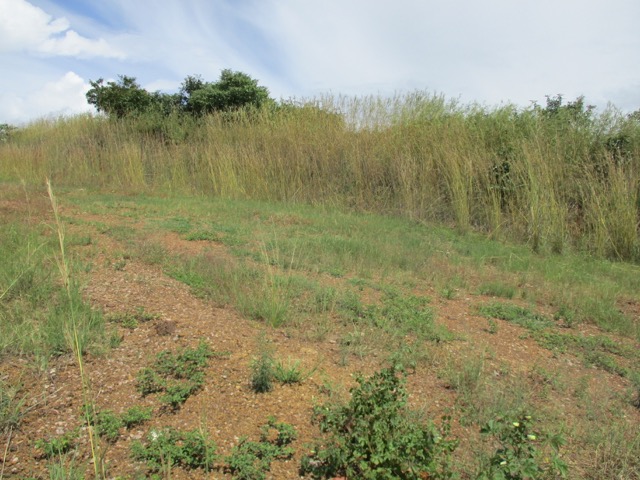
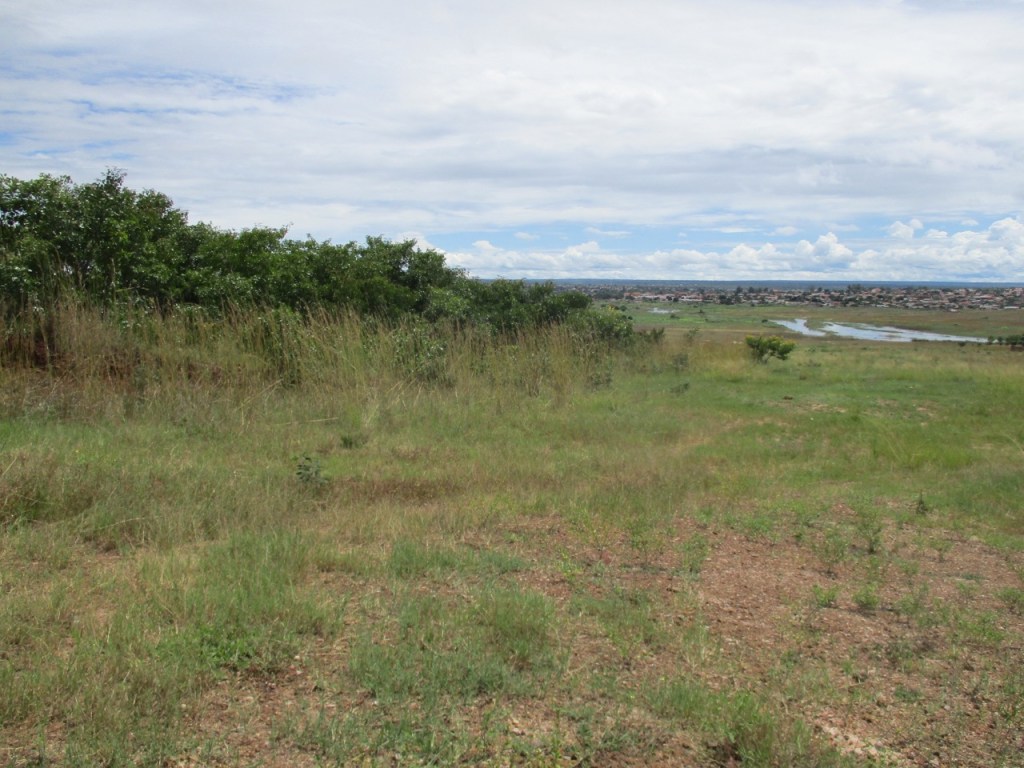

The OM property stands out in the community as the land with many trees, and the OM team is trying to preserve them. Every year, they impress upon the locals that there are better ways to manage the land. They teach God’s command to good stewardship of the Earth from the Bible. They encourage alternatives to burning, like cutting down the standing material and either spread it out or work it into the soil. Or letting the land lay fallow for a few years so the soil can replenish its nutrients before it is put back into service. These require time and labor that the locals are not willing or able to expend, and thus far the advice has been little heeded. Corn and grass grow everywhere, and much of the land is communally owned and managed. There is little personal incentive to manage the land wisely, as the benefits of changing their methods would take a long time to materialize.

 Welcome to Angola