

The mornings were so serene. I was accustomed to the rhythm of life on the base, and I was getting used to the idea that I had little control over my fate. I was disappointed that we could not visit the elderly home or the men’s prison. But even as the coronavirus was locking everything down, I found my days were far from idle.
Asher
Like the previous Saturday, we planned to walk the neighborhood and talk to the people. I was paired with Herivaldo. As we departed the base, he hesitated at the top of the track. He started to go left, but hesitated and went right instead. We turned in among the first cluster of houses. A group of people were gathered in the courtyard among the close-set homes, and there was a celebratory mood in the air. It was a family gathering, a reunion of sorts for several generations of extended family. A young boy sat on the ground, drawing a multiplication table in the dirt, while a little girl in a colorful dress toddled around. There were several young men at the party, and we went to talk to them.
I was settling into my role as observer – smiling, making eye-contact, and nodding when it seemed appropriate. Herivaldo interrupted my observing and said that one of the young men only spoke English. We were offered a couple of chairs and left to get acquainted. I wasn’t sure how to start, so I asked if he knew of Jesus Christ. He encouragingly replied that he read the Bible regularly, adding “My name is Asher, like in Exodus 1.” Asher left Angola at a young age and had lived in Zambia most of his life. Consequently, he spoke little of the local tribal language or even Portuguese, but he spoke good English. He was in Angola visiting his family, and though he could not communicate well with much of his family, he and I had a rewarding conversation.
He had recently completed college having taken accounting and construction classes. He told me that some of his fellow students had invited him to a party. They were of the Rastafari religion, and the party was basically a pretext for their particular brand of “Christian” worship. The festivities included marijuana, which he found confusing. He questioned why a religion rooted in Christianity would include marijuana as one of its sacraments, and he declined to participate. I congratulated his discernment and restraint. Apparently satisfied with my response, he posed another question, this time regarding whether Satan was the ruler of this world, which led to a discussion on suffering and the concept of free moral agency.
It was as if he had awoken that morning and compiled a list of spiritual questions so he would be ready for my visit. His questions were insightful and covered a lot of ground. Can a Christian have anything to do with witchcraft? Is a child guilty for the parents’ sin? Is a child a Christian because his parents are? We covered the nature of sin, salvation, death, judgment, and the afterlife. They were deep questions to which he really wanted answers. I scarcely finished one answer when he would ask another question. It was surreal that I had found myself in such a scenario, discussing such weighty subjects with a stranger while stranded in Africa.
When Asher had apparently exhausted his list of questions, we prayed together for God’s guidance and blessing on our time together. I was fairly floating from the encounter. Herivaldo had finished talking to the other guys, so we made our way back home.
Painting the floor
Having finished the green chalkboard walls the day before, I shifted my attention to the red floor. Arming myself once more with the small bristle brush, I started enthusiastically into the job. I started by cutting in around the edges where I had left the bottom 10 centimeters of the walls bare. For all I knew, I might be in Angola long enough to complete the entire floor.
Knowing how dirt can keep paint from sticking, I intended to sweep the floor well. Taking stock of the storeroom once more, I returned with a long-handled broom and two dense hand brushes. No matter how vigorously I attacked the concrete with the broom, the floor was defiantly dirty. The broom was simply too stiff to effectively move the dust out of my way, so I resorted to dual-wielding the two hand brushes. I decided the only way to do a proper job was to bend over and sweep behind me as a dog might dig a hole. As I worked, I was amused at the spectacle that would greet a passerby who peeked in at that moment, this odd guy bent over, paddling away at the floor with two brushes, while a perfectly good broom lay against the wall. Nevertheless, I soon had the floor prepped.
As I cut in the red paint around the edges, Wessel dropped by to see how his pet project was progressing. He again expressed gratitude for my careful efforts, adding that “not just anyone can do what you are doing” as he watched me work, my face nearly touching the floor in concentration. I was enjoying the work and glad that it met with approval. I wondered aloud that he ever thought to give me this job. Once the edges were done, I worked in small squares to paint the rest of the floor. As I connected the squares I noticed a distinct pattern emerge from the overlapping sections. It reminded me vaguely of a giraffe’s fur pattern.
Bike ride
After lunch, Ericleidy offered me the opportunity to go on a bike ride, something for which I had secretly hoped but hadn’t mentioned to anyone. The lockdown made it difficult for his disciples to visit the OM base, and Ericleidy was anxious to see them. Since travel by auto was restricted, he hoped to get through on bicycles. I jumped at the chance. The wind and the dust in my face was a welcome change from riding in the truck everywhere. Traveling by bicycle, the homes and the people were closer and more personal.
The police presence had increased, and they were restricting movement through the streets, occasionally stopping people to ask why they were out instead of staying at home. We glided off the main road and into the labyrinth of side streets, where the police didn’t have the manpower to effectively patrol. Riding these trails presented a unique perspective of the city. Each subdivision had its own feel, structure, and style of housing. The simple, small homes near the base soon gave way to bigger and nicer houses. Some had simple electrical devices powered by solar panels, and a few even had satellite dishes on the roof.
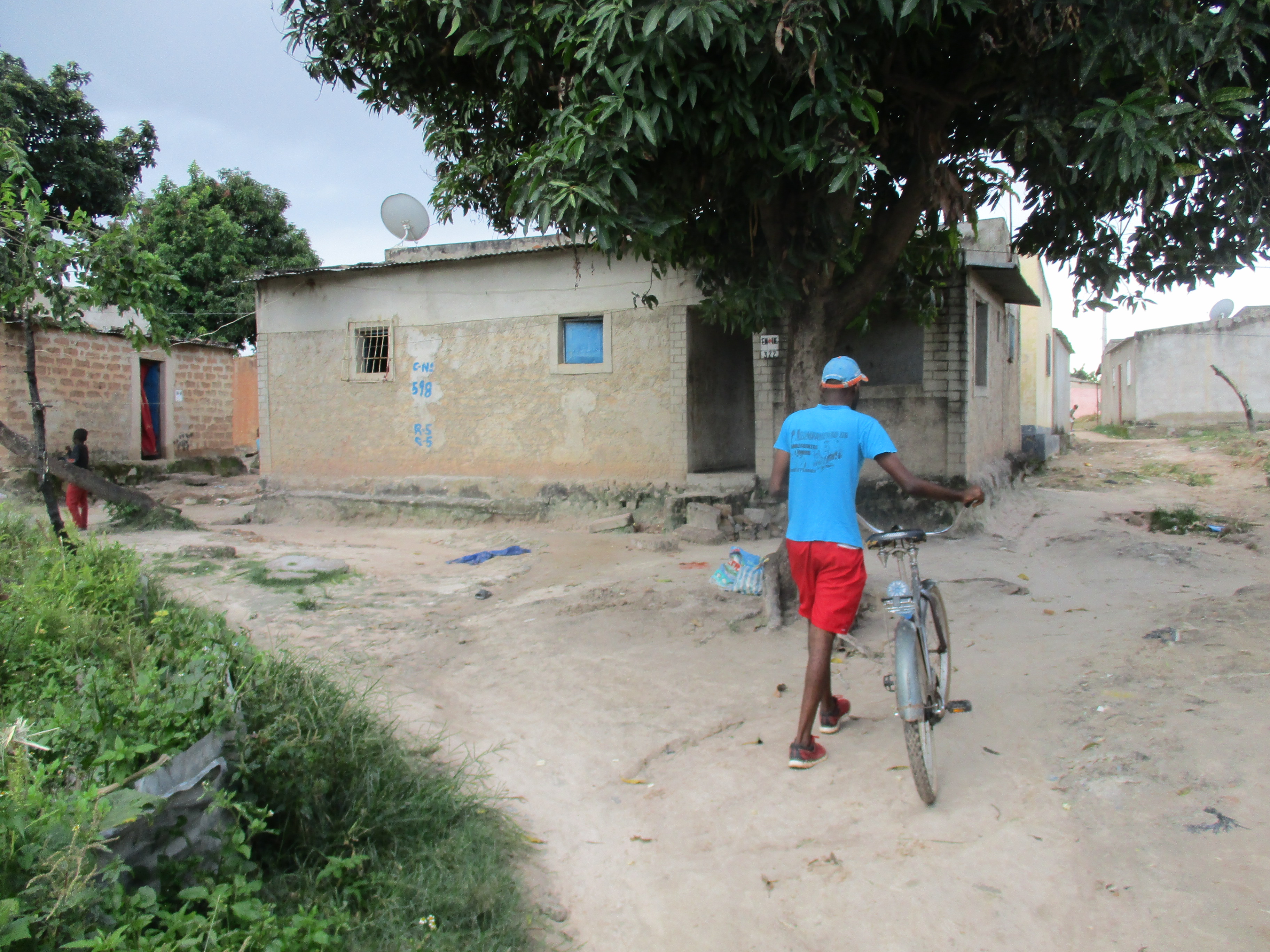
Our first stop was a bust, as his disciple was away from home. Few people owned cell phones, and airtime was expensive, so calling ahead to arrange meetings was not an option. We continued our winding way between the close houses, alternating riding and walking our bikes through the bumpy and often narrow passageways.
Ericleidy soon stopped at another home and called a greeting through the open doorway. We were invited in, and the structure opened from the alley straight into the main room. The home was deceptively big. Size was hard to gauge from the exterior since many of the homes shared internal walls for economy. The first room was bigger than many entire homes I had visited. It was combination living room, dining room, and kitchen, and in the back on either side were two doorways, presumably bedrooms. We were offered chairs. Ericleidy, his disciple, and I sat against the wall, while the sister and mother stood and joined in conversation with us. Ericleidy told me that the sister could speak English, because she too had received some education outside of Angola. She timidly tried out a few pleasantries, demonstrating her English ability.
Moving on from that home, we pressed toward a disciple’s house on the other side of Menongue. The side streets seemed to converge back onto the main road, and there we found the road blocked. Quickly adjusting our path, we turned down a street to the right, hoping to circumvent the blockade. Many others clearly had the same idea, for the side street was a throng of motorcycles, cars, and pedestrians. The street lacked sidewalks, let alone bike lanes, and we rode in the street with all the other traffic. Narrowly avoiding a collision with a visibly startled motorcyclist and his passenger, I managed to keep up with Ericleidy.
Coming back to the main road from the side, we saw that our way was again blocked, and we stopped short of the yellow and black barriers. There were several uniformed police watching the intersection, one man and two women. Ericleidy politely asked if we could pass, and I could tell through the language barrier that the man had denied the request. We stood there watching other cars, motorcycles, and pedestrians go through the intersection without bothering to ask permission or even slowing down. It occurred to me that if we hadn’t asked permission, nobody would have stopped us.
Instead of simply turning around once we were denied, Ericleidy challenged officer’s decision a bit. He asked some questions in Portuguese, pointing to the other people moving freely through the intersection. The response was a noncommittal stare and a shrug. The female officers looked uncertain about restraining us, but they did nothing to facilitate our passage. Ericleidy was not satisfied. He wanted an answer for the seemingly random denial, so he returned to the attack in his polite yet assertive way. The guy did not seem amused by his continued persistence, and I started to wonder what the Menongue jail was like when Ericleidy broke off his attack. We went back the way we came.
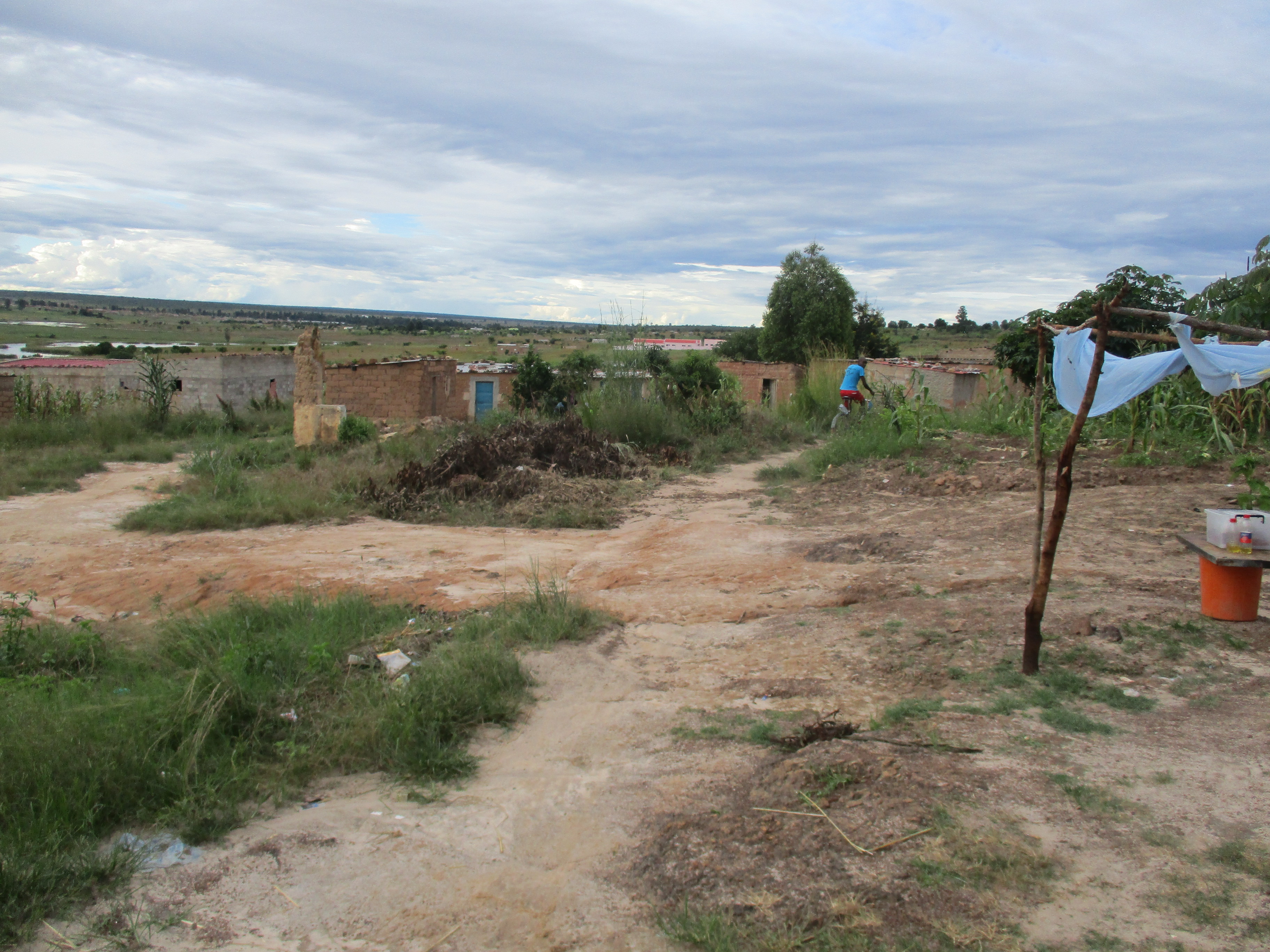
As we rode back through the neighborhood, we broke through the houses into a clearing. Ericleidy stopped his bike and gestured to the beautiful view of the Cuebe River valley that spread before us.
He exclaimed, “Look at the beauty that Father has made!”
The setbacks of our ride had not affected his good nature, and he was exulting in the wonder of God’s creation. I had seen life in crowded Luanda, where Ericleidy had lived before moving to Menongue. The splendor before us was starkly different from that environment, and I joined with him in expressing thanks to the Creator of all things.
Leaving Menongue
After dinner, the meal had barely been cleared away when Wessel got an urgent call from Pastor Pedro in Luanda: a rumored flight for the next morning was all but confirmed. A group of Chevron employees were counting on it for their escape. With a large oil company like Chevron backing the flight, it seemed likely to happen. The expected departure time was between 9 and 11 the next morning, leaving me about 16 hours to travel 1,000 kilometers with no bus or plane available.
On the spot, Wessel made the decision that he had been mulling over for days: he would take me to Luanda himself and bring Ericleidy along to help drive. Someone pointed out that it was getting dark, and worse, it might rain, but Wessel said “that’s okay – we have the overhead lights on the truck, and we can go slow when we need to.” Only much later did I understand the real significance of that brief exchange. But just then, I had no time to think of the implications. I had to get ready. It was time to go.
There was a flurry of activity over the next hour as we prepared for the trip. Food, drinks, lights, and many other items had to be gathered and loaded. Having been in a partial state of readiness for days, I was soon packed with nothing to do but watch and think. Barianne broke into my thoughts by pointing out that the students, normally so boisterous and cheerful, had fallen silent. “They are going to miss you. They are sad to see you go.” And it sunk in how much I was going to miss them and that place. It had gone from being foreign to feeling like home so quickly. I was not excited to leave, however much I wanted to get back to my family.
Everything was soon made ready, and we gathered outside by the truck. Night had fallen. The truck was running, and we gathered around the beam from the headlights. Someone broke out in a farewell song, and the whole group joined in. Little of it remains in my memory, but it contained the phrase “Now that it’s over” and the refrain started with “Give him a hug.” Everyone – students, leadership, Joan, and Wessel – each took a turn giving me a hug while they sang. Those goodbye hugs around that dusty circle of light stand to this day among my most vivid and poignant memories. Scarcely able to get the words out, I said to Herivaldo, “I hope you get back to your family soon.”
We climbed in the vehicle and drove away from the crowd. The GPS unit on the dashboard read 977 kilometers to Luanda, ETA 6:00 am. I hoped that the device was making allowance for the bad roads, because we were already on a tight schedule.
As we drove into the darkness, I felt a twinge of regret that I must drive across the beautiful landscape of Angola at night, left only to imagine what lay beyond the dark curtain outside my window. I tried not to dwell on my disappointment as we drove to the city center. I had only seen Menongue during the daylight, and it was difficult to orient myself in the darkness. I noted the Shoprite as we stopped at a roadblock, the first challenge on our journey. After a short conversation in Portuguese, the guard let us pass. We crossed the distinctive bridge spanning the Cuebe River, and I recognized the large roundabout near the outskirts of town.
As we made our way toward the highway out of the city, Wessel made the ominous announcement, “I don’t know any of these police.” Those new guards were reinforcements from outside Menongue. The capricious, yet friendly, police of our daytime bike ride had been replaced with unknown troops once night had fallen. It occurred to me then that our escape from the city was in no way assured. Trying not to draw attention, I slipped my hand out of my window to put the satphone’s external antenna on the roof of the car, and I sent a text to Carmen with a single word, “pray.”
At the edge of the city, we arrived at a roadblock by a gas station. People were gathered here and there in small groups under the dim streetlights. Some were talking to the police. Uncertainty was in the air; this sort of lockdown was perhaps something new even to the Angolans. Wessel rolled down his window and greeted the guard just as he had the one before. But this one wasn’t going to be denied so easily. He wanted a good reason for why we wanted to violate the president’s lockdown order. There were three guards taking an interest in us. One of them shone his light in my window. I tried to look friendly, but I could only muster a wan smile. He took a probing look at me and the contents of the back seat. I couldn’t imagine these guys being swayed by my sad plight.
And that’s how it played out. Wessel made a strong case, but getting a stranded American missionary home wasn’t reason enough to let us pass. With no travel papers and no clout, we were out of luck. We were forced to turn back. Just like that, our bold race to Luanda was over.
We drove back to OM base in silence. The students had already retired to their dormitory. When Elisa saw me, the language barrier didn’t keep her from expressing her sympathy; the look on her face said it all. I grinned and shrugged. In a way, I was glad to be back. After everyone else turned in for the night, Wessel and I were left alone in the main room. I was looking around, taking in the now-familiar setting. So it was that at the end of a very long, anticlimactic day, I looked at Wessel and asked, “Permission to stay a little longer?”
With a smile, he simply replied,
“Granted.”

 Welcome to Angola