
Different perspective on Luanda
Nathan and I stayed at Charles’ home for a few hours. Feeling that the exciting times were over, I was feeling a letdown and only wanted to get to a bed and sleep. At times, I could barely stay awake, and I didn’t feel like a good guest. I had come full circle and was back in the large city of Luanda, yet the setting was very different from my first visit. Charles’s apartment was in a nice multi-level complex with paved parking lots and manicured lawns. With the palm trees, humidity, air conditioning, and hard tile floors, it felt nothing like the version of Luanda I had left a month ago. It felt more like vacationing in Florida. It was all so different from the dusty, noisy stay at Pastor Pedro’s house. But I wasn’t so sure that I hadn’t felt more at home in that version of Luanda than this one.
Luanda apartment
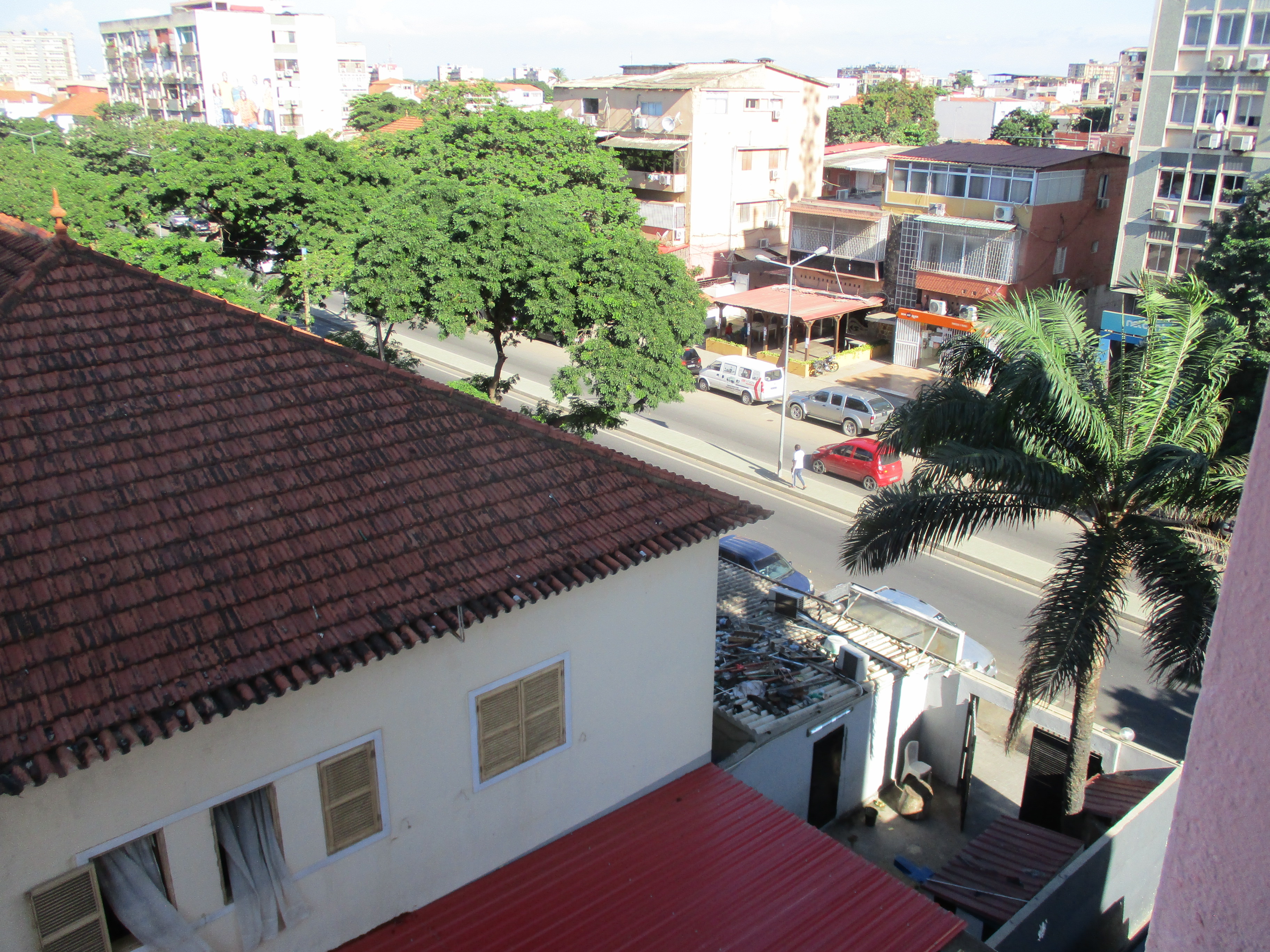
Later in the day, it was finally time to go, and Charles drove us further into Luanda to the place that Nathan had booked for the week. We had only moderate traffic to contend with on our way in. Gone were the mud walls, gone the thatched roofs. Everything was concrete, metal, and tile. I had gone from a soft place to a hard one. We found the apartment building on a street that would normally be very busy. It took coronavirus to calm the city down. People were staying at home instead of working, playing, living. Our apartment was on the fifth floor; it was a short-term rental that Nathan had stayed at before. A strong US dollar and the lack of tourists gave us a good rate for the week, and we could always extend our stay if we couldn’t leave by then – nobody would have a reservation that conflicted with ours.
We talked to the doorman, and the owner of the building stopped by. We were clearly welcome, as coronavirus had ground tourism to a halt. As the doorman let us in through the heavy metal door, lively music and voices were blaring from a neighboring building. As we ascended the cement staircase (like Nathan’s apartment building in Huambo, the elevator hadn’t worked in a long time), the music slowly faded into the background. A small balcony outside the apartment overlooked the harbor, where I could see many large vessels anchored, unmoving. All over the globe, ocean vessels filled with oil and products were stuck at sea or in harbors like this one. Coronavirus had destroyed the demand for oil, and the shutdown meant there was no one to unload the ships. There they waited in the harbor while we waited in the apartment.
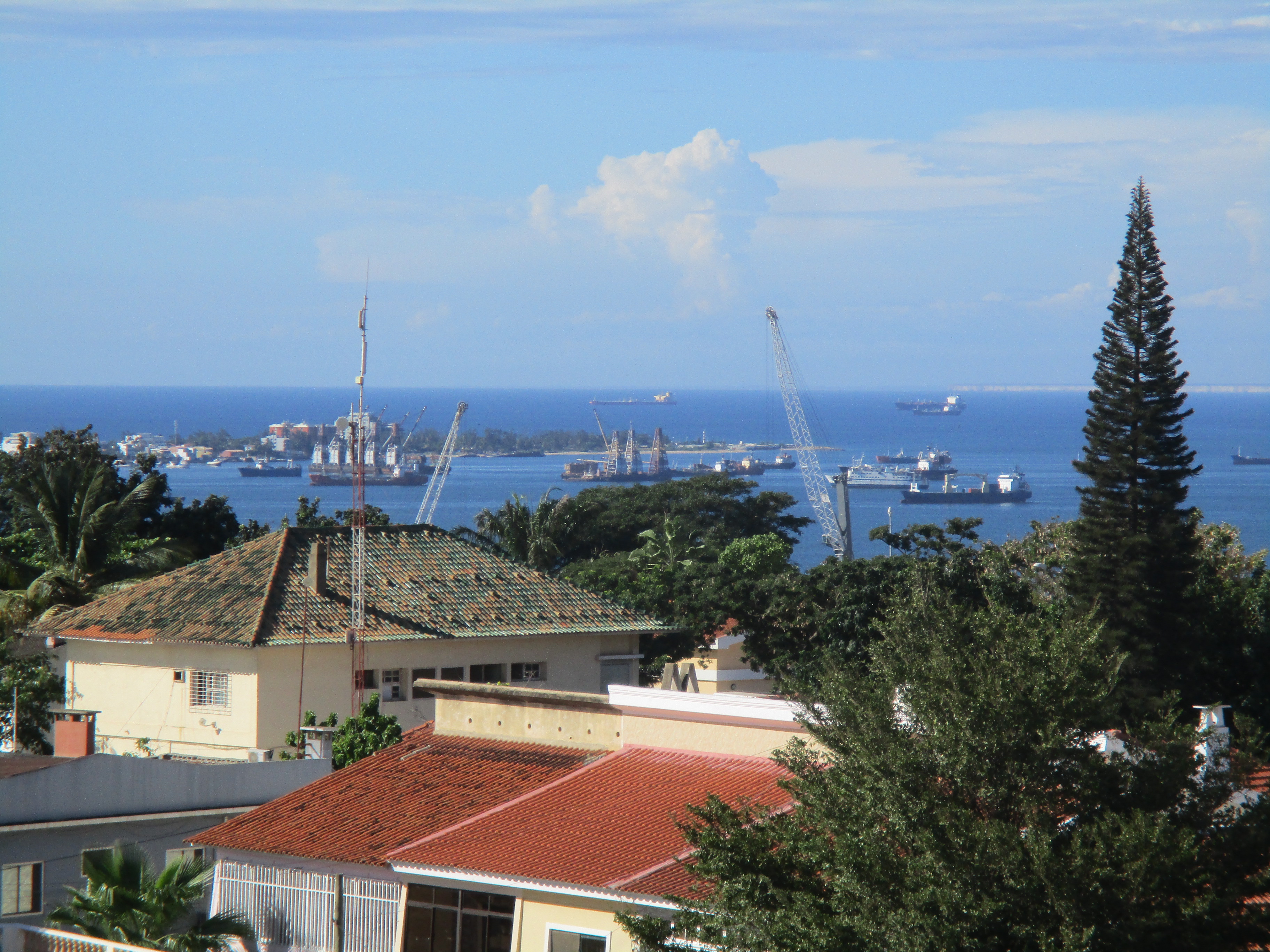
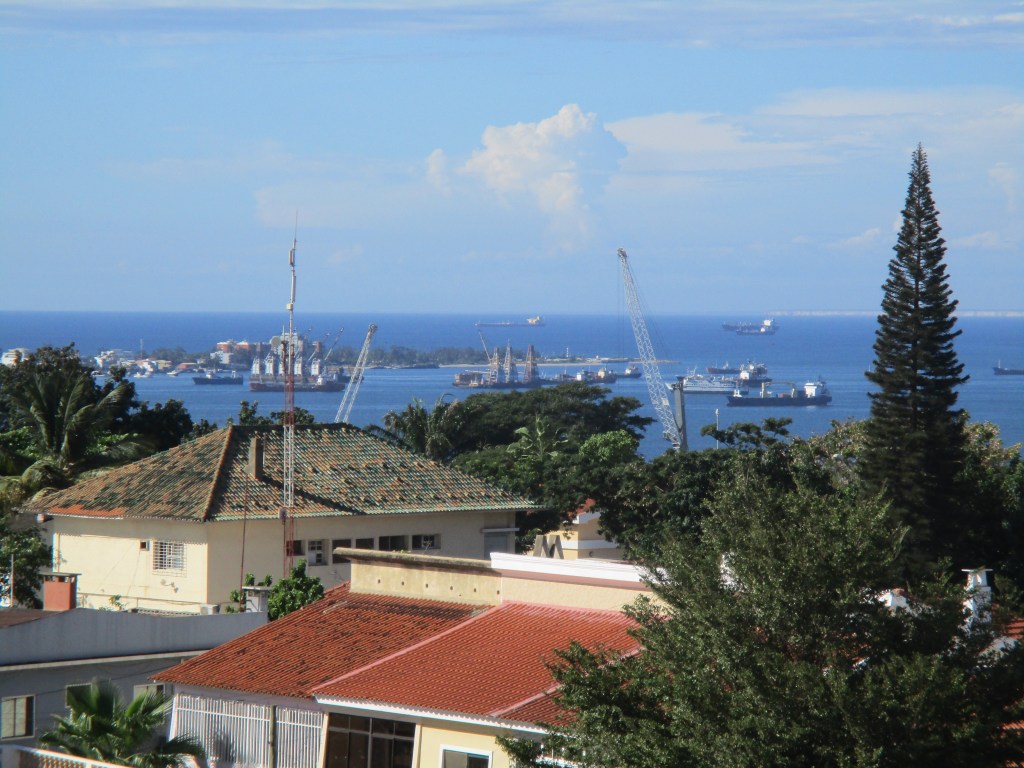
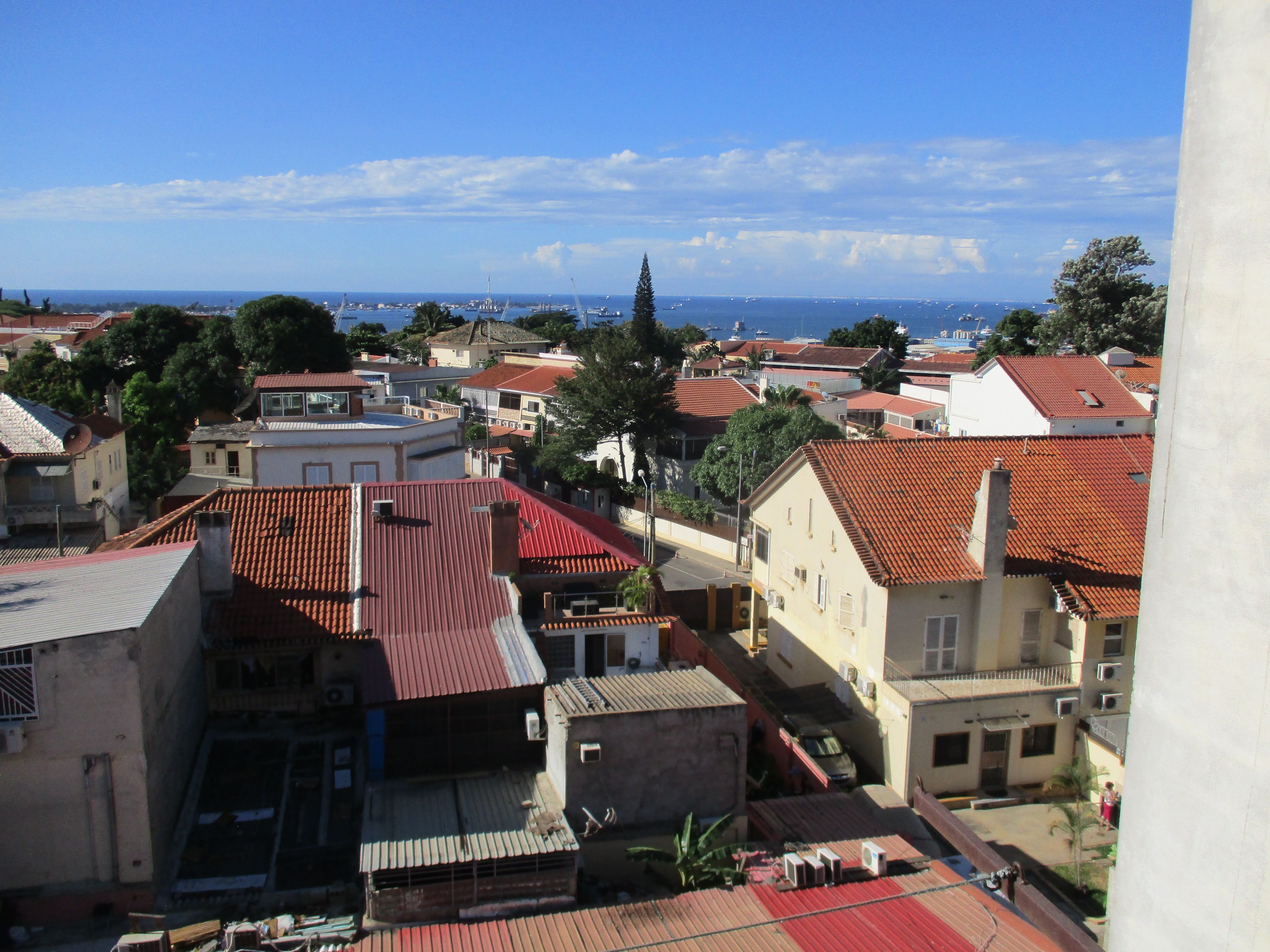
The building’s height afforded a commanding view of the city and the harbor, all the way to the Ilha do Cabo, a spit of land jutting into the harbor. The buildings around us were nice, and there were many fancy cars in the driveways. Most of the buildings were multiple stories tall, and many still had the red roof tiles from the Portuguese era, though some had been redone with corrugated metal sheets. Looking out from that balcony reminded me of the view out of the window of the church when I first came to Luanda weeks earlier, except that the buildings around that five story apartment were not covered in rubble to hold down the roofs.
The waiting game – a week in Luanda
The apartment was well appointed. It was styled like a Portuguese villa, right down to the faux clay-tiled roof that hung over the kitchen bar. There were two big bedrooms, two bathrooms, a fully equipped kitchen, a dining room, and a living room with Internet television. The nearly constant air conditioning kept the mosquitoes at bay. The US embassy was very close. It was on the same street in fact, just four blocks away. After weeks of confusion and uncertainty, everything seemed to be neatly packaged all of a sudden. Jason at the embassy contacted us shortly with the good news that a flight from the Congo was almost certainly going to stop in Luanda at the end of the week, and Nathan and I were assured of a spot on the passenger list.

Finding food and killing time
We were worried about finding food and drink for the week. We left the apartment and walked in the direction of a big grocery store that Nathan remembered. We didn’t walk the main road, instead traversing side streets and empty parking lots, just in case the police were patrolling and enforcing the lockdown rules. Buildings full of windows surrounded us as we walked through the virtually empty city, making me feel very exposed. We soon found ourselves directly across the street from the big store, but there were police officers checking people as they went in and out. Preferring to avoid that kind of attention, we retreated to the apartment to look for other options.
We were pleasantly surprised to find a small convenience store right across the street from our building and next to a restaurant that had switched to delivery and take-home options. With those discoveries, our food uncertainties vanished. We lived high that week, and I tried several Angolan dishes from the restaurant. I also got acquainted with Angolan café (coffee) which was served in a little shot glass but packed the punch of a full cup of coffee. It’s an acquired taste. Once, while we stood in the shade of the restaurant, waiting for our food and drinking our coffee, an enterprising guy walked past us selling a selection of face masks to fight the pandemic.
With little to worry about, the time flew by. I was determined to spend the week compiling my notes for this book, because Christy’s off-hand comment about writing a book had spurred my imagination. Instead, I binge-watching TV with Nathan and talked about my plans for coming back to Angola. He offered advice on topics such as cell phones, internet, transportation, and learning Portuguese.
Paying for tickets
The only real challenge for the week came in the form of paying for the tickets for the repatriation flight. It was only about 1800 USD, which was a big reduction in price. Since HALO Trust didn’t charge me for the ride, the total price to get home looked to be about $2000 instead of $7000. But I didn’t have that kind of cash, and it didn’t matter anyway, because the only form of payment that was being accepted (thanks to an increase of fraud thanks to COVID-19) was credit card in Kinsasha, Congo. It seemed like paying with a wire transfer was a potential option, but Nathan knew that it could never clear in time. With all the fraud, it was likely to be rejected anyway, coming from an American account to a Congolese account out of the blue. The solution was to get a repatriation loan through the US embassy. I needed to e-sign a promissory note to repay the loan, and then the embassy would buy the ticket on my behalf. (The collateral on such a loan is essentially one’s ability to travel internationally: the State Department would not honor future passport renewal requests until the loan is repaid.) I would have been sunk again, had it not been for Nathan’s laptop and smart phone. He helped me send my passport information and sign the electronic loan application.
Contrasts
My second stay in Luanda was so different from when I first arrived in the country. The apartment was on the affluent side of the city, near the harbor and business district. And coronavirus had nearly emptied the streets. Instead of the chaotic driving and dusty, narrow streets of my first visit, outside the apartment, the wide, clean road was virtually empty and silent. During those few days, I experienced a subdued Luanda that few tourists will ever see. The apartment was air conditioned and roomy, and I made up for lost sleep. I am grateful for the unique view of the city that I got during those few days, but I do regret not being able to see much beyond the apartment.
Drive to the airport
The evening before our midnight flight, Charles came to take us to the airport. Charles took a meandering route so I could see a little of the city. Leaving the apartment behind, we continued on Rua Ndunduma and down a winding road past the US embassy to the banking district and along the Marginal beach. The beach would normally be filled with joggers and walkers at that time of day, perhaps enjoying Gelado de Múcua made from baobab fruit, but it was desolate. We passed a new luxury mall and the Fortaleza de São Miguel, a 16th century fort, now a museum. Soon we were on the Ilha do Cabo. A major hub of entertainment in Luanda, Ilha do Cabo (also known as the Ilha do Luanda or more commonly “The Ilha”) is home to a variety of hotels, clubs, restaurants, and marinas. As we drove along the The Ilha, typically full of night life, there were few people to be seen. It grew dark as we drove, and I could barely make out the sands of the beach to our left. Charles turned the pickup around and headed back to the center of the business district and on to the airport.

 Welcome to Angola