

An early start
As I awoke in Huambo the next morning, I noticed a few bug bites that hadn’t been there the evening before. I hadn’t seen any mosquitos in Huambo, but something had certainly found me. I couldn’t be sure if they were mosquito bites or some other nighttime nuisance, but to be safe I took a couple more anti-malaria pills. I was quietly thankful that I had started rationing them weeks earlier. Nathan and I had little time to get ready for the convoy’s arrival. We had a quick breakfast, and Nathan gathered some food for the trip. He put everything in order in the apartment, dropped off his keys with his landlord, and we slipped down to the street where everything was eerily quiet in the early morning twilight. We only had a block or two to walk to meet Christy and company, but stories of police aggression made us wary. Thankfully, we hadn’t long to wait at the cold, dark street corner.
Coronavirus Convoy #2 rolled up a few minutes later. Louie was ensconced at “Casa Branca,” and we were joined by the Huambo HALO team. There were still two vehicles in the convoy, but Christy’s Land Rover had been swapped out for another Toyota Land Cruiser. Both vehicles were full to capacity. Gabby was among the new passengers, and she took the liability release forms that Nathan and I had signed. The document allowed us to ride with the convoy with the understanding that if we died a horrible death on the way, it was on us. Seemed fair to me. The document also made it quite clear that the ride was not a courtesy that HALO would normally extend, and if not for the global pandemic, we would have been on our own.
Everyone was eager to get on the road. Little time was spent on introductions and small talk, so I didn’t learn any of the new passengers’ names. Nathan rode shotgun on this leg of the journey. I got in the back seat next to one of the other HALO workers. He was a young man with fair hair and he didn’t talk much, but he was friendly and shared his snacks with me.
Foggy morning drive

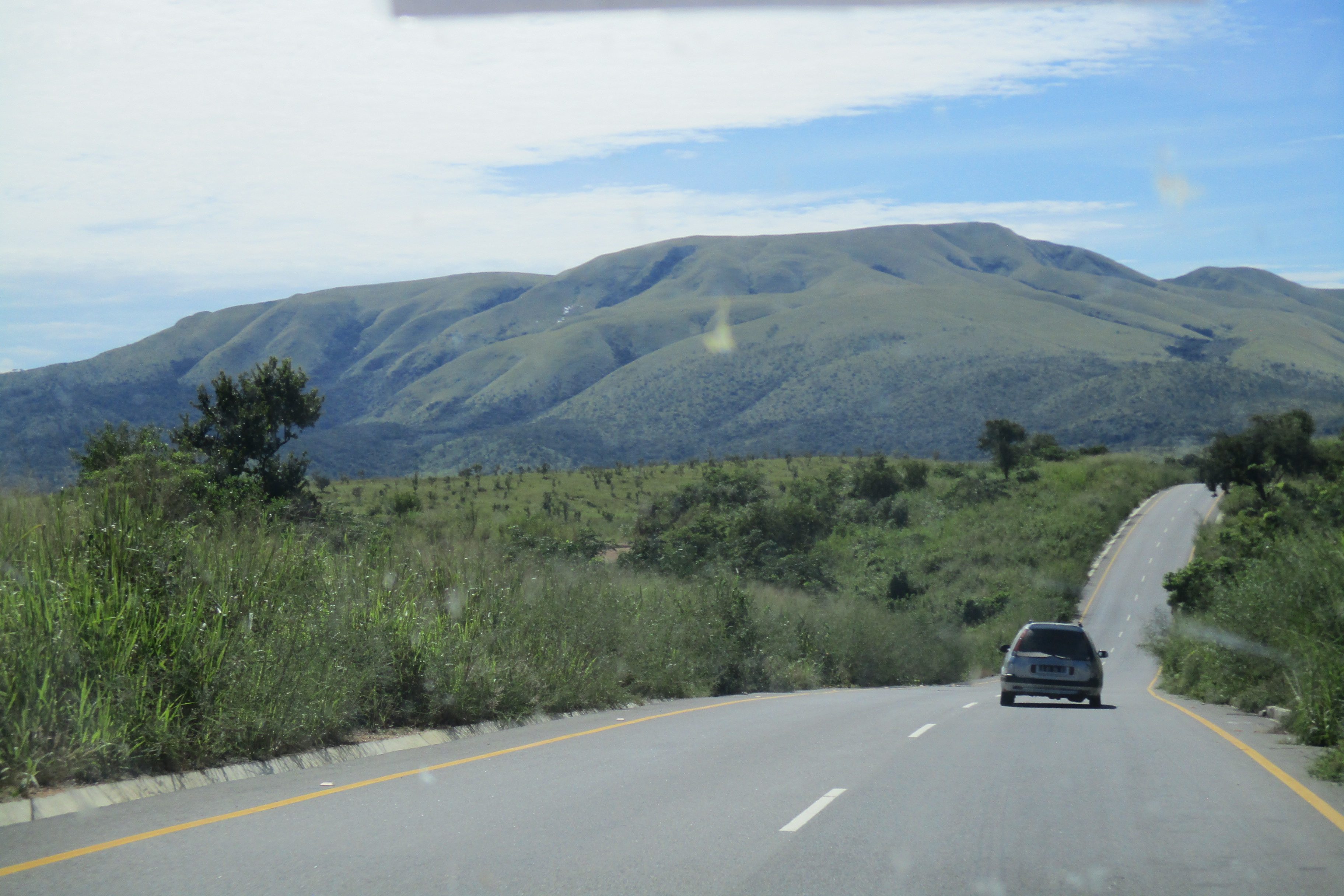
We were driving on what looked and felt like a new road. There was a dense forest to our left and a field to our right. Soon a dense fog rolled in, reducing visibility and slowing us down. We couldn’t see far in any direction, and we soon lost sight of the other vehicle, driven by Giorgi. We slowed until they caught up. The road was beautifully smooth as we glided over the gentle hills and drove away from Huambo and back onto the open highway. At length, the sun came up and burned the fog away, and another beautiful day in Angola was under way.

Baobab trees
As we continued further north, I finally got to see that classic symbol of Africa, the baobab tree. I had hoped to see some on my way through the country, but there are very few in southern Angola. The trees are unmistakable with their giant trunks and clustered tops, earning them the nickname “the upside-down tree.” The fruit looks like a cucumber or gourd, and it dangles from a vine, as if gift parcels were hung from the branches. Christy said the fruit of the baobab (also known as monkey fruit because it is favored by the climbing creatures) is used to make a frozen treat popular in Angola, called gelado de mucua. A baobab can live thousands of years. Its trunk provides shelter for all kinds of African wildlife, and it holds massive amounts of water, making it remarkably resistant to fire. The leaves and bark impart a wide variety of health benefits. It is truly the African tree of life.

Christy talked about a staple of the Angolan diet, the food commonly known as funge, which I had eaten several times already. Also known by the name fuba de bombo, it is a sticky mass made from the root of the cassava plant. It is the foundation of many Angolan dishes, though many of the poorest people eat it by itself, because they cannot afford protein or vegetables to add to it. He pointed out that some of the women on the side of the road the day before had been drying crushed cassava on sheets on the hot roadway. The roots and leaves of the plant contain cyanogens – substances that produce cyanide if not properly treated. By crushing, washing, and boiling the plant, the cyanogens are neutralized. Drying is the last step of the process, rendering the cassava safe to sell and eat.
The River Cuanza roadblock
The second day of travel in the coronavirus convoy was largely uneventful. We stopped very little. Most of the guards at the roadblocks let us pass, offering a salute as we drove by. Christy conjectured that perhaps word had gotten around that a HALO Trust convoy was heading north to Luanda.
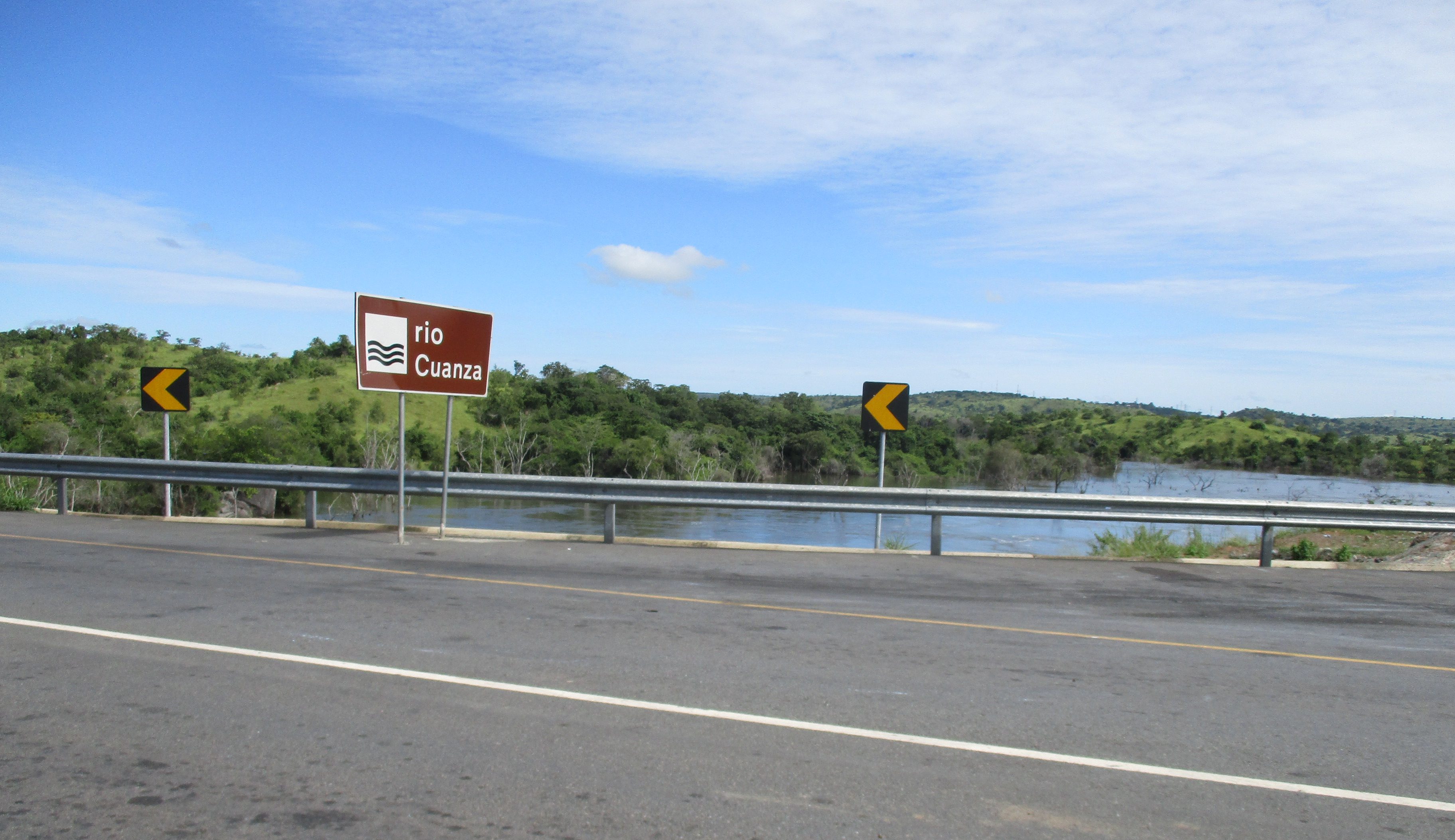
The largest roadblock we encountered was at the Cuanza River, the namesake of the Angolan Kwanza currency. All vehicles were forced to stop at the roadblock about a hundred feet beyond the river crossing. Everything from small passenger cars to large trucks and tankers were parked haphazardly on either side of the road. We exited the trucks and joined the disorderly queue of people. Much like the day before, there was a hand-washing ritual, followed by a temperature reading, and we were each ceremoniously handed a scrap of paper with our reading on it. Surely I wasn’t expected to present this documentation later, but I tried to keep track of it just the same. They looked at our passports and recorded the details. I tried to answer a few questions I couldn’t understand. After a minute or two, my passport was handed back to be, and I was waved through.
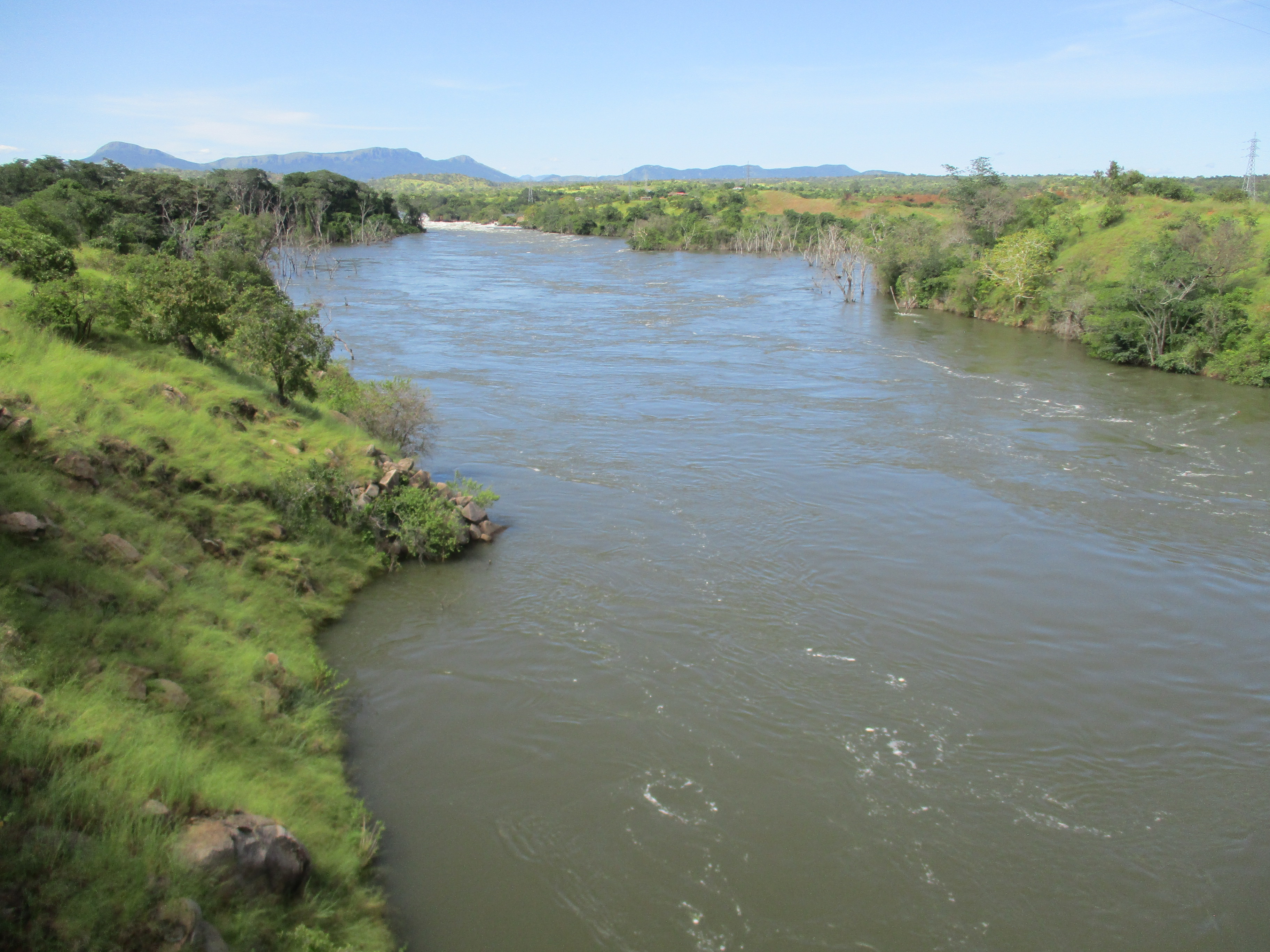
Nathan and I were among the first to be processed, so we walked the short distance back to the bridge. The Cuanza starts in southern Angola as a small stream and gets bigger the further north it winds. At this point it was a large channel, wide and powerful. I took a few pictures of the mighty river, despite the general restriction against taking pictures near government installations. (I did not make the decision lightly. I had heard of an artist at the Cuito Cuanavale war monument who had his multi-sheet drawing confiscated for “recording” the national treasure.) We enjoyed the beautiful view while waiting for the rest of our crew, and I was again struck by the potential for tourism that exists in Angola. Soon we were summoned back to the vehicles. I was glad that the roadblock was at such a scenic and culturally significant location, because sight-seeing was not on the convoy’s agenda.

Lunch break
We stopped for lunch and a bathroom break at the side of the road at the bottom of a wide valley. I got out onto the shoulder of the road, which consisted of fine red dirt and rocks. The scenery was as beautiful as ever, with grassland, forests, mountains, and jutting ridges all visible from that spot.
I needed to find a place that would serve as a toilet, but I was loath to wander far from the roadside to find a well-secluded place. HALO Trust had helped clear the roadway of landmines before a lot of the highway was laid, with just enough margin on either side to make roadwork safe. At some areas, it would still be unwise to stray far off the road. As it was, I had to be satisfied to duck down a ditch that had been formed by heavy rain runoff. We had already eaten much of what Nathan had packed for us, and I was grateful to my fellow travelers that they shared what they had.

Before we got going again, Christy asked me if I enjoyed today or yesterday more.
After a moment’s thought, I answered, “Yesterday, I think. It was … funner.”
“Surely you mean more fun” he said with a hint of a smile.
I had no comeback to that. I wasn’t going to argue with the Queen’s English.
End of the road
I was starting to feel the fatigue of the trip, and I passed in and out of sleep. I would awake now and then to find that our convoy had a lot more company on the highway. As we neared Luanda, more trucks, tankers, and passenger vehicles were joining us on the road. It was a sobering reminder that this part of my adventure would soon come to an end. It had been quite a ride.
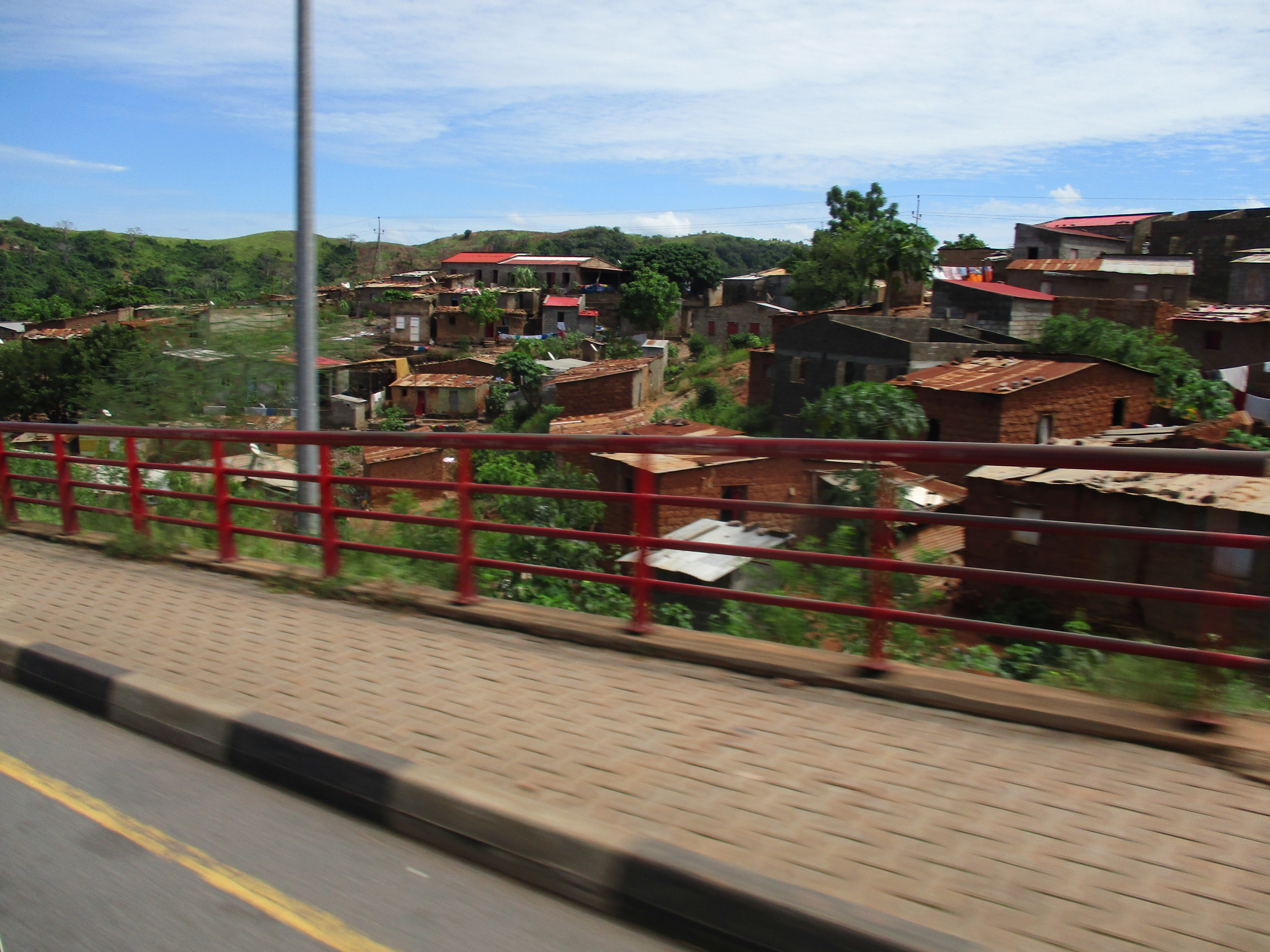
At our request, the HALO Trust Coronavirus Convoy dropped Nathan and I at the edge of Luanda. We said goodbye to the other members of the convoy and wished them all well in the uncertain future. I shook hands with Christy and expressed my sincere gratitude for helping me get that much closer to home, and that I hoped to meet him again. Nathan’s friend Charles picked us up as arranged, and he took us to his home just inside the city so we could eat and rest.

 Welcome to Angola