
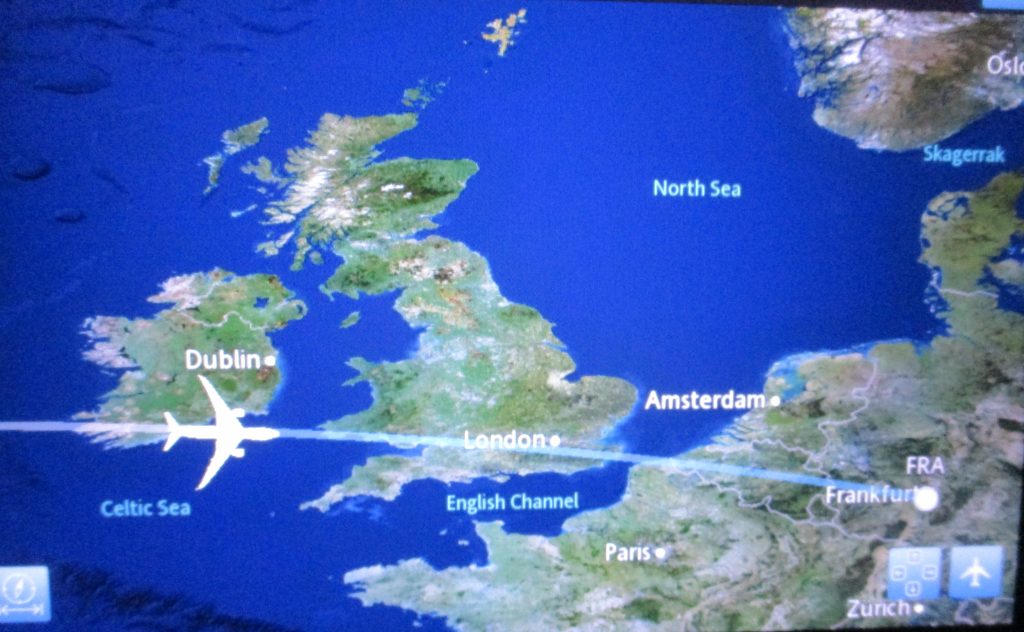
Frankfurt airport
Arriving at the Frankfurt airport, I proceeded to the information counter to check on my connecting flight to Angola. The buzz of conversation around me revealed that global events were progressing much faster than I had anticipated. One person declared that after seven months of working in Germany, he was told on short notice to evacuate with no indication when he might return. Another shared the startling news that America was closed to European travelers as of yesterday, 11 March 2020. That was the day I shared tearful goodbyes with my wife and children and set out on this adventure, unaware that my trip would unfold against the backdrop of a global pandemic. I had been in the air less than an hour when the news reached my parents that the president had closed the US borders. They relayed the information to my wife, Carmen, so she could compel me to come home. She tried, and failed, to contact me, knowing that, even if she could get a message through, I was unlikely to turn back.
I was on what some would call a “vision trip” – a short-term mission trip with a long-term purpose. My destination was a mission base on the edge of the remote city of Menongue in the country of Angola. The base was operated by Operation Mobilization (OM), and South African missionaries Wessel and Joan van der Merwe were to be my hosts. They had been living and working in Angola since 2002 and in rural Menongue since 2005. A series of unexpected events had led my wife and I to think that we should move to Angola. We would share the Gospel, and I would teach computer programming, having worked in the software industry for 15 years. The idea was that by the end of this trip, we would know for sure. I didn’t know what to expect, but I had learned a few things about the country.

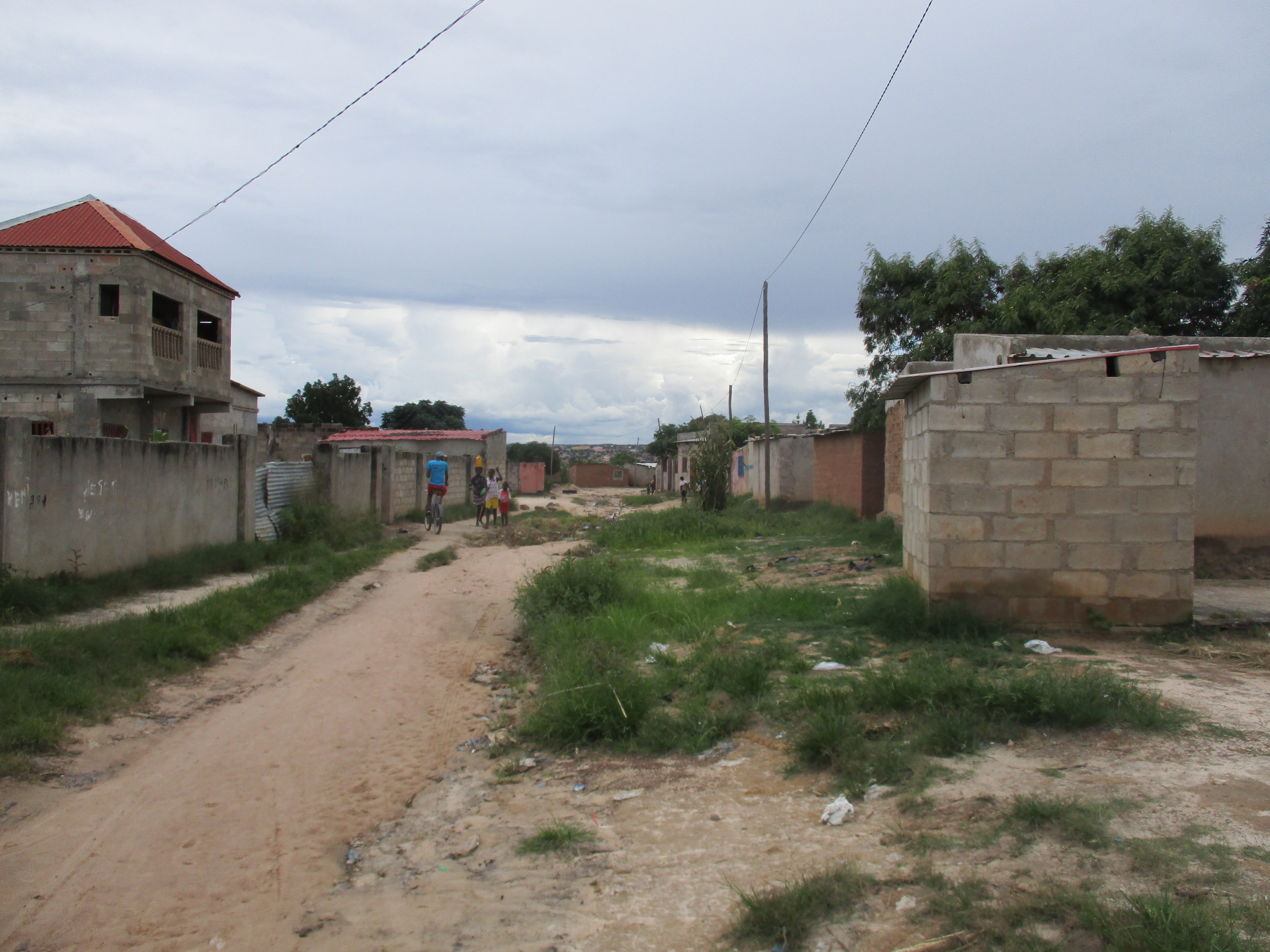
Angola was a Portuguese colony for hundreds of years. After a long struggle for independence, Portugal withdrew in 1975, and Angola became a sovereign nation. Civil war broke out as political factions vied for control, pitting pro-communist against anti-communist forces. Other nations joined the fight, as Angola’s internal conflict was co-opted as a proxy for the cold war. Angola emerged from decades of war in 2002, and the country has seen incredible revitalization and growth, driven by an abundance of resources in oil, diamonds, and natural beauty. However, the benefits of progress have accrued to a rare few, and most of the country remains in deep poverty. Angola is a demographically young country, and its youth are eager to contribute to the development of the nation and leave the legacy of war behind them. Angola has tremendous potential, but many challenges remain to be overcome. The typical problems of a developing nation are in attendance: poverty, corruption, famine. The proxy war burdened the country with hundreds of thousands of landmines; malaria kills more than the coronavirus ever could; child mortality numbers are among the worst in the world. Amidst this suffering, the people yearn for training to better themselves and improve their socio-economic condition.
Beginnings
How did we come to be called to this country with such a tragic past and promising future? It was a long process that started after the birth of our last child. My wife wrestled with the desire to reach outward while safeguarding our children against the influence of the world. She came to the conclusion that her primary mission field was our children. About the same time, I started to feel that there was something else for us to do for God’s kingdom, but I didn’t know how or where. As I pored over the world map, confounded by the sheer number of destinations, eventually Angola stood out, and it soon became the sole focus of my attention.
I shared my interest in Angola with Carmen, and we sought to reconcile my call to Angola with her call regarding our children. So began a long period of searching for answers. I identified a set of requirements for a suitable place to serve, narrowing the list of locations to three cities in the process. From north to south, they were Luanda (the capital), Huambo, and lastly Menongue in the southernmost province of Cuando Cubango. The cities increased in remoteness the further south they were.
The first requirement was a location to teach programming and English, such as a university or other gathering place for students. The next criteria was access to an underserved people group. When Jesus walked the Earth, he primarily served those of low estate, and I sought to mirror His example. Lastly, we needed a place to live, preferably a rural location with access to water, shelter, and food. We were willing to live in a tent and gather firewood and water, but at the very least we required a piece of land to call home. I knew that satisfying all the requirements would be a challenge, but I used the criteria as a guide as I continued the search.
Making sense of it all
Through all the research and discovery, we were both trying to make sense of the calling. We had little missionary experience and no language training. We had young children. The burden was great enough trying to raise them in a culture we sort of understood; how could we raise them in a culture we knew nothing about? Compounding all this was the impression that we should provide for most of our own mission expenses, meaning that whatever living arrangements we found would have to be affordable (read: cheap). Furthermore, all of the missions organizations we knew did not have a presence in Angola. Most importantly, we were unsure what real value we could have in Angola. In particular was the nagging thought at the back of my mind that sending money would be more useful than being there in person. I wasn’t yet convinced that I could be the kind of servant that the people of Angola needed and deserved.
A breakthrough for Carmen came as she studied the Bible. This passage in the book of John leapt from the page:
By what death he should glorify God. He knows all about us, even to our future death. He has our life planned out. If Angola was a part of that plan, it would be the best for us and Angola, and it would bring glory to God.
Finding a Way
After much searching, and still feeling insecure in my abilities, I began looking for a way to fulfill God’s calling. To that end, near the end of 2019 I started contacting organizations regarding service opportunities and living arrangements. The day after contacting Operation Mobilization, we received an encouraging message from Wessel van der Merwe (roughly pronounced “vessel fun dare mare vah”) that started “With gratitude we receive your letter.” We scheduled a phone conversation, and the pieces started falling into place.
Wessel and his wife Joan operated a rural mission base in Menongue. Wessel shared that they had been building a three-bedroom house for four years, just in case a big family wanted to move there. He also said said there was a natural spring on the property that produced drinkable water right from the hillside. Menongue also had a technical college, and there were not one but two underserved people groups near the OM base. Surrounding the mission base were the Luchazi, a people group that had fled to Zambia during the civil war. Called back by the Angolan government and given land to live on, they were otherwise given little support. And the OM missionaries regularly visited a bushman tribe, the Khoisan (“San”) people. Once a nomadic people ranging over Namibia, Botswana, and Angola, they were settled into one location close to the mission base.
With all of my stringent requirements met by the OM mission in Menongue, it was time to go for a visit…
Preparing to go
Wessel and Joan had long ago stopped inviting Americans, because so few made it through the long and expensive tourist visa process that required the applicant to travel to an Angolan consulate in the United States. But they said if I could secure a visa, I was welcome to come for a visit. Thanks to an overhaul of the tourist visa process in 2018, my online tourist visa application was approved in only 6 hours. I found an affordable itinerary that would get me back home just before our wedding anniversary and my birthday. I hurried to collect my gear, including an old handheld GPS, satellite phone, solar panel and battery system, and a simple camera. I also got some “Africa” clothes for the trip: khaki pants, safari shirt, hiking boots, and Tilley hat. Before I knew it, I was on my way to the airport, and Africa. But a lot had changed in a short amount of time.
This thing called the “novel coronavirus” had arrived in the US from China, where it had originated. The virus arrived in Washington state and spread with alarming speed to my county within days of my scheduled departure. In the early days of the virus, the Centers for Disease Control (CDC) recommended that non-medical personnel should not wear any sort of protective mask. But I was not going to be blamed for bringing a deadly virus to isolated Menongue, so I dug up a used N95 respirator from my toolbox, and I had been wearing it in the days leading up to my departure. (The CDC had reversed its mask guidance by the time I got back.) To be presentable, I went to get a haircut, and I was the only person at the barber shop wearing a mask. I felt like a trend-setter. Waiting at the airport in the US before my departure, I noticed more people wearing masks of some sort – surgical masks, cloth masks, construction masks. They’re terribly uncomfortable, yet I was certain everyone would be wearing them in the future.
We rejoin the story already in progress
After half a day of constant wear, I was painfully aware of my mask, as one of the staples was imprinting on my face. And I was tired. I fixed the mask with tape, refilled my water bottle, and sat down to consider my options. Facing a twelve-hour layover, I had planned a walking tour of the city to pass the time, but that was before the pandemic had taken over. By the time I landed in Frankfurt, my tourist plan was looking pretty shaky. I wanted to leave the airport and experience Germany for a few hours, but I wanted more not to be put in quarantine in Angola. I ultimately decided to stay in the airport and get some much-needed rest. I found an out-of-the-way corner of the quiet airport next to a Winston Smoking Lounge. I had seen several of these enclosed rooms. They all had large televisions playing non-stop smoking ads. I had a small journal to capture my thoughts, and I jotted down the first of many observations.
The novel coronavirus was scary because of its tendency towards respiratory infections like pneumonia, slowly filling the lungs with fluid and suffocating its victims. The world was gearing up to battle a deadly respiratory disease, and here was a special room set up just for smoking in the middle of an airport.
Reclining across several bench seats, I strapped my bags to the makeshift bed and slept. Waking several hours later, muscles stiff, I gathered my belongings and went to the nearby shuttle, only to find it no longer running. Why I hadn’t taken the shuttle before sleeping, I don’t know. There was nothing else for it but to leave the secured area and make my way on foot to the next concourse. To get through security, I would need to empty my water bottle, but the nearest bathrooms seemed to be past the customs checkpoint. I went to find an information desk. My journal recorded the encounter.
There were four screeners at the security checkpoint, three men and one woman, and I was their only customer. One of them admitted, “We are bored; we need more passengers.” This meant they could be very particular inspecting my bags.
I soon found a food stand, bought some dinner, and contemplated my peculiar situation.

I made it to the departing gate to check in, and the agent at the counter reviewed the travel regulations for Angola. She confirmed that I had visa pre-approval and proof of yellow fever vaccination, and she asked if I had a required health screening document. Weeks before, I had gotten my travel vaccinations against yellow fever, hepatitis A & B, and typhoid, but I knew nothing about a screening document. Hopefully they would provide that on the way. Opposite my gate, across the big circular room, was an Air China gate. All of the passengers on that side were wearing masks. Maybe they knew something the rest of us didn’t. They were heading into the belly of the beast, the source of the coronavirus, and I hoped that the security lady was right about Angola. Maybe the virus wasn’t there yet.

 Welcome to Angola
3 responses to “Memoir: Germany, 12 Mar 2020”
Michael, I read this “intro” with great interest and plan to share this and future news with members of the Mtn View Church, especially those who do not have internet access. You and your family continue to hold an important place in our thoughts and prayer interest. WS
LikeLike
[…] << Previously […]
LikeLike
[…] The story continues >> […]
LikeLike