
[I started writing this post on 17 Nov 2022, while we were moving to Angola.] My family left the United States over a week ago on 9 Nov 2022, and we have yet to arrive at our new home at the Operation Mobilization base in Menongue, Angola. I am writing this at a beautiful lodge just outside the city limits of Menongue. We have made an unexpected stop, that is to say, a second unexpected stop. Before I regale you with the epic tale that is our move to Africa, I want to first tell you a little story from a year ago when I went to Angola a second time to attend the wedding of two of the Angolan OM mission workers.
- Preparing to go
- Flying to Luanda
- COVID test on arrival
- Immigration and Nicolo
- The Luanda experience
- On to Menongue
- Civil ceremony, call from Nathan Holland, and wedding prep
- Words of encouragement
- Base developments and COVID test
- Wedding and COVID test results
- Gildo’s words and back to Luanda
- Accidental bribe
- Serendipity and the slog home
Preparing to go
Not long after getting back from my first trip to Angola in March and April of 2020, I learned that two of the Angolan workers I met at the OM mission base in Menongue were going to marry each other: Ericleidy and Delfina. Their wedding was many months away, and I had hoped that my family would be settled in Angola before the date arrived. As the time drew close, I could tell we would not make it, so I decided to make a special trip by myself. I wanted to support Ericleidy on his special day, and I saw the trip as a sort of team-building exercise. As a side bonus, I planned to take a few of the things we would need in the future, including a small gas-powered inverter generator.
I called the airline and asked if I would be allowed to put the generator in a checked bag, since it had never had gas or oil in it. The lady on the phone said it should be fine, so I packed it in a plastic tote with some tools and other equipment. Before sealing up the box, I put in a note saying that the generator was clean and that I had been given permission to check it. I didn’t think it would work, and more than one person had told me it wouldn’t work, but I had “official” permission, so I was going to try it. I figured it was better to lose it on this trip than when we actually moved in the future.
Flying to Luanda
The wedding was scheduled for November of 2021. With little vacation time left, the trip needed to be quick. I would travel for two and a half days, have three days there, and then take two more days to get back home – if everything went according to plan. Armed with COVID-19 vaccine card and negative test result, and with generator in tow, I headed to the airport. Ericleidy’s uncle would meet me at the airport in Luanda; I would ride with someone overland to Menongue; and I would then fly back to Luanda after the wedding. There was one wrinkle that I hadn’t ironed out yet: I wasn’t sure how or where I would get a COVID test for my return flight. I hoped and prayed that it would all work out somehow, and I boarded the plane. Unlike my first trip to Angola, absolutely everyone was wearing a mask (medical, to be specific – no other types were allowed). At that time, COVID was still very strong just about everywhere in the world.
On the long layover in Frankfurt, Germany, I learned from news broadcasts that Australia was just ending a 19-month restriction during which thousands of its citizens were stranded around the globe, unable to go home. However, if they were vaccinated, they could still travel elsewhere in the world in the meantime. They were finally allowed to go back home without having to fight for a spot in a costly hotel quarantine.
I walked around the terminal and identified familiar locations from my last trip. That’s where I slept for several hours. That’s where the Chinese lady needed money. That’s where I had a panini and chocolate mousse.
COVID test on arrival
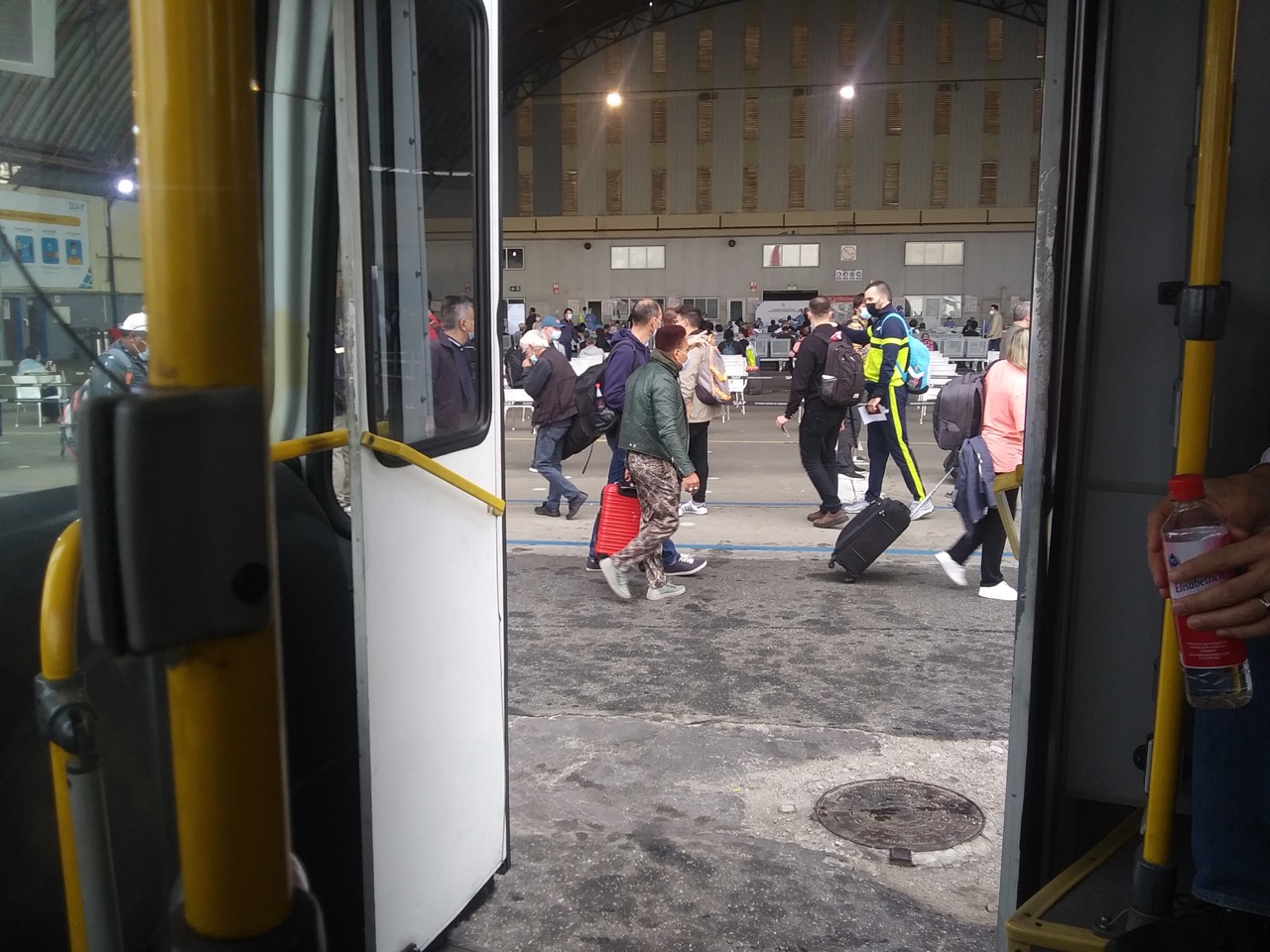
On arrival at the Luanda airport, all of the passengers were bussed to a hangar, where everyone would receive a rapid coronavirus test. I could see row upon row of chairs facing ten white tables staffed by white-coated personnel.

A rope aisle snaked six times back and forth along the length of the hangar. Before entering the line, we were marched through a short tunnel misting a disinfectant spray.

At the end of the line, each passenger was directed to the first available table. Passport information and a nasal swab were collected from each passenger, who then took a seat in one of the chairs to wait. Names were called out loud when results were ready. My last name seems to be difficult to pronounce, so I listened intently so as not to miss it. The hangar was nearly empty when I heard my name. Negative. So far, so good.
Immigration and Nicolo
Getting off the bus at the terminal, I strolled with buoyed confidence into the terminal and turned left toward the immigration office as I had learned on my previous visit. I was soon deflated as there were dozens of people waiting outside the office, and there were very few seats inside the office. I waited and fidgeted for half an hour as the crowd slowly declined in number, constantly wondering about the fate of my special checked package. Then a familiar masked figure stood before me. I instantly recognized Nicolo, the airport security guard who had been so helpful to me on my last visit.
He went and talked to a uniformed official, gesturing toward me as he talked. I soon found myself ushered into the immigration office, and I claimed one of the coveted seats. No sooner had I sat down than I saw an agent walk out the door with a handful of passports, and one blue US passport stood out among the different colored passports of other countries. Sensing my opportunity evaporate, and squashing the urge to run after him yelling, “That one’s mine!” I tried to recall some useful words from my scant Portuguese. He came back and placed a single blue passport on a table and grabbed several others. On his way past me, I tried out my voice, “Com licença (excuse me)?” and he looked at me, maybe because he actually understood me, or maybe because I had made a funny noise. I didn’t care. I had his attention. Ahem. Gesturing toward the table, I ventured again, “A mesa. Meu passporte azul. (The table. My blue passport)” And it worked. I was next in line.
After forever, I finally made it to baggage claim. Nicolo was waiting there, but my small crate was not. Undeterred, I showed the handlers a picture of the package, and they pointed to the far corner. There it was. Almost in a trance, I loaded it onto the x-ray machine and braced for the inevitable query, “Hey, what’s that big metal thing in there?” But it didn’t come. I inspected the box. It hadn’t been opened. The locks, zip ties, and note inside were undisturbed, and there was no note from the TSA saying they would like a word with me on my way back.
The Luanda experience
Ericleidy’s uncle Pedro was waiting for me outside. He spoke excellent English. He helped me exchange some money on the street, something that is not governmentally encouraged (but unenforced is the same as legal, right?). It doesn’t take many US dollars to turn into a ludicrous stack of kwanzas. Pedro took me to a restaurant by the ocean named Por Do Sol, where I enjoyed a meal of fish, fries, vegetables, and a fruit drink.


We then went to visit Ericleidy’s grandmother at her home.
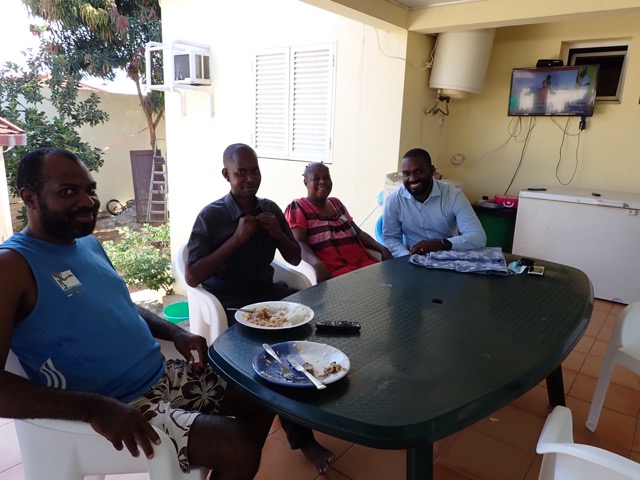
In an odd coincidence, Pedro had an appointment to attend that day. A year before, he had applied to buy a residence in Luanda, and his application had just been accepted. He needed to finalize the deal, so I went with him to a nice building with a view of the sea. I sat in a well-appointed lobby while he conducted his business. The letters EGTI (a land management company) were emblazoned above the receptionist’s desk. Pedro was impeccably dressed, and I was in my sloppy travel clothes and dirty hat. I flipped through an old Portuguese-language business magazine while I waited, noting the out-of-date kwanza exchange rate and appreciating the financial products in the ads, trying to project the image of “disheveled businessman” rather than “disoriented hobo.”
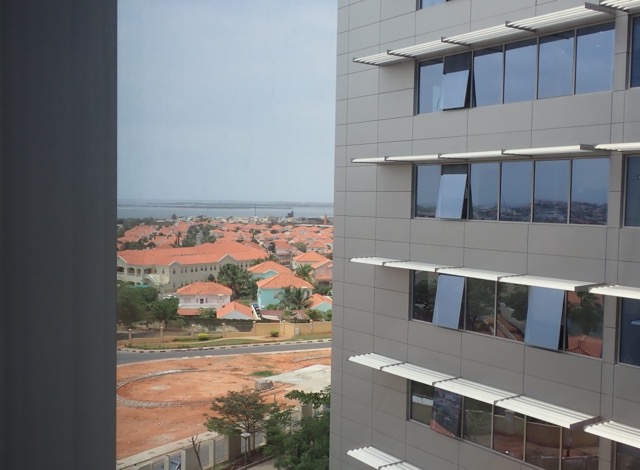
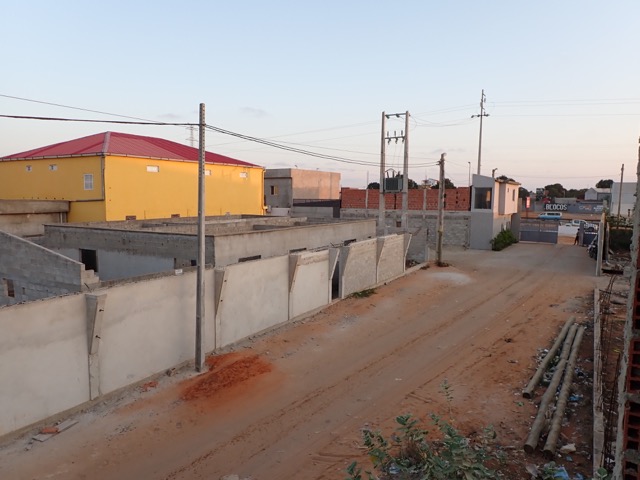
In due time, Pedro handed me off to Gildo who would get me to Menongue. Gildo and his wife, Lucia, were Ericleidy’s godparents, and they were going to the wedding to stand in for Ericleidy’s parents. Gildo and I would drive to Menongue, and Lucia would arrive by plane later. Before hitting the road, Gildo needed to make a stop in a gated industrial complex to check on a building project of his. As we drove past the guards at the gate, a frantic man came running out, followed by a group of men with sticks. The man came so close to my window that I could see red spots standing out from his short jet-black hair. Gildo commented that without a strong rule of law, the street justice we just witnessed was often the punishment for thieves. Once outside the gate, the presumed perpetrator stopped running and sat down nearby, apparently aware that he was now safe from the retribution. He stared dejectedly at his bloody hand as we drove into the complex.

On to Menongue
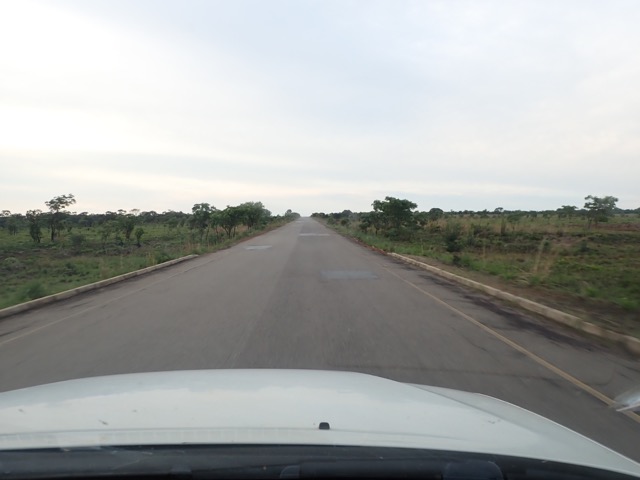
We set out toward Menongue in the evening, and we had 600 miles to travel. We got some snacks from a service station to sustain us. Because I had never learned to drive stick, Gildo drove the whole way. Driving in Angola at night can be treacherous. Gildo’s determined slowing, swerving, and accelerating to avoid potholes and debris took their toll on me. I was terribly carsick most of the way. I tried to sit upright and put on a brave face, but at some point I gave up and hunched over in a ball of misery. Gildo tried bravely to keep up some conversation, but I mostly just grunted in reply. We stopped a few times to rest. The bathrooms at the gas stations along the way were daunting. Most were unlit. None had running water. I was still getting used to the variety of toilet arrangements that the country had to offer. And a lizard clung to the wall next to an ancient, inoperative towel dispenser.
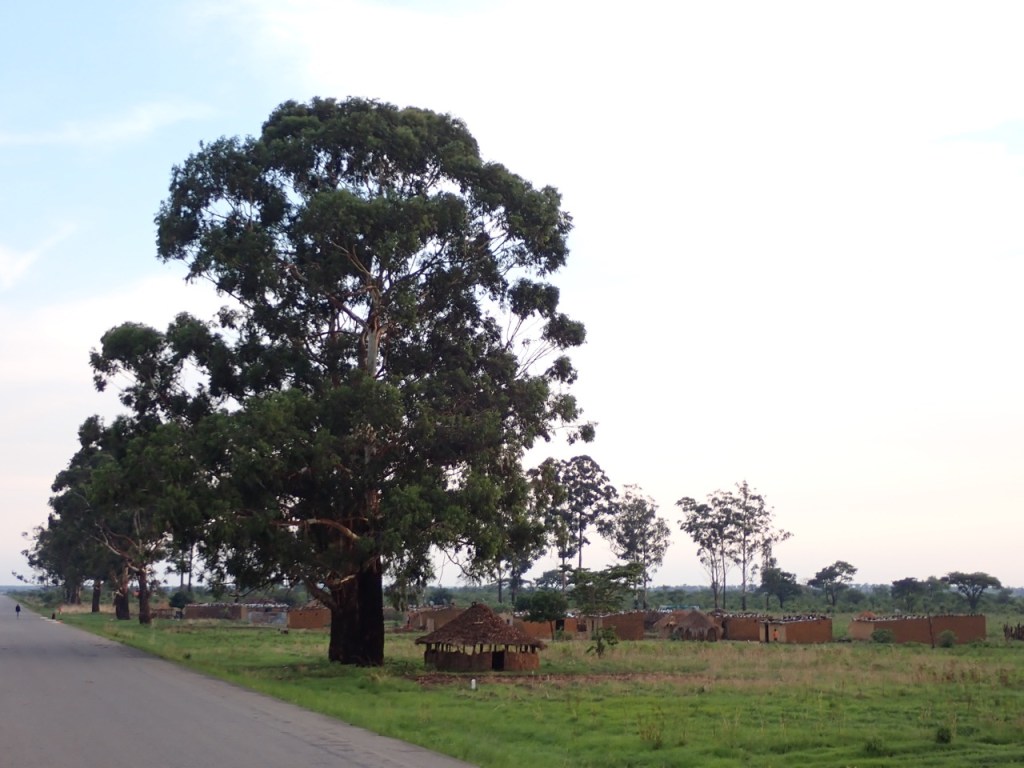
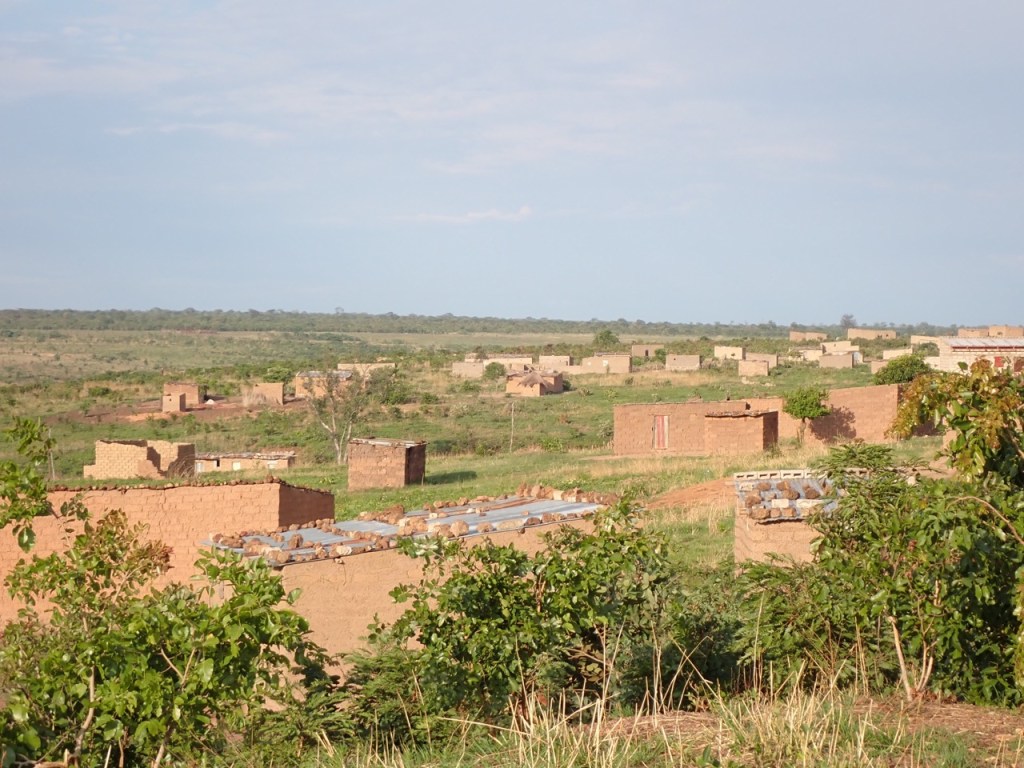
The sun was almost up as we neared Menongue, softly illuminating our surroundings. We passed many villages of 20 or 30 huts. Walking beside the road were children in white tunics with chairs on their heads – students in their uniforms on their way to school. Some of them would be heading to an actual school building; others would set their chairs around a shade tree to learn. Adults with farming tools were walking to the fields to begin the day’s work. A fireball rose in the east, setting the morning fog ablaze.
We eventually arrived at the OM base in Menongue. I was looking forward to crashing on a bed and not moving for a day, but it was not to be. The fancy church wedding was two days away, but first we were going to the civil ceremony in front of a government official. They said I could sleep after that. I was installed in a vehicle, and off we went.
Civil ceremony, call from Nathan Holland, and wedding prep
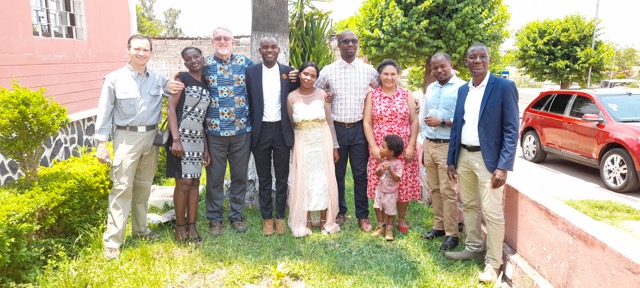
The civil ceremony was fascinating. It was like a justice of the peace giving pre-marital counseling. It is the official custom in Angola. It was nice to hear a government representative giving the couple good advice for their married life. The government recognized the importance of strong families in making a strong society. “Both should work for each other.” “The husband should help in household work.” “Seek good counselors who can help resolve conflicts.” “Stay faithful to each other.” “Decide early on your separate roles and responsibilities.”

When we got back to the base, I finally got some rest. When I awoke, I had a message on my phone from Nathan Holland, the missionary from Huambo who helped me get out of Angola when the coronavirus hit in 2020. He was in Luanda at the time, about to fly home to America for a few weeks. He was surprised to learn that I was in Angola at that moment; I hadn’t told him I was coming. He advised that the only place that could administer the required PCR COVID test was in Luanda, and it was not at the airport. Results typically took 2 or 3 days, and I would only have 8 hours between the domestic flight in and international flight out of Luanda.
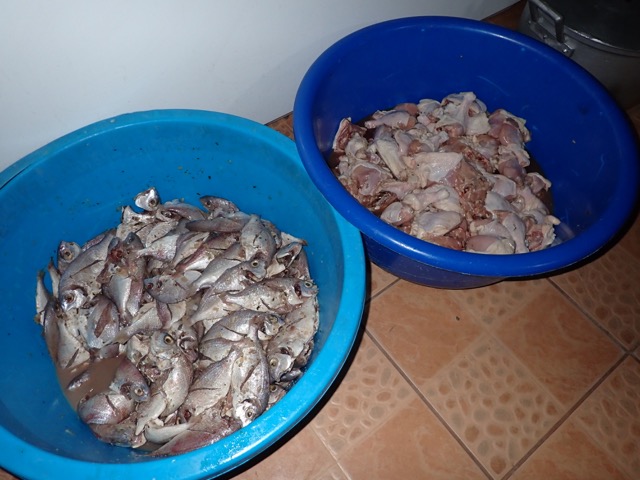
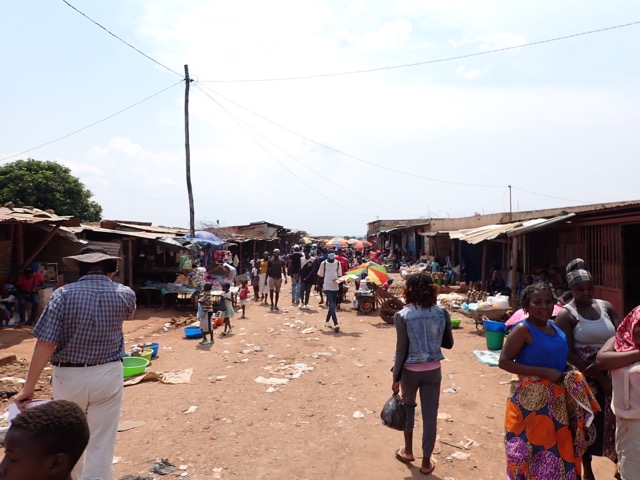
The next morning I read in the Bible Joshua 1:9-11 including the passage “Within three days ye shall pass over.” I took that as a sign that I would be able to get on the flight home, somehow, so I stopped worrying about it. The day was spent getting ready for the wedding. As people went to the market and various stores, I would tag along. At the market, Ericleidy dropped off clothes at the tailor. A blanket hung across a corner of the tailor’s stall. Ericleidy confirmed that the blanket was the “dressing room.” At a cloth store, I bought a popular Angolan pattern to display at home. At the base, dishes were being cleaned, tables were being set up, and food was being prepped.


Words of encouragement
In the afternoon as I was organizing my bags, one of the students, Laurenco, came to speak to me, and Wessel interpreted for him. Laurenco stated that God had given him some things to say to me, and that if he didn’t, he would be responsible. Laurenco had been listening as I talked about my family’s preparations for moving to Angola: selling our house, moving from place to place, living in tents for a while. He said that we should guard our passion for the ministry so we don’t let it slip away. He told us that we would get to Angola safely, and that he could see a humility in the way I behaved. He took my hand and pointed at the palm, saying that success was in my hand. He encouraged us to remain faithful, and that I should share his encouraging words with my wife. My family’s journey to Angola did seem interminably long, and at times we did despair of ever making it.
Base developments and COVID test
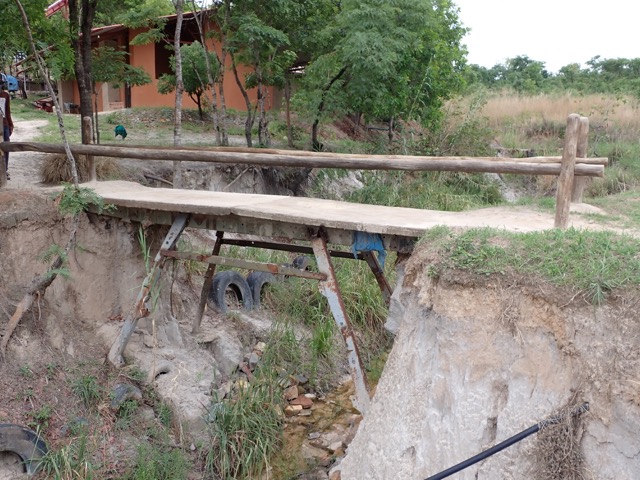
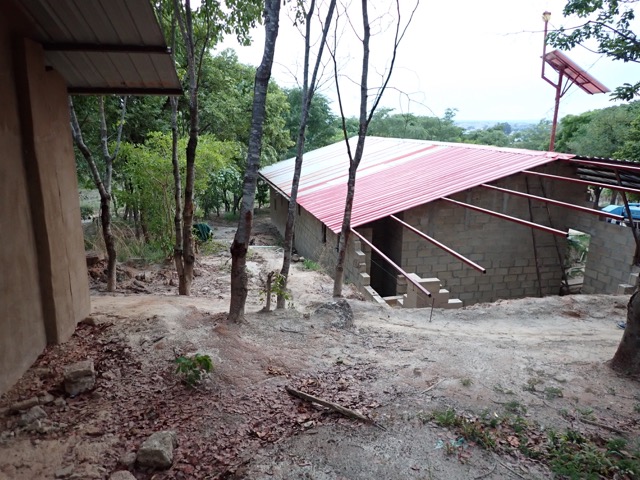
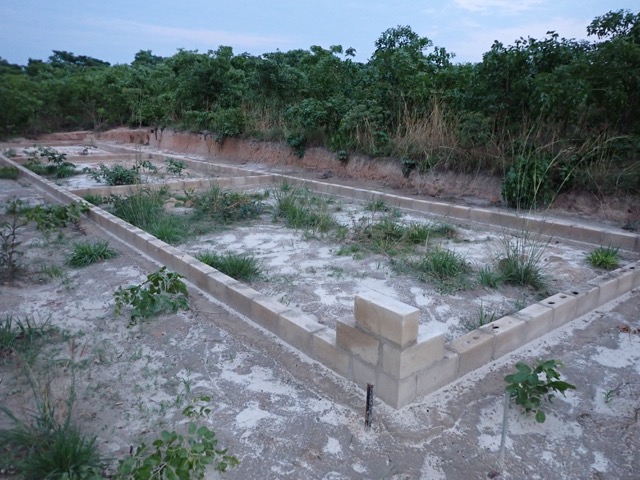
I walked around the base to see what had changed in the past year and a half. In the house on the hill where my family would someday live, some windows and concrete floors had been added. Down the hill from our house, they were finishing the home that Ericleidy and Delfina would share after their wedding. Until then, they would stay in their rooms in the main house. I shared Ericleidy’s room for the last few days of his bachelorhood. Attached to their house was an unfinished structure that would serve as visitor quarters in the future. I walked past the new housing and went across the gully that bisected the base to see how the academic school rooms were coming along. The third grade building was nearly completed, and the foundation had been laid for rooms 4 through 6. The ground for room 7 had been leveled.

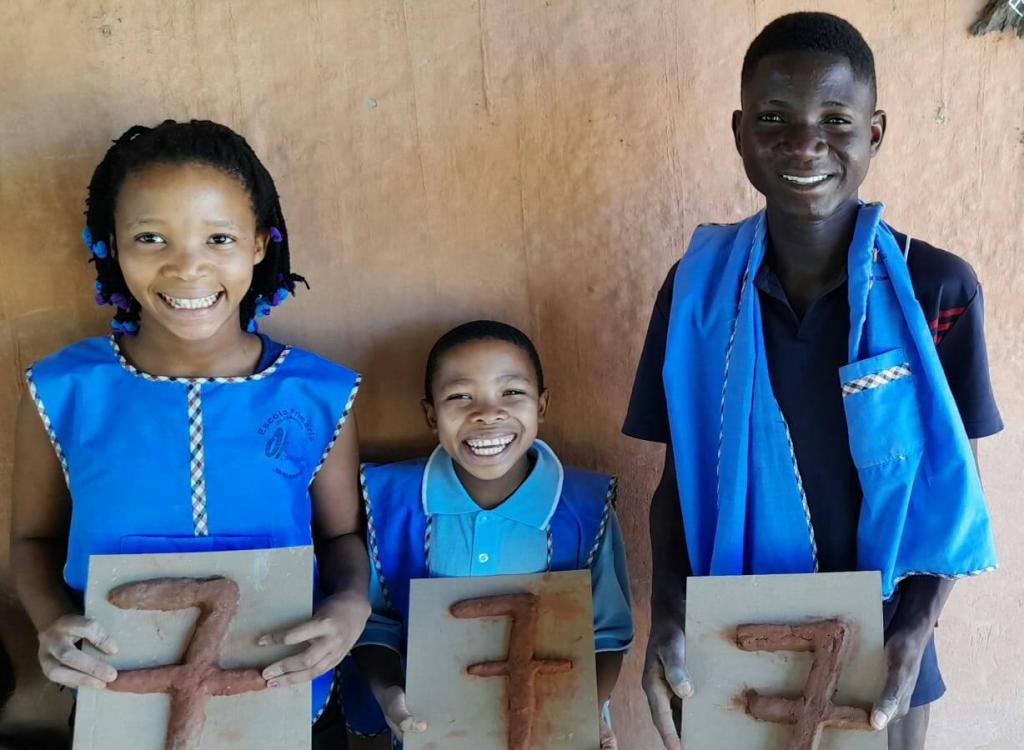
There was another development since my last visit. Two children from the local San bushman tribe had come to live at the base much of the year, Domingos and Kuvanja. Nobody knows their exact ages. Domingos’s father is the tribal chief. The two were attending OM’s El Shammah academic school and quickly learning Portuguese with little formal training. When they went home for visits throughout the year, they taught their tribe what they had learned.
Wessel had contacted a doctor in Menongue who could give me a COVID test and have results the next day, which was the day of the wedding and the day I was scheduled to fly back to Luanda. So between all the excitement of preparing for the wedding, he and I slipped out to visit the Menongue municipal hospital. With some help, we located a doctor by the name of Fortuna. He administered the test and promised results soon.

Wedding and COVID test results
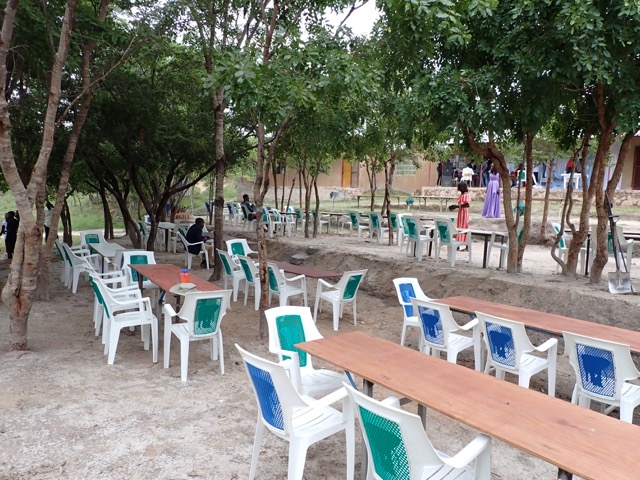
The day of the wedding finally arrived. The ceremony and reception were held on the shaded lawn in front of the school buildings. Workers had transformed the sloping hill into a series of terraces, and each terrace had a row of dining tables. The cement porch was decorated, and a local band had set up. The ceremony was much like any wedding I had attended. Wessel gave a short presentation. He had each married couple in the crowd stand on a block that read “Eu Sou (I Am)” and advised Ericleidy and Delfina to found their married life on God’s Word. The reception included a lot of good food, singing, and dancing.
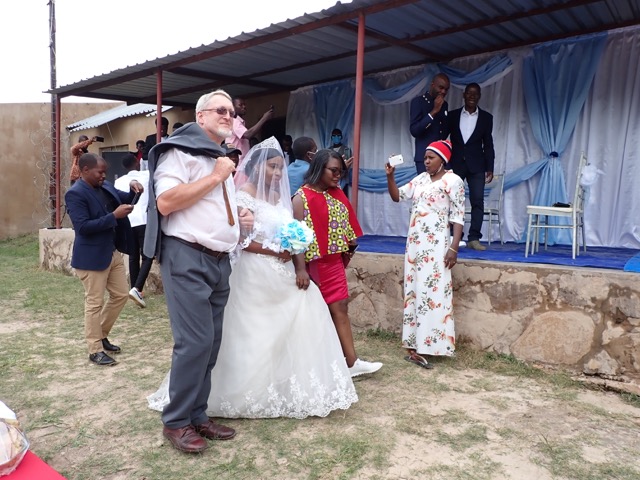
Wessel walking Delfina in at the wedding ceremony 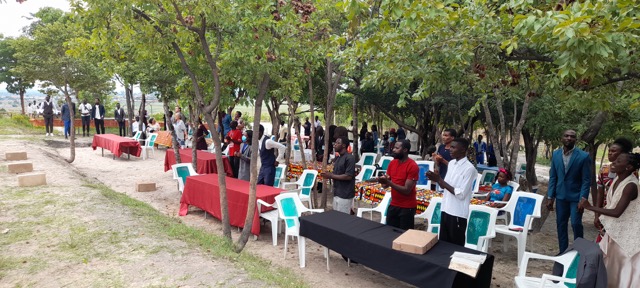
All rise for the entrance of the bride 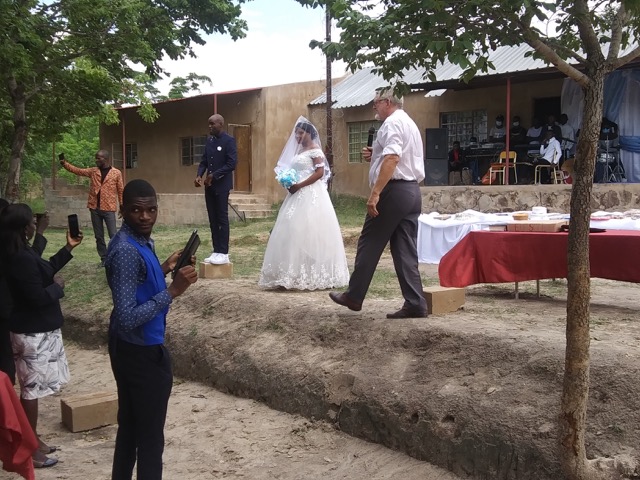
The wedding service 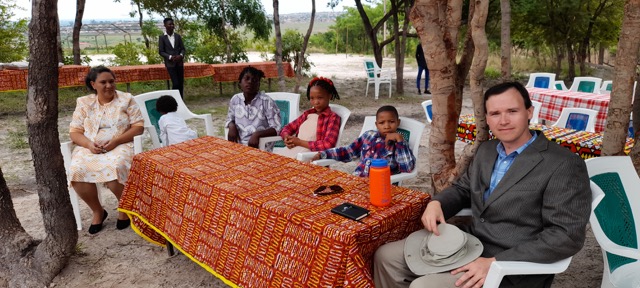
Barianne and Yakeem, Kuvanja and Domingos, and me at the wedding. Machai – on of the school workers – in the background 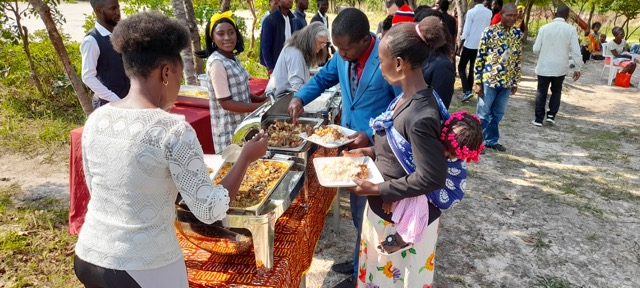
The buffet line at the reception 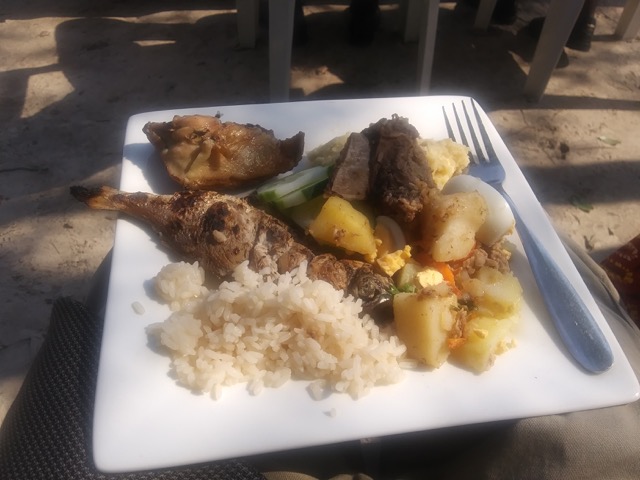
Food at the reception 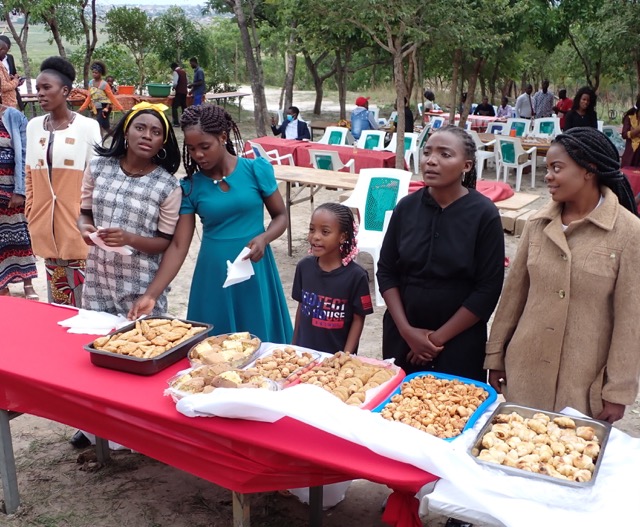
The dessert table at the wedding reception
As soon as the wedding was over, Wessel and I rushed to the hospital to get the results of my COVID test. Arriving back at the hospital room, we found the doctor absent and the door closed and locked. We sought out a nurse and asked for the doctor. Then we sat in the empty corridor and stared at the door.
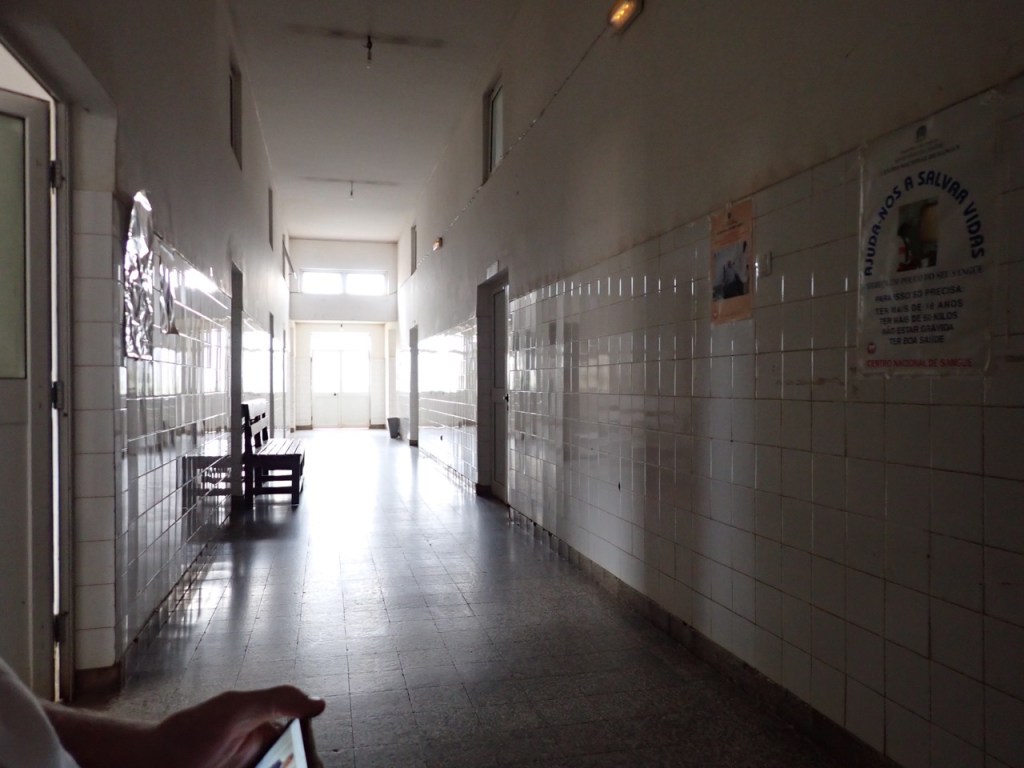

At length, Wessel said, “[something in Afrikaans]”
To which I replied, “I think you think I’m someone else”
“Oh, was I speaking Afrikaans?”
“Yes”
“Sorry”
We waited longer.
Wessel pulled out his phone and started going through the pictures he had taken that day, deleting some as he went.
I contemplated the odds of getting stuck in the same city twice in as many years because of the same virus.
Shortly after I had given up all hope, Dr Fortuna arrived and presented me with a negative COVID-19 test certificate. I was a little apprehensive about the certificate. Though it was signed by the doctor on hospital letterhead, it contained the Portuguese word rápido, which implied that it was a quick test, not the PCR required by regulation. Aside from that, I had a sore throat that morning and had a hint of sinus congestion and a runny nose. I had no choice but to trust that everything would work out, and I thanked the doctor for his timely assistance.
Gildo’s words and back to Luanda
Back at the base, I was saying my goodbyes when Gildo gripped my hand and said something I did not expect. “This land is yours.” I stared at him. He reiterated, “God has given you Angola.” I didn’t know what to say. He could not have known my prayer to God in 2020 when I first visited Angola and got stranded there. Lord, give me Angola, give me the language, and give me my family. He could not have known the significance of the exact words that he had just said, but there they were.
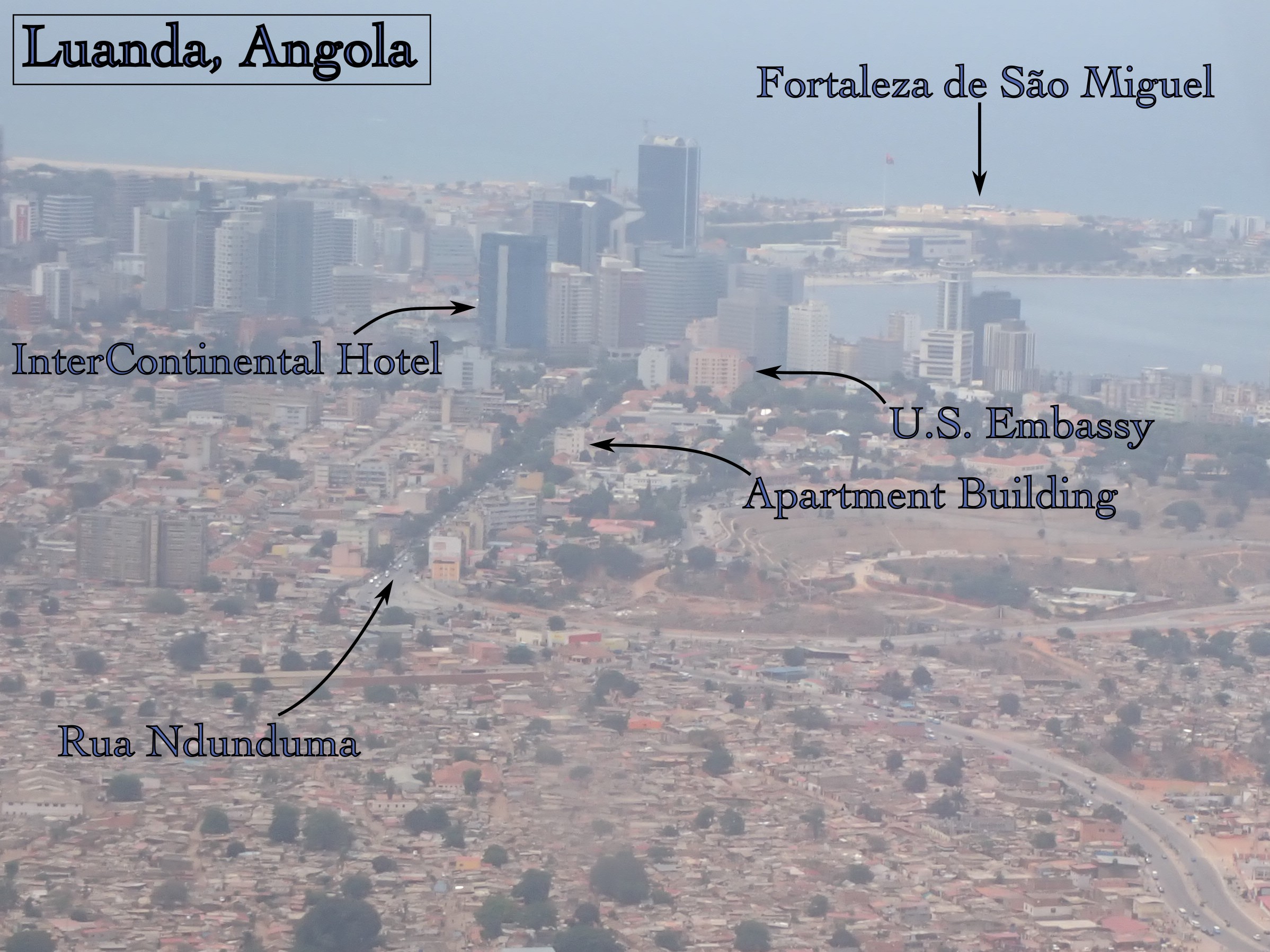
I flew to Luanda that afternoon, and as the plane came in to land, I snapped many shots of the city. I later discovered that one of the photos included the apartment building that Nathan Holland and I had spent coronavirus lockdown in before our repatriation flight in 2020. The building was in the upscale Miramar neighborhood on a street named Rua Ndunduma. The US Embassy was at the far end of the road, and it was also visible in the image, barely peeking out from behind a larger building. In the far distance, I could just make out the old Portuguese fort, Fortaleza de São Miguel, that Nathan and I passed on our way to the airport.

As I walked out of the domestic terminal of the airport to an empty parking lot, it occurred to me that I had failed to arrange for transportation to the international terminal. I finally got in a sketchy taxi and paid too much for the very short ride. Arriving at the other terminal, I found the guard at the front door would not let me in. I was too early for my flight to Portugal. A man seated on the sidewalk was eager to be of assistance, though. He asked if I was hungry, and he walked me to a restaurant in an adjacent part of the airport. He helped me order, adding a drink for himself to my tab, and sat down at my table. My meal arrived, and he remained my stalwart companion. Unsure how to get rid of him without being rude, I subtly got out a kwanza note and stuck it under the edge of my placemat towards him. I clasped my hands together and said, “Obrigado (thank you).” He nodded, slid the note from the table, stood up, and walked out of my life. At least he had provided a small service for his drink and tip.

Accidental bribe
What happened after the restaurant was truly embarrassing. As I headed outside to see if I could get to the main terminal, a man behind me called out, “Portugal? Portugal?” I made the mistake of turning to see what he was yelling about. In rough English, he said that I needed two copies of my COVID-19 test results. He pointed to an airport office just inside the entrance, and we walked to it. An airport worker took my test and turned around to copy it. Apparently that really was a thing. But then of course my loud friend wanted compensation for his help. I gave him a small amount of kwanzas, and then he offered to get me past the line and the grumpy gatekeeper with the help of his buddy, a snappily dressed officer in dress blues who stood nearby. The rest is a bit of a blur, but it went something like this.
I decline as I put my money away. Loud Friend grabs at a big euro note. I say that’s too much. I walk outside. Loud Friend follows. He tries to pull my suitcase for me. I say no thanks. We both pull my little pilot case along the sidewalk toward Grumpy Gatekeeper. Loud Friend says that Dress Blues is right behind us; he can get you inside; he’s coming; quickly now. I say no thanks; I’ll wait in line; waiting in line is fine. People in line stare at the unfolding sidewalk drama. Dress Blues walks (menacingly?) toward us. Loud Friend pulls me and Pilot Case toward Grumpy Gatekeeper, who lets us pass without a word. Once inside, Loud Friend triumphantly wants to be “paid.” I give him a smaller euro note. People who were just outside start stacking up behind me, wondering why I’m so special.
So, yeah, I accidentally bribed (was extorted by?) someone to get something I did not want.
Serendipity and the slog home
The surrealism was not over yet. I got to the first checkpoint and stepped out of line to fill out some COVID-related paperwork. Then I heard someone say my name. I looked up and saw Nathan Holland standing there. Turns out that we had booked the same flight out of Angola to Portugal that day. I had last seen him in 2020, when we had the same coronavirus repatriation flight out of Angola to Washington, DC. I wondered if he saw my sidewalk performance just a few minutes earlier, but I never did ask. We spent the time catching up the previous year and a half while we waited for the flight.
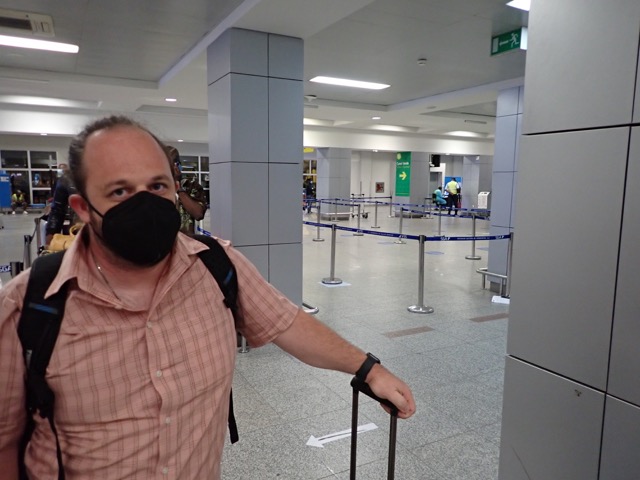
Nathan and I parted ways in Portugal. By the time I boarded the flight to the US, my health had deteriorated. All the way home, my nose kept running, and my mask kept trying to fall apart. I stuffed tissue up my nose; buried my head in my pillow; and tried not to sneeze. (My condition worsened after I got home. Medical tests only showed that I had contracted giardia from something I ate or drank on the trip.) During those miserable hours over the Atlantic, I wish I could have known what I know now: the next time I flew over that ocean, I would have my family with me.
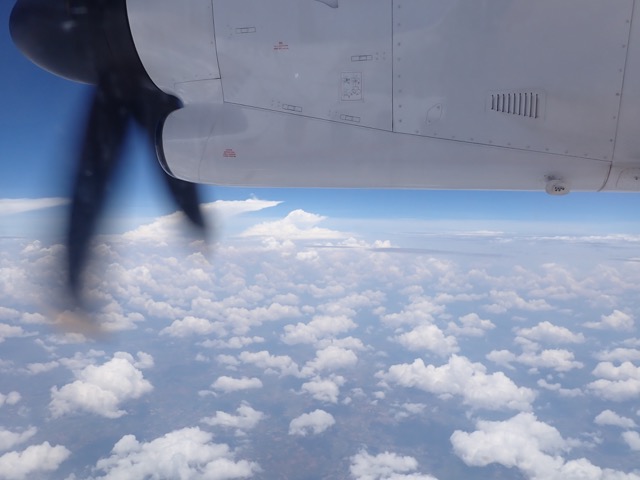


 Welcome to Angola
One response to “Ericleidy and Delfina’s wedding (Nov 2021)”
Very interesting, Michael. Thanks for all the details and the pictures. I’m trusting the Lord has given you a touch after your latest bout with malaria.
LikeLike